

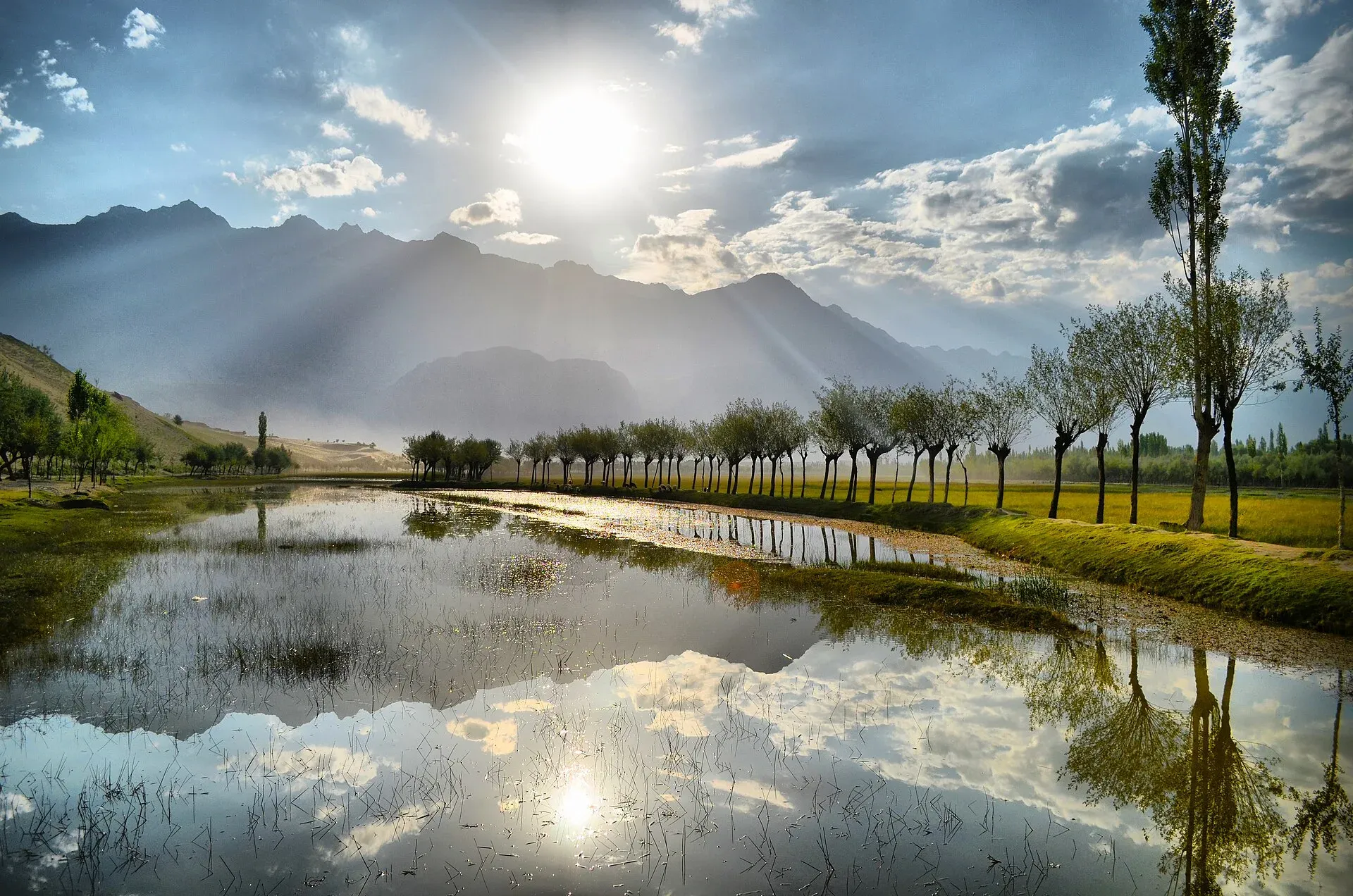
Photo: Qammer Wazir, with thanks · CC BY-SA 4.0 · via Wikimedia Commons · temporary stand-in photo

Balti Food (Mamtu, Phey and More)
Everyday dishes of Baltistan: steamed mamtu dumplings, thick khambir bread, and apricot oil. Mild, filling mountain food with Tibetan and Central Asian echoes.
What it is
Balti food is the home cooking of Baltistan, the region around Skardu, Shigar and Khaplu. It is simple, mild and made from local grain, dairy, dried fruit and apricot oil. It is quite different from the spicy curries of the plains, and travellers often point to its Tibetan and Central Asian echoes. These links are described in general food writing and are best treated as a regional influence, not a precise history.
Dishes to look for
- Mamtu: steamed dumplings with minced meat, chopped onion, herbs and spice, eaten hot with chilli sauce or a yogurt-garlic dip.
- Khambir: a thick, soft, slightly sour bread baked in a clay or stone oven. It is usually eaten with butter, local cheese or apricot jam. Similar breads are also known in Ladakh.
- Marzan: a mound of dough served with a bowl of apricot oil. One source says it is made from buckwheat and another text mentions wheat grains, so ask what the cook uses.
- Phey: named in some Balti food lists. Its recipe is not published.
How it is made
Mamtu dough is rolled thin, filled, pinched into small purses and steamed. Khambir uses a leavened dough baked in a small oven, which gives it a dense crumb. Many dishes use apricot oil, which is pressed from local apricot kernels. Cooks avoid heavy spice, so the flavour comes from the meat, butter and herbs.
Where it comes from
The valleys of Baltistan have long depended on barley, wheat, apricots, dairy and livestock because of the cold, dry climate and short growing season. The food reflects those limits. Local food writing lists many of these dishes among Baltistan's specialities. There is no known documented history of individual dishes.
Where you will eat it
- Skardu, in local restaurants and guesthouses.
- Shigar and Khaplu, where village homes and heritage guesthouses cook local dishes.
- Trekking base villages, where family kitchens may serve simple meals.
Many dishes are made to order, so ask a day ahead if you can.
When people eat it
Mamtu is a lunch or dinner dish, and khambir is common at breakfast. Hot, hearty food is popular in cold months, but the tourist season in Baltistan is mainly summer and early autumn, when most restaurants are open. Winter menus are limited.
Dietary notes
- Halal: meat dishes normally use halal meat.
- Vegetarian: khambir with butter or jam is vegetarian. Mamtu is usually meat-filled, though vegetable versions are sometimes cooked on request.
- Spice: mild. Chilli sauce is served on the side.
- Allergens: wheat, dairy and nuts or apricot kernels.
How to order and eat it
Ask for mamtu by name and check the filling. Eat dumplings with your hands or a spoon, dipping into the sauce. Tear khambir and spread it with butter or jam. Take food from the part of the dish nearest to you, and say thank you. Prices vary and are not given here.
For foreign visitors: the UK FCDO does not advise against travel to Gilgit-Baltistan in general (page updated 27 October 2026). Roads, weather and local conditions still change, so check current advice before you go.
Sources and last checked
Last checked Confidence low4 sources3 still to check
- Last checked
- Method
- Desk research from published sources
- Confidence
- low
- Checked by
- trek.pk research team
Researched from published sources; not yet checked on the ground by our team. Spot something out of date? Report a mistake.
Sources
- Traditional foods of Baltistan: Skardu, Shigar, Khaplu · Skardu.pk · checked
- Baltistan food · Migrationology · checked
- Government of Gilgit-Baltistan tourism department · Gilgit-Baltistan Tourism · checked
- Cuisine of Pakistan: Gilgit-Baltistan (mumtu dumplings) · Wikipedia · checked
Still to be checked on the ground (3)
- Phey recipe is not confirmed in any source
- Grain used in marzan: Skardu.pk says buckwheat, Migrationology's text mentions wheat under a buckwheat heading
- Mamtu and khambir descriptions rest on general food writing (Wikipedia confirms mumtu dumplings served with yogurt and chilli sauce; khambir is not covered by the sources opened)