

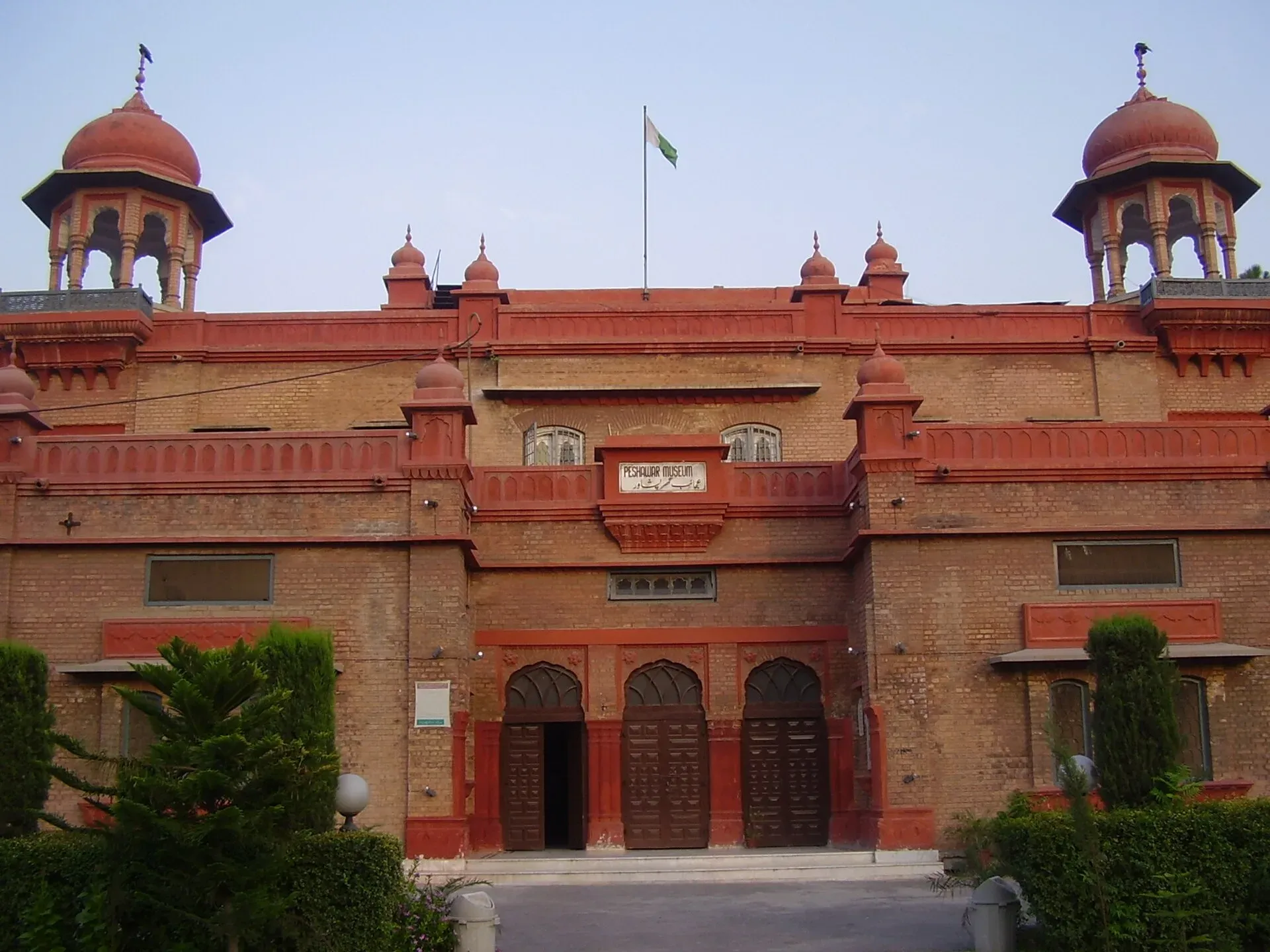
Photo: Khalid Mahmood, with thanks · CC BY-SA 3.0 · via Wikimedia Commons · temporary stand-in photo

Peshawar
Khyber Pakhtunkhwa's capital and one of South Asia's oldest living cities: the Gandhara museum, Qissa Khwani Bazaar, mosques and a strong food culture.
Overview
Peshawar is the capital of Khyber Pakhtunkhwa and the largest city of the province (1.9 million people at the 2023 census), in a broad valley at the eastern end of the Khyber Pass route to Afghanistan. It is one of the oldest continuously inhabited cities in South Asia, and was a major centre of the Gandhara region. Today it is a busy trading city with a famous old bazaar quarter, a strong food culture, and an excellent museum of Gandhara art. It is a rewarding stop for travellers interested in history and culture, but you should check current conditions before going.
Plan your visit
- Getting there
Air: Bacha Khan International Airport (PEW), about 10 km west of the centre. Rail: Peshawar Cantonment, the end of the main line from Karachi. Road: M-1 from Islamabad (about two hours) and the N-5 Grand Trunk Road. More
Best months
Oct – Mar
- Peshawar
- Related places nearby: Sethi House and Sethi Mohallah, Peshawar, Gor Khatri and City Museum Gor Khatri, Peshawar, Warsak Dam, Mohmand Dam
History in brief
Peshawar was an important city of the Kushan Empire under Kanishka in the 2nd century CE, and later of the Mughals, Durranis and Sikhs, before the British arrived in 1849. The old city still follows the layout of a walled town, with bazaars grouped by trade. The Qissa Khwani Bazaar, the "street of storytellers", was a stopping point for traders on the old Silk Road routes.
Wikipedia describes the old city as a once heavily guarded citadel with high walls. Only remnants of the walls remain, but the houses and havelis (traditional mansions) stand on. Most are built of unbaked brick with wooden frames as a precaution against earthquakes, and many have carved wooden doors and latticed balconies. The British years left a different layer: Edwardes College (1900), Islamia College and the Cunningham clock tower of 1900, called Ghanta Ghar. See Peshawar walled city.
Neighbourhoods
- Old city and Qissa Khwani Bazaar: the historic centre, with mosques, havelis and crafts markets. Good for history and food.
- Saddar and the Cantonment: colonial-era roads and churches, with hotels and shops. Good for a base.
- University Town: quiet, green and academic, with Peshawar University, the Islamia College and several cafes.
- Hayatabad: a large planned suburb with markets and restaurants.
- Namak Mandi and Chowk Yadgar: a food district for night eating.
Top sights
- Peshawar Museum: one of the best collections of Gandhara sculpture in the world, including Buddha figures and reliefs. It was founded in 1907 in memory of Queen Victoria, and Wikipedia says its building mixes British, South Asian, Hindu, Buddhist and Mughal Islamic styles. The collection holds almost 14,000 items, from Gandharan, Kushan, Parthian and Indo-Scythian periods.
- Qissa Khwani Bazaar: historic market street, best in the morning.
- Mahabat Khan Mosque: a Mughal mosque of the 1670s in the old city, with a fine courtyard and minarets.
- Bala Hisar Fort: the old fort above the city. It is the headquarters of the Frontier Corps, so it is a military site. Wikipedia says the provincial government has asked for it to be opened to tourists and that it was closed to visits (an old note, tagged for update), so assume you cannot go in unless you have permission.
- Sethi Mohallah: a group of 19th-century merchant houses with carved wooden fronts.
- Islamia College: a landmark colonial campus of the early 20th century.
- Chowk Yadgar: the central square, with a memorial and evening food.
- Gor Khuttree: an old caravanserai-turned-archaeological complex in the old city.
- Peshawar Cantonment churches: St John's and other colonial churches.
- Khyber Pass: a day trip west toward the border; check access and permissions first.
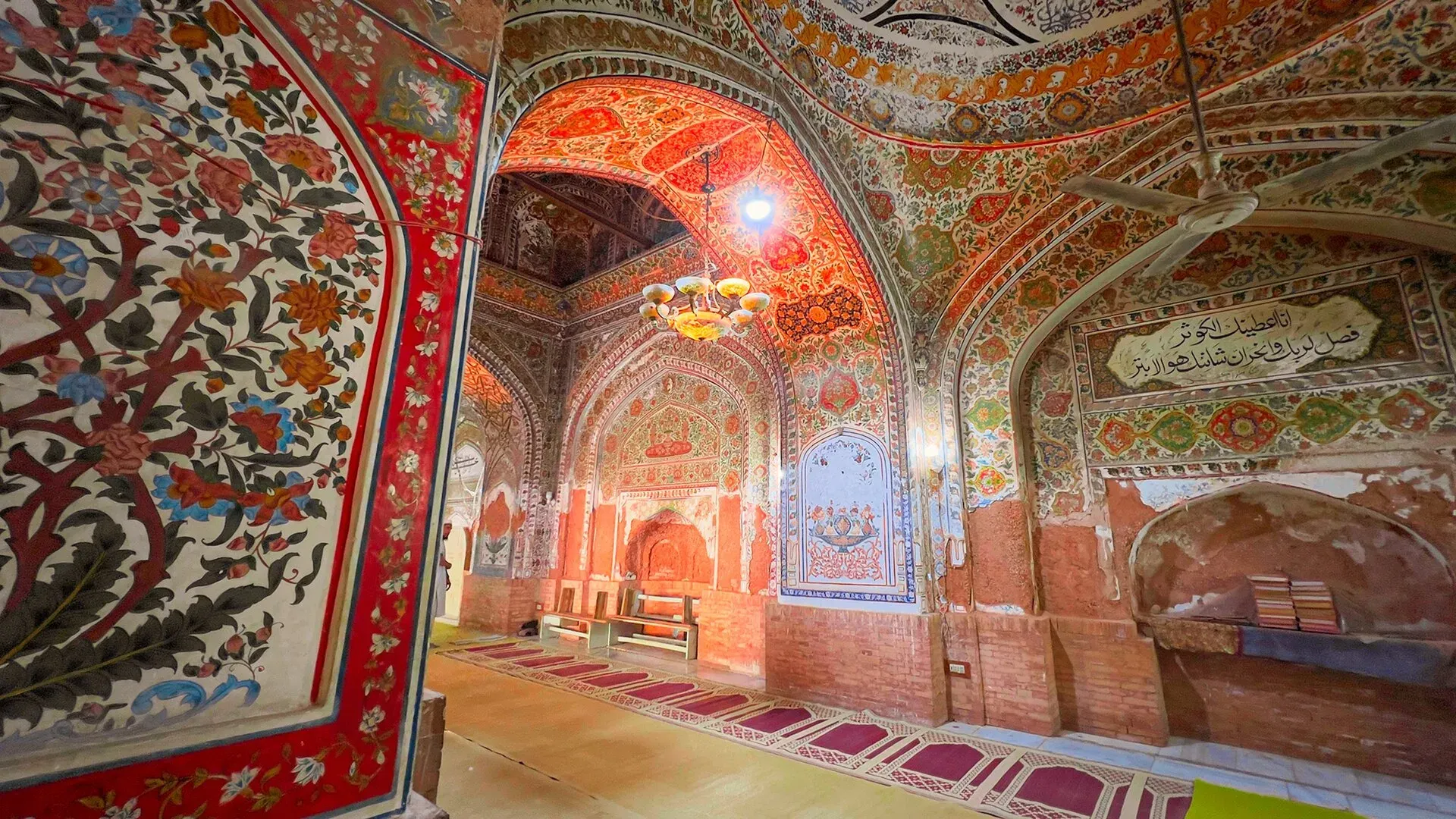
Photo: Faysalelahi, with thanks · CC BY-SA 4.0 · via Wikimedia Commons · temporary stand-in photo

Food and shopping
Peshawar is known for meat dishes. Wikivoyage names Namak Mandi for roast, barbecued and karahi mutton, and describes chapli kebab as a flat beef kebab. Also try charsi tikka, kabuli pulao and, after meals, kehwa, the sweet green tea. In summer, sharbat-e-sandal (a cold sweet drink with black seeds) and falooda are popular, and Wikivoyage lists Qissa Khwani for falooda and kulfa, which it says is sold from April to September. Choose busy places and drink bottled water.
Gems are sold on Shah Qabool Gems Street in Namak Mandi, according to Wikivoyage. The old-town markets, including Namak Mandi and Khyber Bazaar, also sell Pakistani and Afghan handicrafts. Shafi Market in the Saddar area is known for fabric and clothing, and bargaining is expected in shops without fixed prices.
Getting there
- By air: Bacha Khan International Airport (PEW) is about 10 km west of the centre, with domestic flights and services to the Gulf.
- By rail: Peshawar Cantonment station is the end of the Karachi to Peshawar main line.
- By road: the M-1 motorway links Peshawar to Islamabad in about two hours, and the N-5 Grand Trunk Road runs through the city. Intercity coaches leave from several terminals.
Getting around
Ride-hailing (Careem, inDrive) works well in the main areas. Rickshaws and shared vans are common. The Bus Rapid Transit (TransPeshawar, also called Zu Peshawar) began service on 13 August 2020 and runs east to west from Chamkani to Karkhano Market (30 stations on the core line, Wikipedia). Wikipedia lists it as operating, with about 329,000 daily passengers in 2024. The old city is best on foot.
Where to stay
- Saddar and the Cantonment: the most hotels and the easiest access to transport.
- University Town and Hayatabad: quieter, newer hotels and guest houses.
- Old city: very few options, so most visitors stay elsewhere and visit by day.
When to visit
October to March is the most comfortable. Wikipedia describes a hot semi-arid climate: summers run from mid-May to mid-September, with the hottest month averaging a maximum above 40 C, and winter lasts from November to late March. Average annual rainfall is about 400 mm, with most winter rain from February to April. Peshawar is not a monsoon region, but heavy summer downpours occur, and Wikipedia cites a 2024 air-quality report that ranked it among the world's more polluted cities.
Safety and etiquette
Security in Peshawar has improved in recent years but remains variable. Check the latest official advice and local conditions, and do not rely on old information. Travel with a local contact or a guide if possible, and avoid crowded demonstrations. Dress conservatively, in line with local customs, and ask before photographing people. Foreign visitors should check current rules about movement and registration with the district administration.
For foreign visitors: the UK FCDO advises against all travel to Peshawar, including the city (advice updated 27 October 2026, checked 16 November 2026). Read the live advice before you plan.
One or two days
This outline uses only places on this page and their opening arrangements are unconfirmed, so check hours first.
- Day one. Peshawar Museum in the morning, then the old city on foot: Ghanta Ghar, Qissa Khwani Bazaar, Sethi Mohallah and Gor Khuttree. Eat at Namak Mandi or Chowk Yadgar in the evening.
- Day two. Mahabat Khan Mosque, then Islamia College and University Town. Keep the afternoon free, or add a day trip from the list below if access is confirmed.
Day trips
- Takht-i-Bahi (about 80 km), a UNESCO Buddhist monastery near Mardan.
- Charsadda and Shabqadar for Gandhara sites.
- Attock Fort and the Indus (about 80 km).
- Khyber Pass and Landi Kotal (check access and permissions).
- Islamabad by the M-1 motorway.
Good to know
A fee applies at the museum and some sites; current fees will be added soon. Check opening days with the Directorate of Archaeology and Museums, Khyber Pakhtunkhwa (phone +92 51 9252516), or at the gate. There is no known official timetable: unofficial listings disagree on whether the Peshawar Museum closes on Fridays, and a news report said the Directorate decided to keep it open seven days a week (undated).
Highlights
- Peshawar Museum and its Gandhara collection
- Qissa Khwani Bazaar and the old city
- Mahabat Khan Mosque
- Chapli kebab and Namak Mandi food
- Takht-i-Bahi as a day trip
Hotels, food, fuel and services in Peshawar
Places to stay
- Amin Hotel PeshawarCall Amin Hotel PeshawarMap of Amin Hotel Peshawar in Google Maps
- Fort Continental Hotel PeshawarCall Fort Continental Hotel PeshawarMap of Fort Continental Hotel Peshawar in Google Maps
- Hotel GrandCall Hotel GrandMap of Hotel Grand in Google Maps
- Shelton Guest House PeshawarCall Shelton Guest House PeshawarMap of Shelton Guest House Peshawar in Google Maps
- Shelton's Accommodator PeshawarCall Shelton's Accommodator PeshawarMap of Shelton's Accommodator Peshawar in Google Maps
- Peshawar Barracks Estb.1867Call Peshawar Barracks Estb.1867Map of Peshawar Barracks Estb.1867 in Google Maps
Places to eat
- Cheezious HBK PeshawarCall Cheezious HBK PeshawarMap of Cheezious HBK Peshawar in Google Maps
- RanchersCall RanchersMap of Ranchers in Google Maps
- Cheezious - TehkalCall Cheezious - TehkalMap of Cheezious - Tehkal in Google Maps
- KFC | PeshawarCall KFC | PeshawarMap of KFC | Peshawar in Google Maps
- McDonald'sCall McDonald'sMap of McDonald's in Google Maps
- Jalil Restaurant & Bar-B-Q Inn (Jalil Kabab House)Call Jalil Restaurant & Bar-B-Q Inn (Jalil Kabab House)Map of Jalil Restaurant & Bar-B-Q Inn (Jalil Kabab House) in Google Maps
Essential services fuel stations and hospitals and clinics
Fuel
- PSO Cantt Filling StationCall PSO Cantt Filling StationMap of PSO Cantt Filling Station in Google Maps
- Aramco Station - HayatabadCall Aramco Station - HayatabadMap of Aramco Station - Hayatabad in Google Maps
- Ali CNG Fuelling StationCall Ali CNG Fuelling StationMap of Ali CNG Fuelling Station in Google Maps
- ShellCall ShellMap of Shell in Google Maps
Hospitals and clinics
- Hayatabad Medical ComplexMap of Hayatabad Medical Complex in Google Maps
- MTI KTH Khyber Teaching HospitalCall MTI KTH Khyber Teaching HospitalMap of MTI KTH Khyber Teaching Hospital in Google Maps
- Northwest General Hospital & Research CentreCall Northwest General Hospital & Research CentreMap of Northwest General Hospital & Research Centre in Google Maps
- Lady Reading Hospital MTI PeshawarCall Lady Reading Hospital MTI PeshawarMap of Lady Reading Hospital MTI Peshawar in Google Maps
- Shaukat Khanum Memorial Cancer Hospital and Research Centre, PeshawarCall Shaukat Khanum Memorial Cancer Hospital and Research Centre, PeshawarMap of Shaukat Khanum Memorial Cancer Hospital and Research Centre, Peshawar in Google Maps
- Dr Hafeez Pets Clinic and pet shopCall Dr Hafeez Pets Clinic and pet shopMap of Dr Hafeez Pets Clinic and pet shop in Google Maps
Listings come from Google Maps data and are unverified: phone numbers, opening months and prices may have changed. Report a problem · Own one of these? Claim it
Tips
- Check current official safety advice before you go.
- Visit the old city in the morning.
- Dress conservatively and ask before photographing people.
- Allow time for the museum, which is large.
Photos we still need: Peshawari food (chapli kebab, kehwa tea) or Namak Mandi; Peshawar BRT or street scene in Saddar. Send us yours
Sources and last checked
Last checked Confidence medium13 sources5 still to check
- Last checked
- Method
- Desk research from published sources
- Confidence
- medium
- Checked by
- trek.pk research team
Researched from published sources; not yet checked on the ground by our team. Spot something out of date? Report a mistake.
Sources
- Peshawar · Wikipedia · checked
- Takht-i-Bahi and Neighbouring City Remains at Sahr-i-Bahlol · UNESCO World Heritage Centre · checked
- Pakistan Railways · Ministry of Railways · checked
- Old trek.pk Peshawar page (facts only) · trek.pk · checked
- List of cities in Pakistan by population (2023 census) · Wikipedia · checked
- List of airports in Pakistan · Wikipedia · checked
- Foreign travel advice: Pakistan (updated 27 October 2026) · UK FCDO · checked
- Peshawar Museum to remain open 7 days in week · APP · checked
- Directorate of Archaeology and Museums, KP · DoAM · checked
- TransPeshawar (Peshawar BRT) · Wikipedia · checked
- Bala Hissar, Peshawar · Wikipedia · checked
- Foreign travel advice: Pakistan - warnings and insurance · UK FCDO · checked
- Peshawar travel guide · Wikivoyage · checked
Still to be checked on the ground (5)
- Any foreigner movement or registration rules (no official source found)
- Bala Hisar Fort access (FC headquarters; Wikipedia's note on closure is old)
- Khyber Pass access and permissions (Wikipedia has nothing current; FCDO advises against all travel to Khyber district)
- Peshawar Museum opening days
- Opening days of Ghanta Ghar and Sethi Mohallah houses (not confirmed)
Nearby and related

Rawalpindi
Islamabad's older twin city: a busy bazaar and cantonment, the north's main rail and bus hub, and an easy base for Taxila and Murree.

Islamabad
Pakistan's green, planned capital at the foot of the Margalla Hills: Faisal Mosque, hillside trails, cafes and the gateway to the north.

Sethi House and Sethi Mohallah, Peshawar
A lane of merchant havelis in Peshawar's old city, built from about 1800 to 1910 by the Sethi family in a Central Asian style, with carved wood, painted ceilings and courtyards. On Pakistan's UNESCO tentative list since 2026.

Gor Khatri and City Museum Gor Khatri, Peshawar
An archaeological complex in old Peshawar: a Mughal caravanserai built over much older layers, later a Sikh-era residence and a police station, now a park with the City Museum Gor Khatri. On Pakistan's UNESCO tentative list since 2026.
Warsak Dam
A concrete dam on the Kabul River north-west of Peshawar, completed in 1960. It is a working power and irrigation site in an area the UK FCDO advises against visiting.
Mohmand Dam
A concrete-faced rockfill dam under construction on the Swat River in Mohmand District, north of Peshawar. It is a construction site in an area covered by FCDO advice against all travel.