

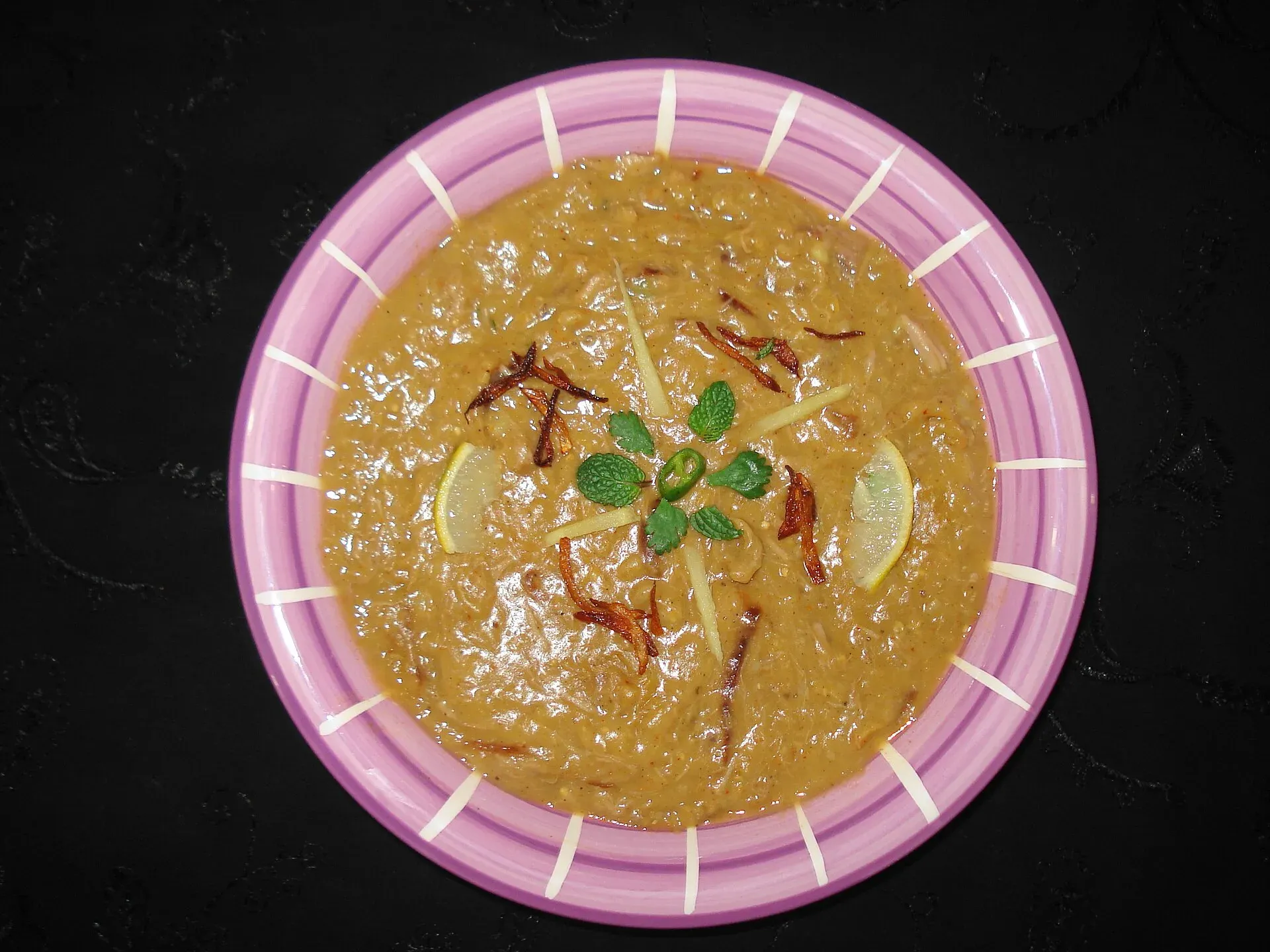
Photo: Miansari66, with thanks · Public domain (CC0) · via Wikimedia Commons · temporary stand-in photo

Haleem
A thick porridge of wheat, lentils and slow-cooked meat, beaten smooth and topped with fried onion, ginger and lemon. Popular all year and especially during Ramazan and Muharram.
What it is
Haleem is a thick, savoury porridge. Wheat or barley is cooked down with several kinds of lentils and meat until the mixture becomes smooth and stretchy. It is served in a bowl with toppings, and eaten with naan or a spoon.
How it is made
Cooks soak wheat (and often barley) and lentils, then cook them with beef, mutton or chicken and a spice blend for many hours. The pot is then beaten or churned with a heavy wooden paddle until the meat falls apart and everything blends into one thick mass. Karachi-style haleem is usually smooth and finely blended, and quite spicy. The classic toppings are fried onion, ginger strips, fresh coriander, green chilli, lemon and sometimes a sprinkle of chaat masala.
Where it comes from
Haleem is generally thought to be related to harees, an Arab wheat-and-meat porridge, and an early recipe for it is credited to a 10th-century Baghdad cookbook. It is believed to have reached South Asia between about the 12th and 16th centuries through traders and others, and cooks there added lentils, ghee and local spices. Where exactly the Pakistani version was refined is a matter of local pride and not settled.
Where you will eat it
- Karachi, where haleem sellers and restaurants are everywhere.
- Lahore and the larger cities of Punjab, in the old bazaars and at roadside stalls.
- Islamabad and Rawalpindi, in restaurants and during Ramazan at pop-up stalls.
Please avoid choosing from anyone's list of "best" places. Pick a stall with a steady crowd, where the pot is being stirred and refilled.
When people eat it
Haleem is sold year-round, but it is especially associated with Ramazan, when many families buy it for iftar, and with Muharram, when it is cooked in large pots and often shared with neighbours as a charitable offering (niyaz). It also appears at weddings and large gatherings.
Dietary notes
- Halal: normally made with halal meat. Ask if you need to be sure.
- Not vegetarian, but some places make a lentil-and-grain version without meat. Ask before you order.
- Gluten: contains wheat or barley.
- Spice level: medium to hot. Ask for it mild if you prefer.
- Rich: often finished with ghee or oil.
How to order and eat it
Order a bowl or by weight and ask for the toppings. Squeeze lemon over it, add ginger and fried onion, and mix before eating. Eat with a spoon, or tear naan with your right hand and scoop. If it is being shared at a religious gathering, accept a small portion politely, as it is offered as a gift.
Prices vary by place and season and are not given here.
Sources and last checked
Last checked Confidence medium3 sources2 still to check
- Last checked
- Method
- Desk research from published sources
- Confidence
- medium
- Checked by
- trek.pk research team
Researched from published sources; not yet checked on the ground by our team. Spot something out of date? Report a mistake.
Sources
- Haleem (English Wikipedia) · Wikipedia · checked
- For Haleem makers, the more you cook it, the better it tastes · The Express Tribune · checked
- Preparation of traditional haleem on eve of Ashura across Karachi · Dawn · checked
Still to be checked on the ground (2)
- Origin of the Pakistani style is not documented; the history above rests on Wikipedia, which itself flags it as thinly sourced
- Seasonal availability varies by city