

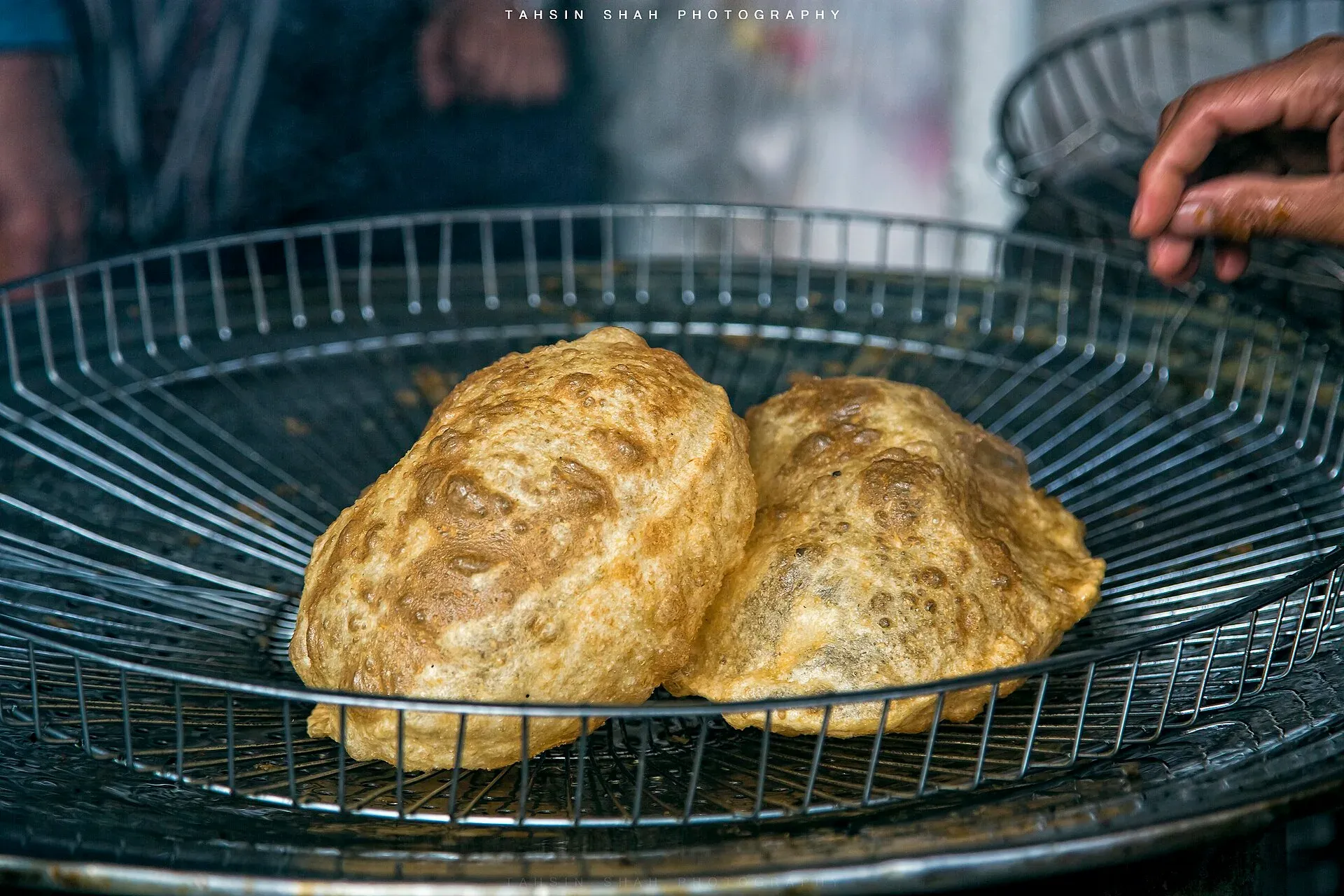
Photo: Tahsin Shah, with thanks · CC BY-SA 4.0 · via Wikimedia Commons · temporary stand-in photo

Halwa Puri
A big Pakistani breakfast platter of fried puri bread with sooji halwa, spiced chickpeas and a potato curry. Eaten above all on weekend mornings and at Eid, especially in Lahore.
What it is
Halwa puri is a breakfast platter that combines savoury and sweet. Puffed, deep-fried puri (a round wheat bread) comes with sooji halwa (a semolina dessert cooked with sugar and ghee), chana (spiced chickpeas) and often aloo ki bhujia (a dry, spiced potato curry). Pickle, onion and chutney sit alongside. It is rich, filling and meant for a slow weekend morning.
How it is made
Puri dough is rolled into small discs and fried in hot oil until the bread puffs like a ball. Some shops use plain flour, others use whole-wheat flour (atta). Halwa is semolina toasted in ghee and cooked with sugar and water until soft. It may be flavoured with cardamom and decorated with nuts. The chickpeas are simmered with onion, tomato and spices.
Where it comes from
Puri and halwa are old foods across South Asia, and the combined breakfast has been popular in the Punjab for generations. Lahore is its best-known home. Wikipedia captions describe it as a traditional food of the Walled City, and a 2018 Daily Times piece names a halwa puri shop there that says it has operated since 1880. There is no known reliable source for when the combination first became a set breakfast, so treat the history as local tradition.
Where you will eat it
- Lahore, especially the Walled City and the older bazaars, where breakfast shops open early.
- Rawalpindi, Islamabad, Faisalabad, Gujranwala and other Punjab cities.
- Karachi and other cities, where versions differ from shop to shop.
When people eat it
It is a weekend breakfast, most often on Sunday, and a classic for Eid mornings after prayers. On ordinary weekdays most people eat lighter foods, so many shops have their longest queues on Sundays and holidays. Plan to arrive early, because the best shops can run out by mid-morning.
Dietary notes
- Vegetarian: the standard platter is vegetarian. The chickpeas and potato are normally cooked in oil, and the halwa uses ghee, so it is not vegan. Ask if the chana is made with meat stock.
- Halal: the dish has no meat.
- Spice: the chickpeas and potatoes are medium. The halwa is sweet.
- Allergens: wheat, dairy and nuts. Puri is deep-fried.
- Heavy meal: many people eat it only occasionally.
How to order and eat it
Ask for "halwa puri" or "puri halwa". A plate usually comes with two or three puris and small portions of each side. Tear the puri by hand, scoop up chana or potato with it, and take a bite of halwa between mouthfuls. Pair it with sweet tea, lassi or a glass of milk. Eat while the puri is still warm and puffed. Many shops sell by the plate or by the piece; ask the price before you sit, as it varies.
Sources and last checked
Last checked Confidence medium3 sources2 still to check
- Last checked
- Method
- Desk research from published sources
- Confidence
- medium
- Checked by
- trek.pk research team
Researched from published sources; not yet checked on the ground by our team. Spot something out of date? Report a mistake.
Sources
- Lahore food diary: An excellent 'puri halwa' breakfast · Dawn · checked
- Special desi breakfast recommendations on Eid · Daily Times · checked
- Puri (food) (English Wikipedia) · Wikipedia · checked
Still to be checked on the ground (2)
- Opening hours of breakfast shops change; check locally
- History of the combined platter is tradition (no dated source found)