

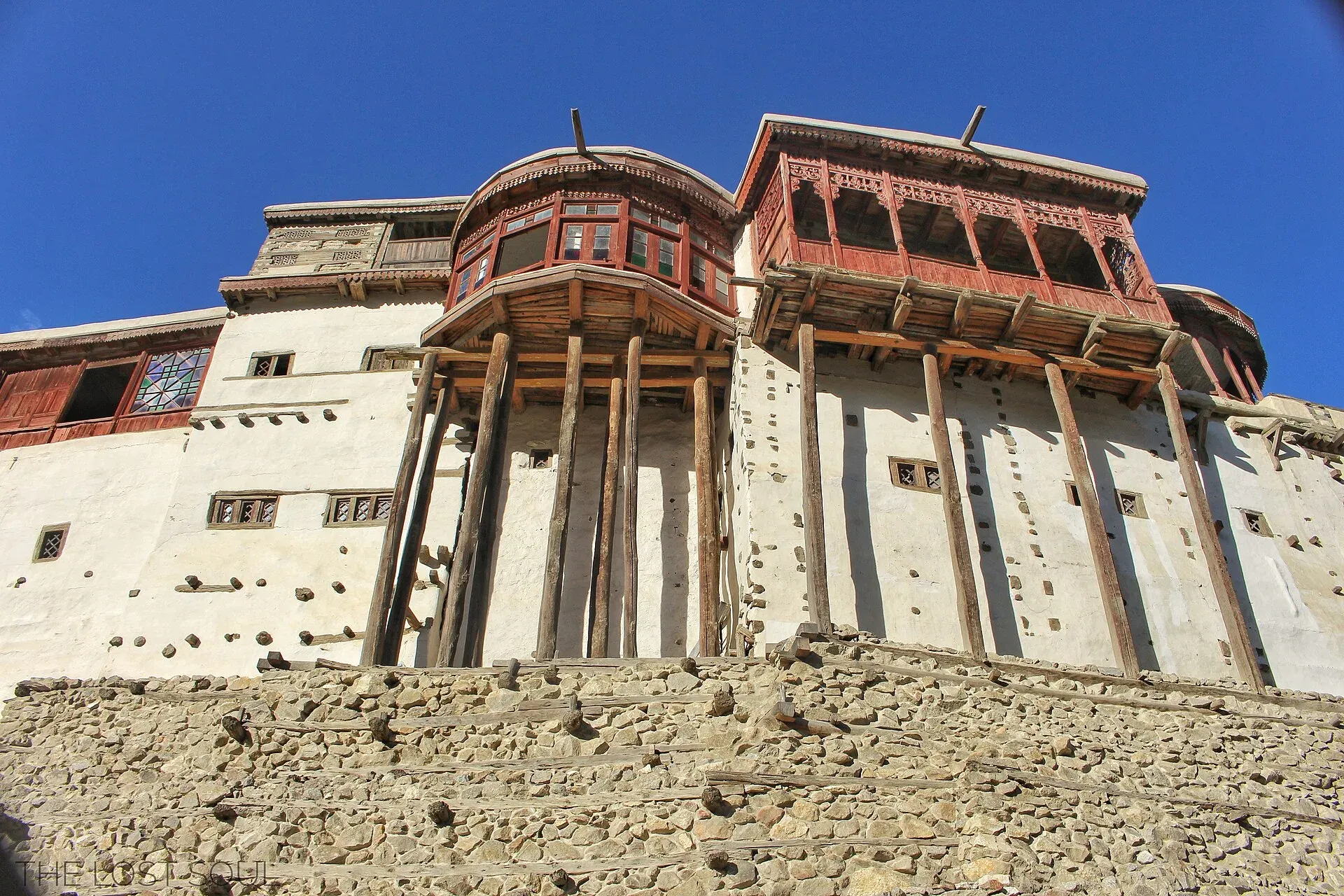
Photo: Fassifarooq, with thanks · CC BY-SA 4.0 · via Wikimedia Commons · temporary stand-in photo

Hunza Local Kitchens Trail
A slow food route through Karimabad, Altit, Aliabad, Gulmit and Passu: family kitchens, chapshuro, dawdo and apricot dishes. Includes best seasons, water tips and etiquette.
Overview
Hunza food is mild, simple and tied to the seasons. Wheat, barley, apricots and dairy have long been the base of village life, and cooks use apricot oil, butter and dried fruit rather than heavy chilli. This is a trail of small kitchens, not one street: you eat in family guesthouses and little restaurants as you travel up the valley, and the best meals are often the ones cooked at home.
The route
- Karimabad (Baltit): the main base. Small restaurants line the bazaar below Baltit Fort.
- Altit: an old village below Altit Fort.
- Aliabad: the main market town, good for lunch stops.
- Gulmit and Passu: further up in Gojal, along the Karakoram Highway.
You can do this over two or three days with a car or local taxi. Ask your host a day ahead if you want a home-cooked dish.
Dishes to try
- Chapshuro, a flat pie filled with minced meat and onion, eaten at breakfast or lunch.
- Dawdo, a thick noodle soup made with hand-cut noodles. See Hunza chapshuro and dawdo.
- Apricots fresh in summer and dried in autumn, plus dishes cooked with apricot oil.
- Butter, local cheese and fresh bread, which are common in village breakfasts.
Many dishes are made in small batches, so check what is available that day.
A sample day
Have a late breakfast of bread, butter and apricot jam at your guesthouse, then walk through Karimabad and Altit between meals. Eat chapshuro or dawdo for lunch, rest in the afternoon, and take an early dinner at a family kitchen. Mountain evenings cool quickly, so a hot soup suits the end of the day. Leave room to talk with your hosts: the stories about the food are part of the trail.
When to go
Spring (blossom, April) and early autumn (September to October, harvest and leaf colour) are the most comfortable seasons. Summer is the main tourist season, when most places are open. In winter, menus are limited and some guesthouses close.
Hygiene and water
- Fresh spring and glacier water is common, but its quality varies. Use sealed bottled water or boil, filter or treat water from taps and streams.
- Eat food that is hot and freshly cooked. Be careful with raw salads washed in untreated water.
- At altitude, drink plenty of water and eat lightly on the day you arrive.
- Carry any medicine you need, as pharmacies are limited in small villages.
Etiquette
- Hunza has a large Ismaili community and is generally open and welcoming. Dress modestly in villages.
- Ask before taking photographs of people, and accept offered tea politely.
- Eat with your right hand, and compliment the cook.
- Many guesthouses have set meal times. Let them know your plans, especially for vegetarian or special diets.
Good to know
For foreign visitors: the UK FCDO does not advise against travel to Gilgit-Baltistan in general (page updated 27 October 2026, checked 17 November 2026). However, it advises against all travel on the Karakoram Highway between Mansehra and Chilas, which is on the usual road route to Hunza. Check the live advice and local road reports before you travel. Prices vary and are not given here.
Sources and last checked
Last checked Confidence medium4 sources3 still to check
- Last checked
- Method
- Desk research from published sources
- Confidence
- medium
- Checked by
- trek.pk research team
Researched from published sources; not yet checked on the ground by our team. Spot something out of date? Report a mistake.
Sources
- Traditional Foods of Hunza · Hunza Guides Pakistan · checked
- Organic cuisine of Hunza · Pakistan Traveler · checked
- Gilgit-Baltistan Tourism · Tourism Department, Gilgit-Baltistan · checked
- Pakistan travel advice (warnings and insurance) · UK FCDO (GOV.UK) · checked
Still to be checked on the ground (3)
- Which guesthouses cook local dishes on request (Pakistan Traveler recommends local homestays in general but names none)
- Winter opening (no source found)
- Dish names and spellings vary by village and by source