

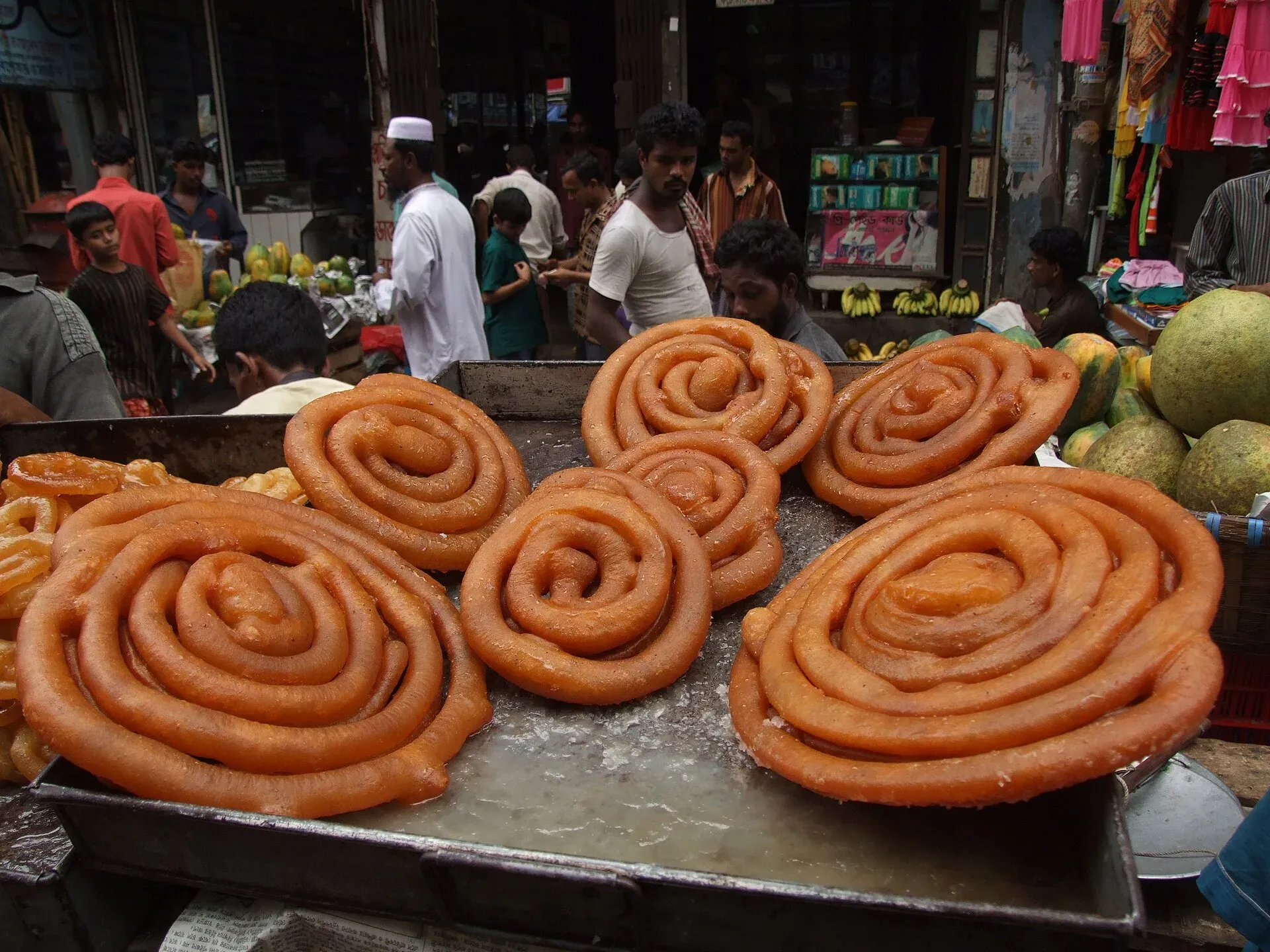
Photo: Md.Saiful Aziz Shamseer, with thanks · Public domain (CC0) · via Wikimedia Commons · temporary stand-in photo

Jalebi
A crisp, bright orange spiral of fried batter soaked in sugar syrup. Eaten warm, often with milk or at breakfast, and especially popular in winter.
What it is
Jalebi is a coil or pretzel shape of fried batter, soaked in sugar syrup. It is crisp at the edges, chewy inside and sticky to the touch. It is bright orange or golden and can be sold hot from the pan. You will find it across Pakistan and South Asia, and in the Middle East under related names.
How it is made
A batter of plain flour (maida) and water, sometimes with yogurt or a little yeast to ferment it, is piped or poured into hot oil in spirals. The spirals fry until crisp. They are then dropped straight into warm sugar syrup, often flavoured with saffron, cardamom or rose water. Cooks lift them out after a short soak and serve them while still warm. The skill lies in even spirals and syrup of the right thickness.
Where it comes from
Food historians trace jalebi to the Arab and Persian world. The earliest known recipe appears in a 10th-century Arabic cookbook by Ibn Sayyar al-Warraq, for a latticed fritter dipped in honey scented with rose water, musk and camphor. A 13th-century Baghdad cookbook describes a similar sweet. The name is traced to the Arabic zulabiya or the Persian zolbiya, and Sanskrit works from about 1450 to before 1600 mention the sweet, with one listing ingredients that match the modern recipe. Other origin claims exist, for example routes via Turkey and Tunisia or the musician Ziryab, so treat the full story as unsettled.
Where you will eat it
- Lahore, in the old city and in sweet shops that serve breakfast.
- Across Punjab, at roadside stalls and markets, where cooks fry jalebi in huge round pans.
- Karachi, Islamabad, Rawalpindi and other cities, in sweet shops and dessert stalls.
- Festival and wedding spots, where jalebi is often made fresh.
When people eat it
Jalebi is especially popular in winter, often eaten with warm milk at breakfast or as an evening tea snack. It is also served at weddings, Eid and other festivals, and sometimes with samosas. During Ramazan, you will see stalls making jalebi for iftar.
Dietary notes
- Vegetarian: typical jalebi has no meat. Frying oil or ghee varies, so ask if it is vegan or cooked in animal fat.
- Halal: the standard recipe is halal.
- Allergens: wheat, and dairy if yogurt or ghee is used. Some versions have nuts.
- Sugar: it is very sweet, so share a portion.
- Hygiene: choose a busy stall with fresh oil and syrup.
How to order and eat it
Ask for jalebi by weight, for example a quarter kilo, or by the piece. Ask for fresh and hot ("garam"), because it is best straight from the syrup. Eat with your fingers, but be careful, as the syrup is sticky and can be hot. Pair it with milk or tea. Wipe your hands with the tissue or napkin, and ask for a paper bag if you plan to carry it. Prices vary and are not given here.
Sources and last checked
Last checked Confidence medium1 source2 still to check
- Last checked
- Method
- Desk research from published sources
- Confidence
- medium
- Checked by
- trek.pk research team
Researched from published sources; not yet checked on the ground by our team. Spot something out of date? Report a mistake.
Sources
- Jalebi · Wikipedia · checked
Still to be checked on the ground (2)
- Origin claims beyond the 10th-century recipe are debated
- Local frying fats vary (no source opened; the page tells readers to ask)