

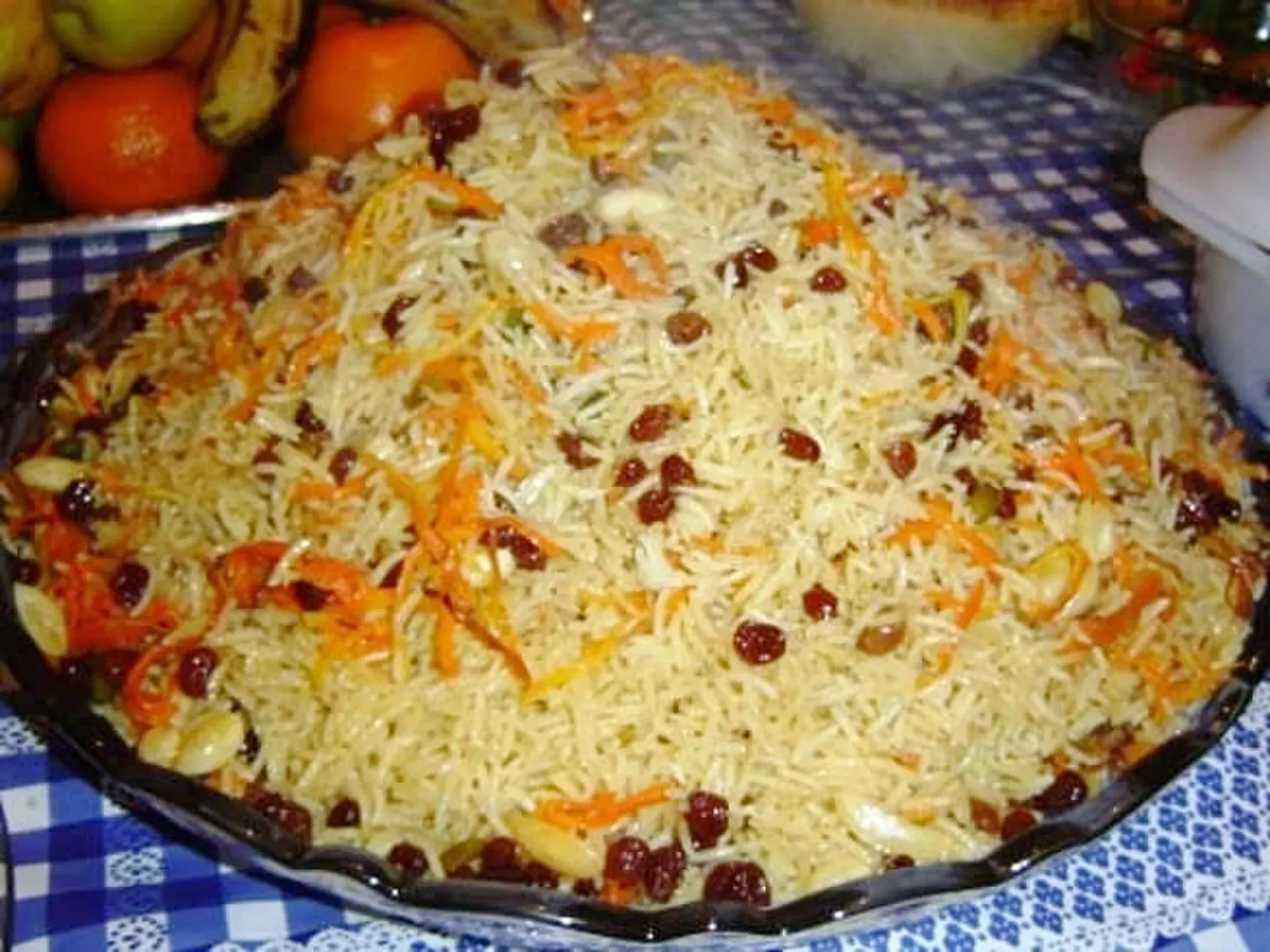
Photo: Jost Wagner, with thanks · CC BY-SA 4.0 · via Wikimedia Commons · temporary stand-in photo

Kabuli Pulao
A rice dish topped with sweet carrots, raisins and nuts over tender meat. Afghan in origin and a staple of Pashtun hospitality in Peshawar and across Pakistan.
What it is
Kabuli pulao (also written palau or qabili) is a festive rice dish. Long-grain rice is cooked in a meat stock until each grain is separate and slightly golden. It is served with a tender piece of lamb or mutton on the bone, and topped with thin strips of caramelised carrot and sweet raisins, often with sliced almonds or pistachios.
How it is made
The meat is first simmered with onion and whole spices such as cumin and cardamom. The rice is soaked, then cooked in the stock so it absorbs the flavour. The topping is made separately: carrot strips are fried with a little sugar until soft and glossy, then mixed with raisins. Everything is layered on a large platter, with the meat set in the rice and the sweet topping spread over it. Some cooks add saffron or a few drops of rose water.
Where it comes from
The name suggests Kabul, but food writers note that pulao traditions across Central Asia and Afghanistan are older and widespread, and one account says this style may have come from northern Afghanistan near the Uzbek border. The earliest written recipes for a qabili pilaf are recorded in a 1521 Persian cookbook by Ali Bavarchi, according to Encyclopaedia Iranica. The dish reached Pakistan through the long movement of people and trade between Afghanistan and Peshawar, and it grew more familiar after large numbers of Afghan refugees arrived from 1979, most of them settling in Khyber Pakhtunkhwa, including around Peshawar. Treat the details as tradition and shared regional heritage rather than one clear origin.
Where you will eat it
- Peshawar, in Afghan-style restaurants and pulao houses, where it is a regular lunch.
- Rawalpindi and Islamabad, which have many Afghan and Pashtun restaurants.
- Quetta and other Pashtun areas, where it is served at feasts.
- Karachi and Lahore, in restaurants run by families from the north-west.
When people eat it
It is a main-meal dish, most often at lunch, and appears at weddings, large family gatherings, Eid meals and when guests visit. It is not a breakfast or street snack.
Dietary notes
- Halal: normally made with halal meat.
- Vegetarian: the traditional dish uses meat and stock. A rice, carrot and raisin plate is sometimes available, but ask how the rice is cooked.
- Spice: mild. It is sweet and savoury, not hot. Chilli and chutney are served on the side.
- Allergens: nuts and dried fruit are common.
How to order and eat it
It usually comes as a portion on a plate, or on a shared platter for a group. Many places serve a half or full tray for tables of three or more. Eat with a spoon, or with the fingers of your right hand if others do. Take from the area closest to you. A salad of onion and tomato, yogurt and a side of green tea are the usual companions. If you are invited to a home, accept a second helping politely; leaving a little on your plate is fine.
Prices vary and are not given here.
Before you travel
Ask the district administration or local police about current conditions before you go. For foreign visitors: the UK FCDO currently advises against all travel to Peshawar and several other Khyber Pakhtunkhwa districts (page updated 27 October 2026). Read the live advice and your own government's guidance before planning any trip there. Many of these dishes are also cooked in Islamabad, Rawalpindi and Lahore.
Sources and last checked
Last checked Confidence medium2 sources1 still to check
- Last checked
- Method
- Desk research from published sources
- Confidence
- medium
- Checked by
- trek.pk research team
Researched from published sources; not yet checked on the ground by our team. Spot something out of date? Report a mistake.
Sources
- Kabuli pulao (English Wikipedia) · Wikipedia · checked
- Afghans in Pakistan · Wikipedia · checked
Still to be checked on the ground (1)
- History of Kabuli pulao in Peshawar is general tradition (Wikipedia only says the dish spread to Pakistan)