

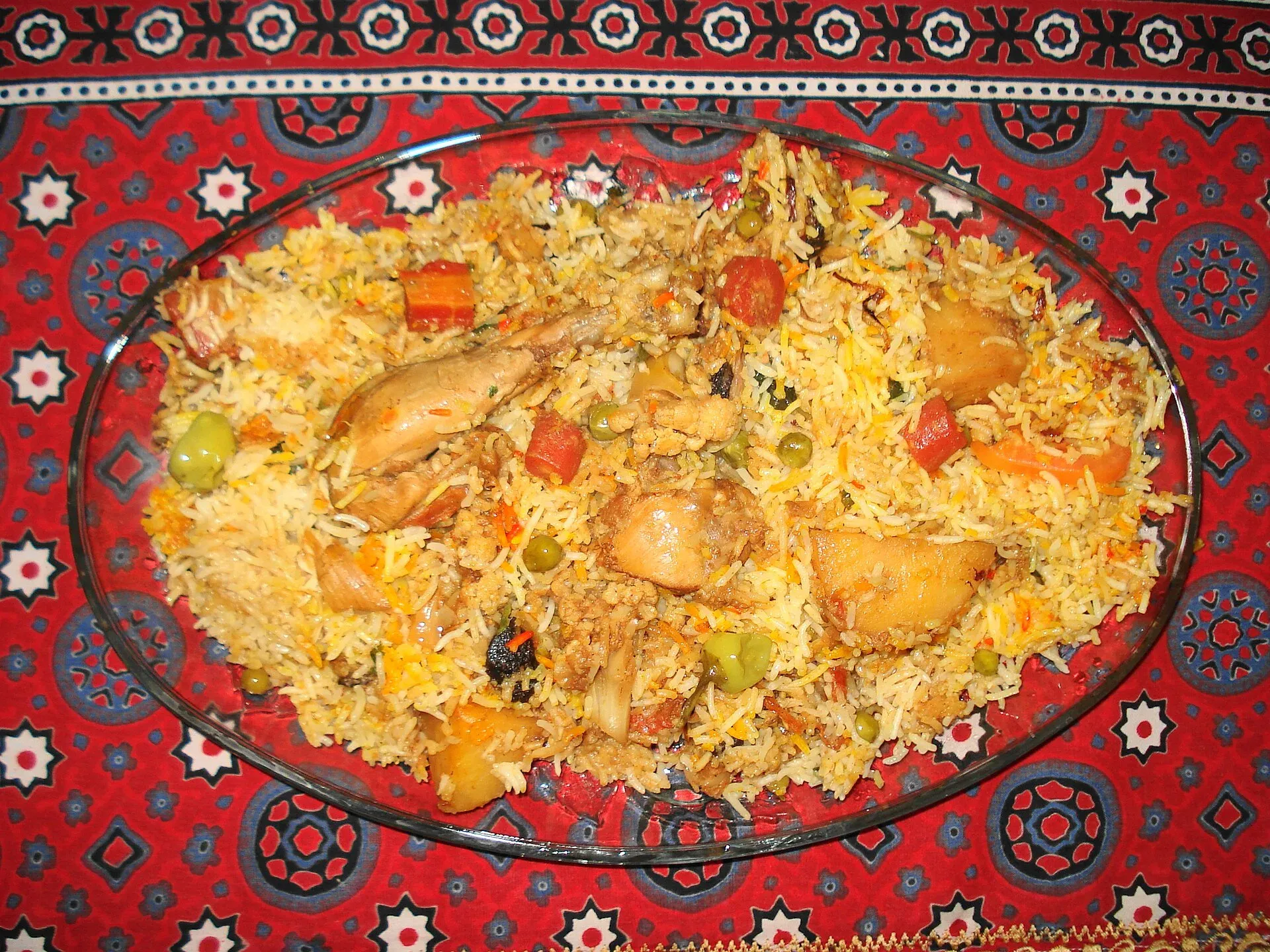
Photo: Miansari66, with thanks · Public domain (CC0) · via Wikimedia Commons · temporary stand-in photo

Karachi Biryani
A spicy, tangy rice and meat dish, layered with yogurt, tomato and often potato and dried plum. The standard biryani of Karachi, eaten at lunch, celebrations and late at night.
What it is
Karachi biryani is a dish of long-grain basmati rice and spiced meat, layered in a pot and cooked on a low flame. Compared with some other regional styles, it is known for being tangy and quite spicy. Ask for "Karachi biryani" in Pakistan and most people will picture a deep orange-and-white rice dish with a piece of meat and a potato in it.
How it is made
The meat is marinated in yogurt, tomato, fried onion, ginger, garlic and spices, then layered between parboiled rice. Saffron or food colour is sprinkled on top, and the pot is sealed and cooked on dum (a gentle steam). Chicken and beef are common, mutton is used at weddings, and a fish or prawn version exists on the coast. Potatoes are a typical addition, and some cooks add dried plums (aloo bukhara); sources mention them mainly for Sindhi-style biryani. It is served with raita and salad.
Where it comes from
Biryani as a dish is much older than Pakistan and has no single agreed origin. Writers often point to the Mughal courts of Delhi and Lucknow, though accounts differ. Karachi's style grew from the many communities who settled in the city, including Urdu-speaking, Memon, Bohri and Sindhi families, each adding their own touches. Some brand stories link the "Bombay" and "Sindhi" biryani masala blends to Karachi, but that is commercial history, not documented food history, so treat it as lore.
Where you will eat it
- Karachi, in countless restaurants and street stalls.
- Lahore, Islamabad and Rawalpindi, where Karachi-style biryani is a popular menu item.
- Hyderabad and the rest of Sindh, with local variations.
Please avoid choosing from lists of "best" biryani.
When people eat it
Biryani is a lunch dish and a celebration food, served at weddings, Eid and gatherings. In Karachi it is also a late-evening meal. Many families cook it on Sundays.
Dietary notes
- Halal: normally made with halal meat.
- Not vegetarian in the usual form; a vegetable biryani exists, but it is not the classic dish.
- Spice level: medium to hot. Ask for less spice or extra raita.
- Dairy: raita and the marinade contain yogurt.
- Gluten: none in the dish itself.
How to order and eat it
Order a plate and say whether you want chicken, beef or mutton. Rice comes with the meat buried in it, and raita on the side. Eat with a spoon and fork, or by hand with your right hand if you are comfortable. Mix the raita through the rice to cool the spice.
Prices vary by place and season and are not given here.
Sources and last checked
Last checked Confidence medium3 sources3 still to check
- Last checked
- Method
- Desk research from published sources
- Confidence
- medium
- Checked by
- trek.pk research team
Researched from published sources; not yet checked on the ground by our team. Spot something out of date? Report a mistake.
Sources
- Sindhi biryani (English Wikipedia) · Wikipedia · checked
- Biryani stories: is biryani the national dish of Pakistan? · Global Voices · checked
- Dawn food writing on Karachi's biryani variants · Dawn · checked
Still to be checked on the ground (3)
- No single agreed definition of Karachi style (Dawn, Oct 2019, and Global Voices do not define one)
- Whether dried plums are common in everyday Karachi biryani (Wikipedia: 'prunes might be added' to Sindhi biryani; Global Voices cites aloo bukhara for Sindhi biryani)
- Photo gap: no suitable Karachi biryani photo found