

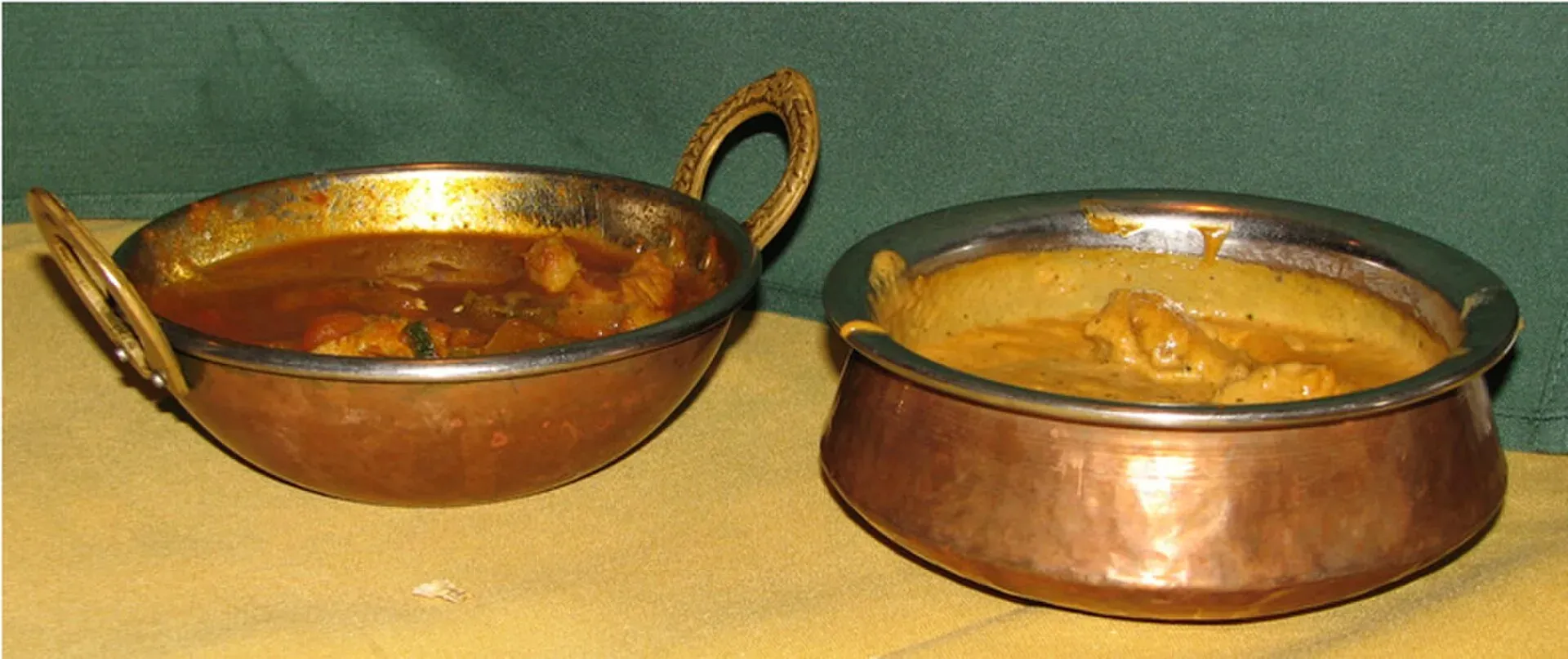
Photo: FiveRings, with thanks · CC BY 3.0 · via Wikimedia Commons · temporary stand-in photo

Karahi
A meat or chicken dish cooked in a wide, deep pan called a karahi, with tomato, ginger, garlic and green chilli. A restaurant favourite across Pakistan, linked with Lahore and the Pashtun north-west.
What it is
Karahi is both a pan and a dish. The pan is a thick, deep, round-bottomed cooking pot, similar to a wok but with steeper sides, and the name comes from an old Sanskrit word for a similar vessel. The dish named after it is a stew of chicken, mutton or beef, cooked in the same pan and often brought to the table in it.
How it is made
Wikipedia names ginger, garlic, tomatoes, green chilli and coriander as the key flavours, and says chicken karahi is made without onions in the base and takes about 30 to 50 minutes. Cooks and restaurants differ on spice, yogurt and other additions, and many cook each order from scratch.
Where it comes from
The pan is old and used all over South Asia and Afghanistan, and meat stews cooked in it have no single known origin. Wikipedia says chicken karahi may come from the Punjab region and is famous in Lahore, and links the lamb or goat version (gosht karahi) with the former North-West Frontier Province, now Khyber Pakhtunkhwa. Food writers do not agree on a precise history, so treat these links as tradition.
Where you will eat it
- Peshawar, where karahi houses cook dishes beside the road.
- Lahore, in the Walled City and in newer food streets.
- Islamabad and Rawalpindi, in highway restaurants and city centre dining.
- Karachi, in many restaurants.
Please avoid choosing from lists of "best" karahi. A busy place with fast turnover is a good sign.
When people eat it
Karahi is a lunch and dinner dish, especially in the cooler months. It is a favourite for family dining out and for eating after travel. Cooks often prepare it for Eid and special occasions.
Dietary notes
- Halal: normally made with halal meat.
- Not vegetarian in the traditional form, though many restaurants now offer paneer or vegetable karahi, which are modern additions.
- Spice level: medium to hot. Ask for it halka (mild).
- Gluten: none in the dish, but it is eaten with naan.
- Fat: can be oily.
How to order and eat it
Order by weight or by the "half" or "full" portion. Chicken and mutton karahi are standard, and mutton takes longer. Tell the waiter how spicy you want it. It arrives in the small pan and is shared. Tear naan with your right hand and use it to scoop meat and gravy. Fresh ginger and lemon come on the side.
Prices vary by place and season and are not given here.
Sources and last checked
Last checked Confidence medium2 sources2 still to check
- Last checked
- Method
- Desk research from published sources
- Confidence
- medium
- Checked by
- trek.pk research team
Researched from published sources; not yet checked on the ground by our team. Spot something out of date? Report a mistake.
Sources
- Karahi (English Wikipedia) · Wikipedia · checked
- Chicken karahi · Wikipedia · checked
Still to be checked on the ground (2)
- Differences between Peshawari and Lahori karahi (neither Wikipedia page describes them; page no longer claims specifics)
- No food photo from Pakistan found