

Photo: Miansari66, with thanks · Public domain (CC0) · via Wikimedia Commons · temporary stand-in photo

Kashmiri Noon Chai
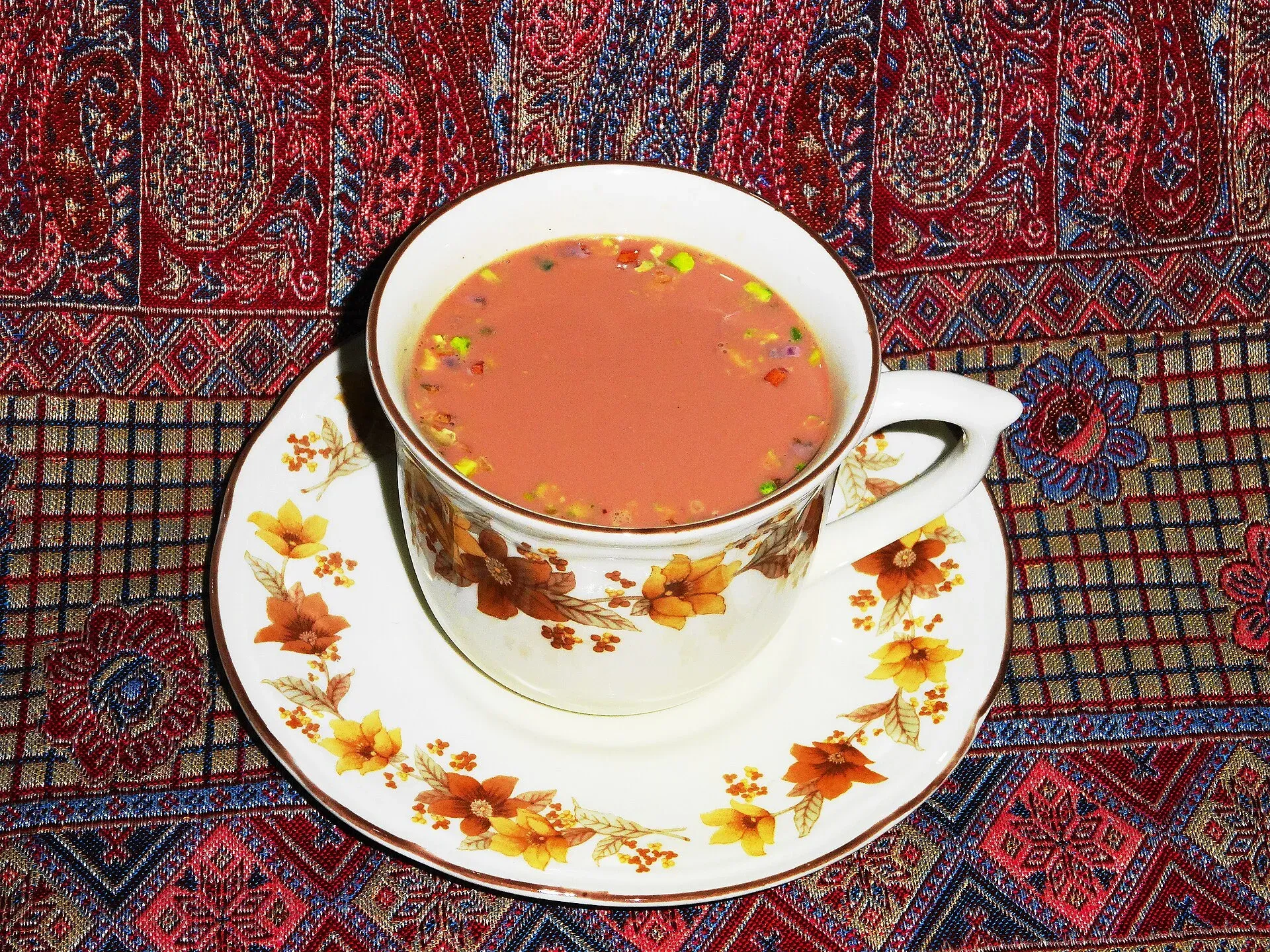
A pink, salty milk tea from Kashmir, brewed from green tea leaves with baking soda. In Pakistan it is also sold sweetened, often with nuts.
What it is
Noon chai (also called sheer chai, pink tea or Kashmiri tea) is a salted milk tea with a rose-pink colour. It is a traditional drink of Kashmir, and is also sold at tea stalls and restaurants in Pakistan.
How it is made
The drink starts with gunpowder green tea leaves, boiled for a long time with a pinch of baking soda. The baking soda deepens the colour to a rich red-brown. Cold water or ice is added to settle the brew, then milk is stirred in. The tea is poured back and forth with a ladle to build up a light froth. Salt is added. Traditionally it is made in a samovar and has no sugar.
The pink colour comes from a reaction between the tea leaves and the baking soda. When milk is added, it turns pink.
Where it comes from
Stories link noon chai to Silk Road trade and say salt was added to help travellers in high, dry places. Other accounts suggest the practice came to the Kashmir Valley from Ladakh, where salted teas are older, with milk replacing yak butter. These are explanations given by food writers, not proven history, so treat them as tradition.
Where you will drink it
- Tea stalls and restaurants in parts of Pakistan, often served with sugar and nuts.
- Kashmiri homes, where it is served with breads such as kulcha or girda.
Wikipedia notes that in Pakistan it is often served with sugar and nuts, and that newer commercial versions may add sweetener or leave out the salt.
When people drink it
Noon chai is popularly drunk many times a day in Kashmir. Wikipedia also says Bakarwal herders prepare it as they move between summer and winter pastures. There is no known source on when it is drunk in Pakistani cities.
Dietary notes
- Halal and vegetarian: it contains milk and tea, no meat.
- Caffeine: green tea leaves and milk, so it is caffeinated.
- Salt: traditional noon chai is salty, so ask if it is salted or sweet before you order.
- Allergens: dairy, and sometimes nuts.
- Sugar: the sweet versions can be very sugary.
How to order and drink it
Ask for "noon chai" (also called pink tea or gulabi chai) and say "namkeen" (salted) or "meetha" (sweet). It comes in a cup or a small glass. Sip while hot. If a host offers it, accept, as hospitality is important. Drink it with bread, a biscuit or a pastry if you like. Prices vary and are not given here.
Ask the district administration or local police about current conditions before you go. For foreign visitors: the UK FCDO advises against all but essential travel to Azad Jammu and Kashmir, and against all travel within 10 miles of the Line of Control (page updated 27 October 2026, checked 17 November 2026). Read the live advice before planning any trip. This page describes the food tradition and is not travel advice for the area. Kashmiri dishes can also be found in restaurants elsewhere in Pakistan.
Sources and last checked
Last checked Confidence medium1 source3 still to check
- Last checked
- Method
- Desk research from published sources
- Confidence
- medium
- Checked by
- trek.pk research team
Researched from published sources; not yet checked on the ground by our team. Spot something out of date? Report a mistake.
Sources
- Noon chai (English Wikipedia) · Wikipedia · checked
Still to be checked on the ground (3)
- Silk Road and Ladakh origin stories are tradition (Wikipedia presents them as origin stories)
- Typical Pakistani sweet versions vary by seller
- When and where noon chai is drunk in Pakistani cities: no source found