

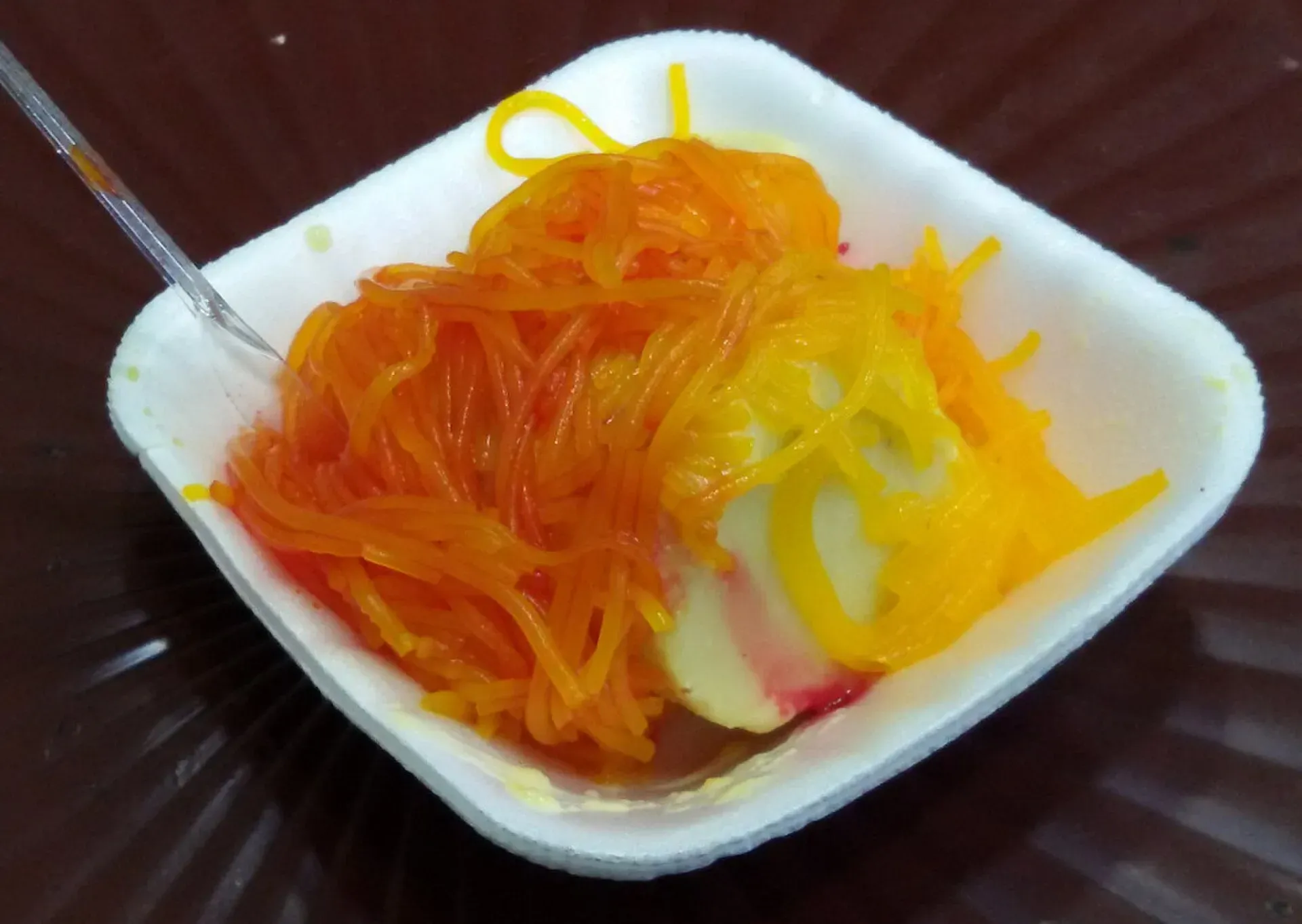
Photo: Sumit Surai, with thanks · CC BY-SA 4.0 · via Wikimedia Commons · temporary stand-in photo

Kulfi
A dense, creamy frozen dessert made from slowly reduced milk. Sold from carts and shops across Pakistan, often with falooda in summer.
What it is
Kulfi is a frozen milk dessert that is not churned like ice cream. It is denser, creamier and melts more slowly. The classic flavours are malai (plain milk), pistachio, almond, cardamom, mango and saffron. It is a common sweet across the Indian subcontinent, and in Pakistan it is sold at street stalls and sweet shops, especially in the hotter months.
How it is made
Milk is simmered for a long time with sugar until it thickens and turns slightly golden. Cooks flavour it with cardamom, nuts or fruit, then pour it into small moulds, often metal cones or pots. The moulds are sealed and set in a matka (clay pot) packed with ice and salt, which freezes the kulfi without ice crystals. Before serving, the moulds are left out for a short time so the kulfi can be released, and it is often cut into slices.
Where it comes from
Food histories link kulfi with the Mughal court in 16th-century Delhi, and the name comes from the Persian word qulfi, meaning a covered cup. Some historians suggest the idea may have started in cooler places such as Persia or Samarkand before the Mughals developed it. These claims come from general food history and are best treated as tradition. Today kulfi belongs to the whole Indian subcontinent.
Where you will eat it
There is no known reliable source on which streets or shops are best, so we do not name any. Look for carts and dessert shops in the busier markets of any city, and avoid choosing from lists of "best" places.
Kulfi is sold by the piece or on a stick, and many stalls serve kulfi falooda, where sliced kulfi is served over thin vermicelli noodles, rose syrup and basil seeds.
When people eat it
Kulfi is a summer favourite, but you will find it all year. It is usually eaten as an after-dinner dessert or an evening treat.
Dietary notes
- Vegetarian: it uses milk and sugar. Some makers may add stabilisers or gelatine; ask if this matters to you.
- Halal: the standard recipe is halal.
- Allergens: dairy and nuts are common. Ask about pistachio and almond in particular.
- Sugar: it is a sweet dessert.
- Hygiene: choose a busy stall with a clean cart and sealed moulds, particularly in summer.
How to order and eat it
Point to the flavour, or say "malai kulfi", "pista kulfi" or "kulfi falooda". It is usually served on a stick, on a plate or in a bowl. Eat it quickly, as it melts fast in the heat. Use a spoon for the plate version. Pay by the piece or per plate, and ask the price first, as it varies by city and season.
Sources and last checked
Last checked Confidence medium1 source2 still to check
- Last checked
- Method
- Desk research from published sources
- Confidence
- medium
- Checked by
- trek.pk research team
Researched from published sources; not yet checked on the ground by our team. Spot something out of date? Report a mistake.
Sources
- Kulfi (English Wikipedia) · Wikipedia · checked
Still to be checked on the ground (2)
- The Mughal-era origin is a general history claim from food historians, not a Pakistani source
- Whether stalls use gelatine or other additives varies and is not documented