

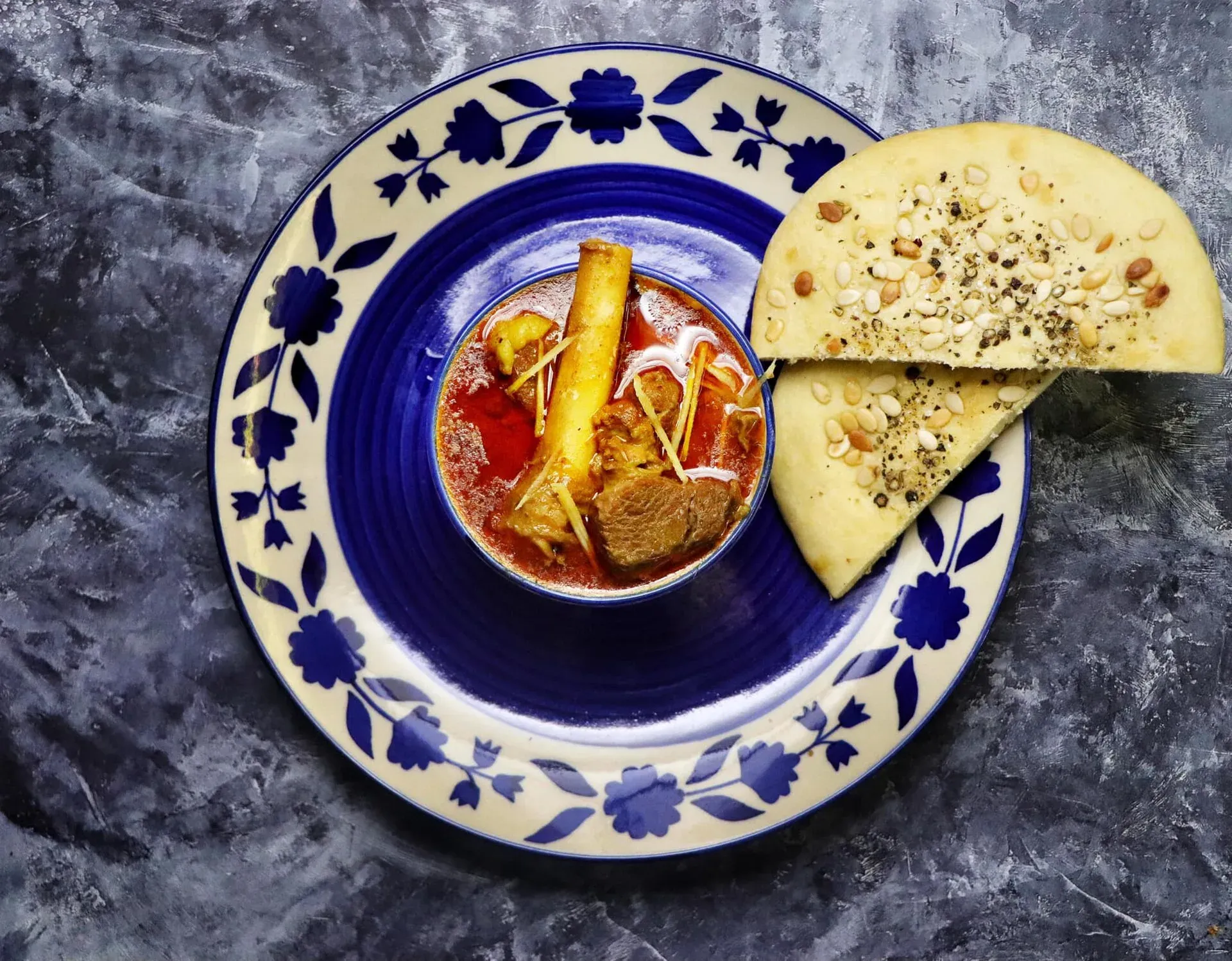
Photo: Nilanjan Sasmal, with thanks · CC BY-SA 4.0 · via Wikimedia Commons · temporary stand-in photo

Nihari
A slow-cooked beef or mutton stew with a thick, spiced gravy, traditionally eaten for breakfast after the dawn prayer. Closely linked with Karachi and Lahore, and eaten with naan.
What it is
Nihari is a rich, slow-cooked meat stew with a thick, glossy gravy. It is usually made with beef or mutton shank and bone marrow, and served very hot with naan. The name is generally traced to the Arabic word nahar, meaning "morning", because it was traditionally a breakfast dish.
How it is made
The meat is simmered for many hours, often overnight, with ginger, garlic, onion, ghee or oil and a blend of ground spices. Long pepper (pippali) is a classic ingredient, Some restaurants keep a pot going and add a portion of the previous day's stew to the next day's pot, a starter known as taar. Nihari is garnished at the table with ginger strips, fresh coriander, green chilli and lemon.
Where it comes from
Food writers link nihari to the Mughal-era cooking of Delhi and Lucknow. One account places its origin in the royal kitchens of Lucknow in the late 18th century, and another in Delhi in the medieval period. Accounts differ, so treat them as tradition rather than settled history. After 1947, Urdu-speaking families who settled in Karachi and other cities brought it with them, and it spread across Pakistan from there.
Where you will eat it
- Karachi, where nihari houses are a mainstay of the city's food culture.
- Lahore, including the Walled City and its food streets.
- Rawalpindi and Islamabad, in bigger restaurants and old bazaars.
Please avoid choosing a place from anyone's list of "best" nihari. A busy shop that serves at the right time, with a steady stream of customers, is usually a good sign.
When people eat it
Traditionally nihari is a breakfast dish eaten after the dawn prayer, and many shops sell out by late morning. It is now also served at lunch and dinner. It is a winter favourite and a weekend treat, and it is often cooked for Eid and family gatherings.
Dietary notes
- Halal: normally made with halal meat in Pakistan.
- Not vegetarian. There is no traditional meat-free version.
- Heavy: it is rich and fatty, so it can feel filling for a first meal of the day.
- Spice level: medium to hot. Ask for less chilli, or add lemon and ginger to balance it.
- Gluten: the naan contains wheat. Ask whether the gravy is thickened with flour.
How to order and eat it
Order a plate of nihari with naan or khamiri roti (a softer leavened bread). Ask for "nalli" if you want bone marrow. Tear the bread with your right hand and use it to scoop up the gravy. Squeeze lemon and add ginger and chilli to taste. Many people drink hot tea afterwards.
Prices vary by place and season and are not given here.
Sources and last checked
Last checked Confidence medium1 source1 still to check
- Last checked
- Method
- Desk research from published sources
- Confidence
- medium
- Checked by
- trek.pk research team
Researched from published sources; not yet checked on the ground by our team. Spot something out of date? Report a mistake.
Sources
- Nihari (English Wikipedia) · Wikipedia · checked
Still to be checked on the ground (1)
- Serving hours vary by shop (some serve only at breakfast, some all day): check locally