

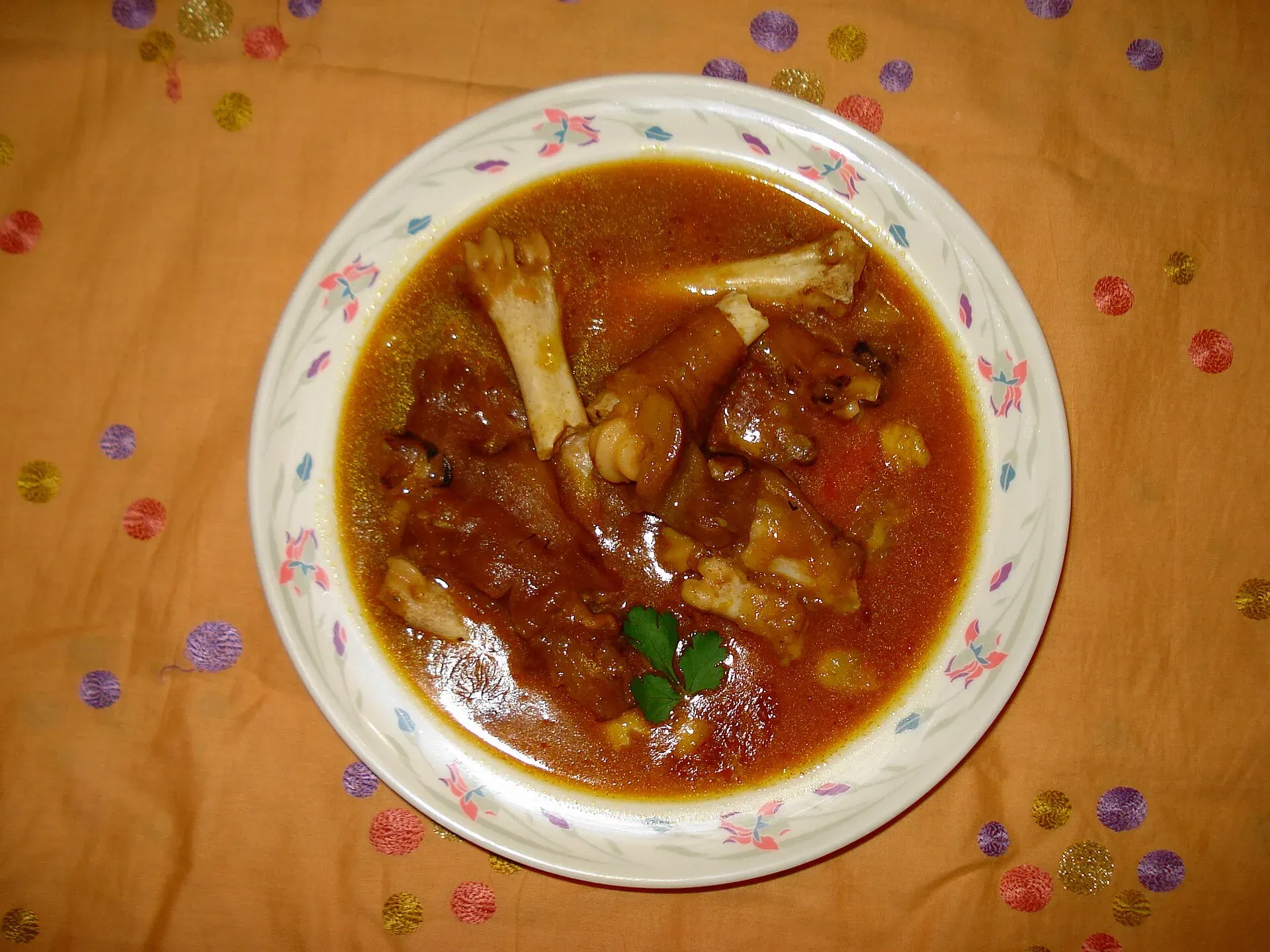
Photo: Miansari66, with thanks · Public domain (CC0) · via Wikimedia Commons · temporary stand-in photo

Paye
A slow-cooked curry of trotters, simmered for hours until the gravy turns rich and sticky. A winter breakfast and weekend dish, especially in Lahore, eaten with naan.
What it is
Paye (also written paya) means "feet" in Urdu. The dish is a spiced stew made from the trotters of cow, buffalo, goat or sheep, cooked for hours until the gravy is thick and sticky and the meat is soft enough to come off the bone. It is a classic winter breakfast.
How it is made
The trotters are cleaned thoroughly and boiled to remove the scum. They are then cooked slowly with onion, garlic, ginger, ghee or oil and a mix of ground spices. Traditionally the pot was cooked slowly over coals overnight, and pressure cookers are now common. The result is a gravy rich in natural gelatin. It is served with fresh ginger, coriander and sliced lemon. A related dish, siri paye, uses the head as well and is considered a delicacy.
Where it comes from
Wikipedia says paya came from a blend of South Asian and Central Asian cooking, was adapted by cooks in Delhi, Hyderabad and Lucknow, and became popular in Pakistan. No source names a single place or date of origin, so treat claims about this as tradition.
Where you will eat it
- Lahore, in old-city food streets and breakfast shops.
- Karachi, in nihari and paye shops.
- Rawalpindi and Islamabad, at traditional breakfast restaurants.
Please avoid choosing a place from anyone's list of "best" paye. A busy, early-morning shop is usually fresh.
When people eat it
Paye is a winter dish and a weekend breakfast. It is often served at family gatherings and is cooked for special guests. Many shops sell out by mid-morning.
Dietary notes
- Halal: normally made with halal meat.
- Not vegetarian. There is no meat-free version.
- Very rich: high in fat and gelatin, so it may be heavy for some people.
- Spice level: medium to hot, but you can ask for less chilli.
- Gluten: contains wheat only if served with naan or thickened.
- Texture: the soft, sticky texture surprises some first-time visitors.
How to order and eat it
Order paye with naan, and ask for the garnish plate. Squeeze lemon on top and add ginger and chilli. Tear naan with your right hand and use it to pick up the soft meat, as the bones are small and the gravy is thick. Be careful of small bones and eat slowly.
Prices vary by place and season and are not given here.
Sources and last checked
Last checked Confidence medium1 source2 still to check
- Last checked
- Method
- Desk research from published sources
- Confidence
- medium
- Checked by
- trek.pk research team
Researched from published sources; not yet checked on the ground by our team. Spot something out of date? Report a mistake.
Sources
- Paya (food) (English Wikipedia) · Wikipedia · checked
Still to be checked on the ground (2)
- No source names a single place of origin (Wikipedia: Delhi, Hyderabad and Lucknow adaptations)
- Typical serving times vary by shop (Wikipedia says usually winter breakfast; opening times not sourced)