

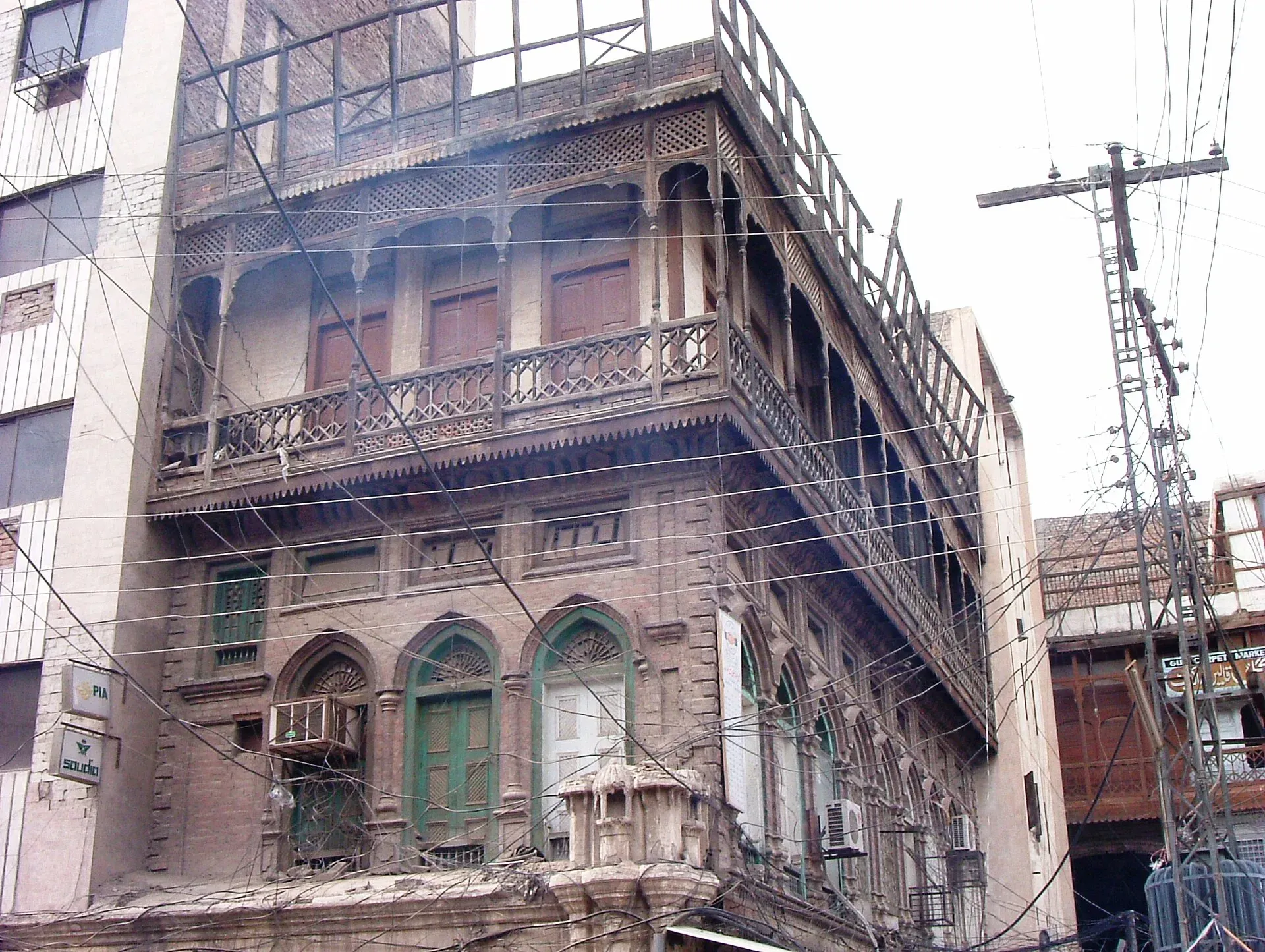
Photo: franek2, with thanks · CC BY-SA 3.0 · via Wikimedia Commons · temporary stand-in photo

Peshawari Namkeen Gosht
Lamb or mutton cooked in a wok with little more than salt, its own fat and a few simple aromatics. A plain, meaty dish tied to Peshawar's Namak Mandi.
What it is
Namkeen gosht means "salty meat". It is one of the plainest and most meat-forward dishes in Pakistani cooking. Young lamb or mutton, often on the bone, is cooked in a karahi (wok) with salt, its own fat and very few extras. The aim is to taste the meat, not a thick masala.
How it is made
Versions differ from cook to cook. The simplest style, which cooks in Peshawar describe, uses fresh meat, animal fat, salt and sometimes black pepper, fried on high heat until the meat releases its juices and turns tender. Many cooks add tomatoes, green chillies and ginger, and one published recipe adds a little crushed black pepper and chilli flakes. There is usually no onion paste or heavy cream, and little or no turmeric. A related roadside style is grilled meat dusted only with salt. The dish is finished quickly, often within the hour, which is why it depends on very fresh meat.
Where it comes from
The dish is tied to Peshawar, and in particular to Namak Mandi, the "salt market" area known for lamb and mutton karahi and barbecue. Some local writers link the name to a salt trade, but a 2014 Express Tribune article says Namak Mandi's name has nothing to do with salt. There is no known scholarly source for either story, and some recipe sites claim Mughal-era roots without evidence, so treat the history as local tradition. Similar plain karahi styles are also cooked in Quetta and other Pashtun areas.
Where you will eat it
- Peshawar, especially in and around Namak Mandi, and on the road toward Bara, where Shinwari-style lamb karahi is also served.
- Pashtun food streets in Rawalpindi, Islamabad and Lahore, where restaurants offer "Peshawari karahi".
- Highway stops across Khyber Pakhtunkhwa and the Punjab, where it is often cooked to order.
Choose a restaurant that shows the meat before cooking, and avoid any place you cannot see the kitchen of.
When people eat it
It is a dinner and special-occasion dish, popular in cooler months. It is served at gatherings and for guests, and it is a common choice at Eid al-Adha when fresh meat is available. During Ramazan it appears at iftar and late-night meals in food streets.
Dietary notes
- Halal: normally cooked with halal meat.
- Not vegetarian, and not suitable for anyone avoiding red meat or animal fat.
- Spice: mild to medium. The heat usually comes from fresh green chillies and black pepper, not chilli powder.
- Rich: the dish is fatty by design.
How to order and eat it
Ask for it by weight (half a kilo is a common order for two or three people) and say if you prefer lamb to mutton. Share from the middle of the table. Eat with fresh naan or a plain roti, torn by hand, with onion, lemon and green chilli on the side. Use your right hand, and take food from the part of the dish nearest to you. Bones are part of the dish; place them on the plate edge. Leave room for green tea afterwards.
Prices change often and are not given here.
Before you travel
Ask the district administration or local police about current conditions before you go. For foreign visitors: the UK FCDO currently advises against all travel to Peshawar and several other Khyber Pakhtunkhwa districts (page updated 27 October 2026). Read the live advice and your own government's guidance before planning any trip there. Many of these dishes are also cooked in Islamabad, Rawalpindi and Lahore.
Sources and last checked
Last checked Confidence medium3 sources2 still to check
- Last checked
- Method
- Desk research from published sources
- Confidence
- medium
- Checked by
- trek.pk research team
Researched from published sources; not yet checked on the ground by our team. Spot something out of date? Report a mistake.
Sources
- Namkeen Mutton Karhai: A reminder of authentic Peshawari food · The Express Tribune · checked
- Namak Mandi: a foodies' dreamland for inimitable taste of lamb karahi, BBQ, tikka · The News International · checked
- Peshawar's lamb cravings defy soaring prices · The Express Tribune · checked
Still to be checked on the ground (2)
- Origin and the salt-trade explanation are local tradition and are contradicted by the Express Tribune (2014), which says Namak Mandi's name has nothing to do with salt
- Recipes vary; confirm style at the restaurant (The News article returned 403 and could not be re-read)