

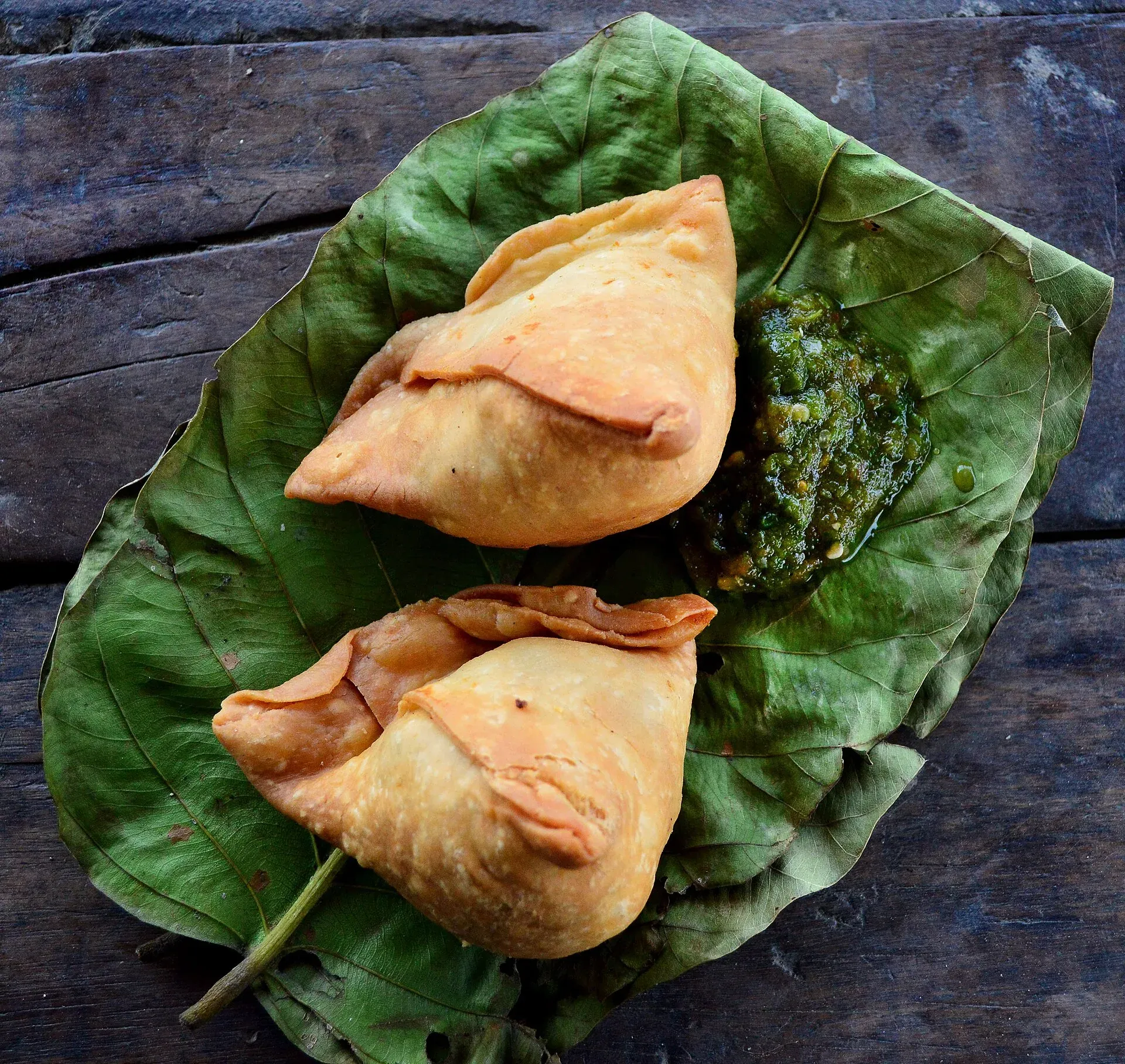
Photo: Kaushalspeed, with thanks · CC BY-SA 4.0 · via Wikimedia Commons · temporary stand-in photo

Samosa and Chaat
Two staples of Pakistani street food: the samosa, a fried triangular pastry with a spiced filling, and chaat, a tangy snack of potato, chickpeas, yogurt and chutneys.
What they are
Samosa is a fried, triangular pastry filled with spiced potato, peas or minced meat. Chaat is a family of savoury snacks: pieces of crisp fried dough or potato with chickpeas, yogurt, chutneys and spice. Both are sold from street stalls and shops across Pakistan, and they are often eaten together.
How they are made
For samosas, a flour dough is rolled thin, cut, folded into a cone, filled and sealed. The filling is usually potato, onion, peas and spices, or minced beef or chicken. The pastry is deep-fried until golden. In Karachi a thinner "paper" samosa (kaghazi samosa) is also popular.
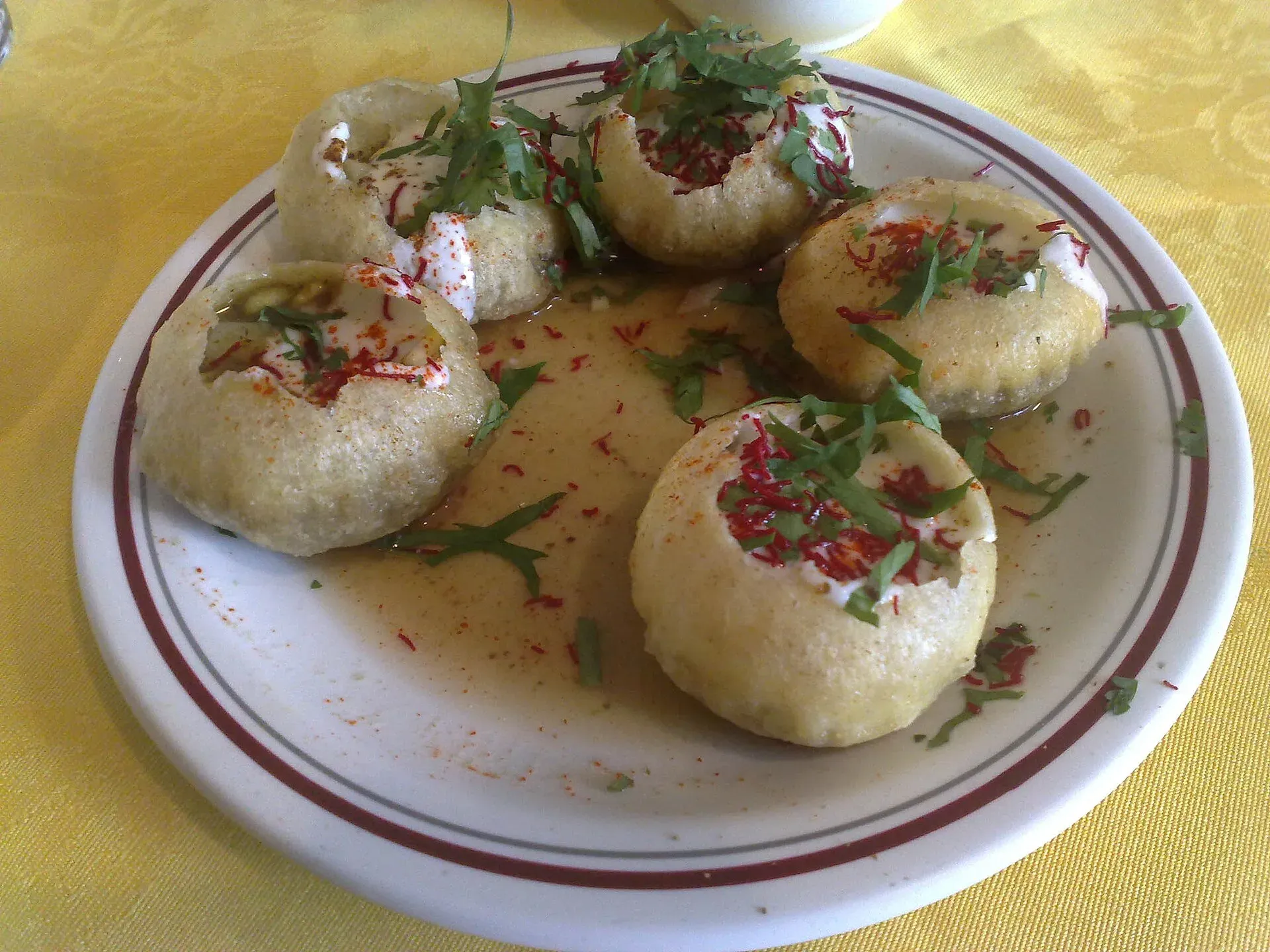
Photo: secretlondon123, with thanks · CC BY-SA 2.0 · via Wikimedia Commons · temporary stand-in photo

Chaat is assembled to order. Common types in Pakistan include aloo chaat (potato pieces with chutney and spice), dahi bhalla (soft lentil dumplings in yogurt) and papri chaat (crisp wafers with chickpeas, yogurt and chutney). The tangy flavour comes from tamarind chutney, lemon, and chaat masala, a spice blend that often includes dried mango powder, cumin and black salt.
Where they come from
The word samosa comes from a Persian word for a triangular pastry, and similar pastries appear in medieval Arabic and Central Asian cooking. Chaat is generally said to come from northern India, with Uttar Pradesh named as its home. The samosa's South Asian form is thought to descend from a medieval Middle Eastern pastry, and Central Asian cooks brought it to the Delhi Sultanate in the 13th or 14th century. Neither has a single proven origin in Pakistan, so treat local claims as tradition.
Where you will eat them
- Lahore, including its old city, where chaat and samosa sellers are common.
- Karachi, where chaat stalls and shops are everywhere.
- Islamabad and Rawalpindi, in markets and at roadside stalls.
- Other towns in Punjab and Sindh, at tea stalls and bazaars.
Please avoid choosing from lists of "best" stalls. A busy stall with fresh oil and quick turnover is a good sign.
When people eat them
Samosas and chaat are afternoon and evening snacks, popular with tea. They are especially common during Ramazan, when they are bought for iftar. They are also served at weddings, gatherings and picnics.
Dietary notes
- Vegetarian: potato and pea samosas and most chaat are vegetarian. Meat samosas are also sold, so ask.
- Dairy: many chaat dishes include yogurt.
- Gluten: the pastry is wheat.
- Spice level: mild to hot. Ask for less chilli.
- Hygiene: chaat is often made with chutneys and sometimes water. If your stomach is sensitive, choose a clean, busy stall and cooked items such as samosas.
How to order and eat them
Ask for a samosa by the piece, with chutney. For chaat, say which kind you want and ask for less chilli if needed. Eat samosas by hand while hot. Chaat arrives in a small plate or paper bowl with a spoon. Add lemon and mix before eating.
Prices vary by place and season and are not given here.
Sources and last checked
Last checked Confidence medium2 sources2 still to check
- Last checked
- Method
- Desk research from published sources
- Confidence
- medium
- Checked by
- trek.pk research team
Researched from published sources; not yet checked on the ground by our team. Spot something out of date? Report a mistake.
Sources
- Samosa (English Wikipedia) · Wikipedia · checked
- Chaat (English Wikipedia) · Wikipedia · checked
Still to be checked on the ground (2)
- Origin claims for both are general, not specific to Pakistan (Wikipedia confirms samosa from Middle Persian sambosag and chaat from northern India)
- Which chaat varieties are most common in each city is not sourced