

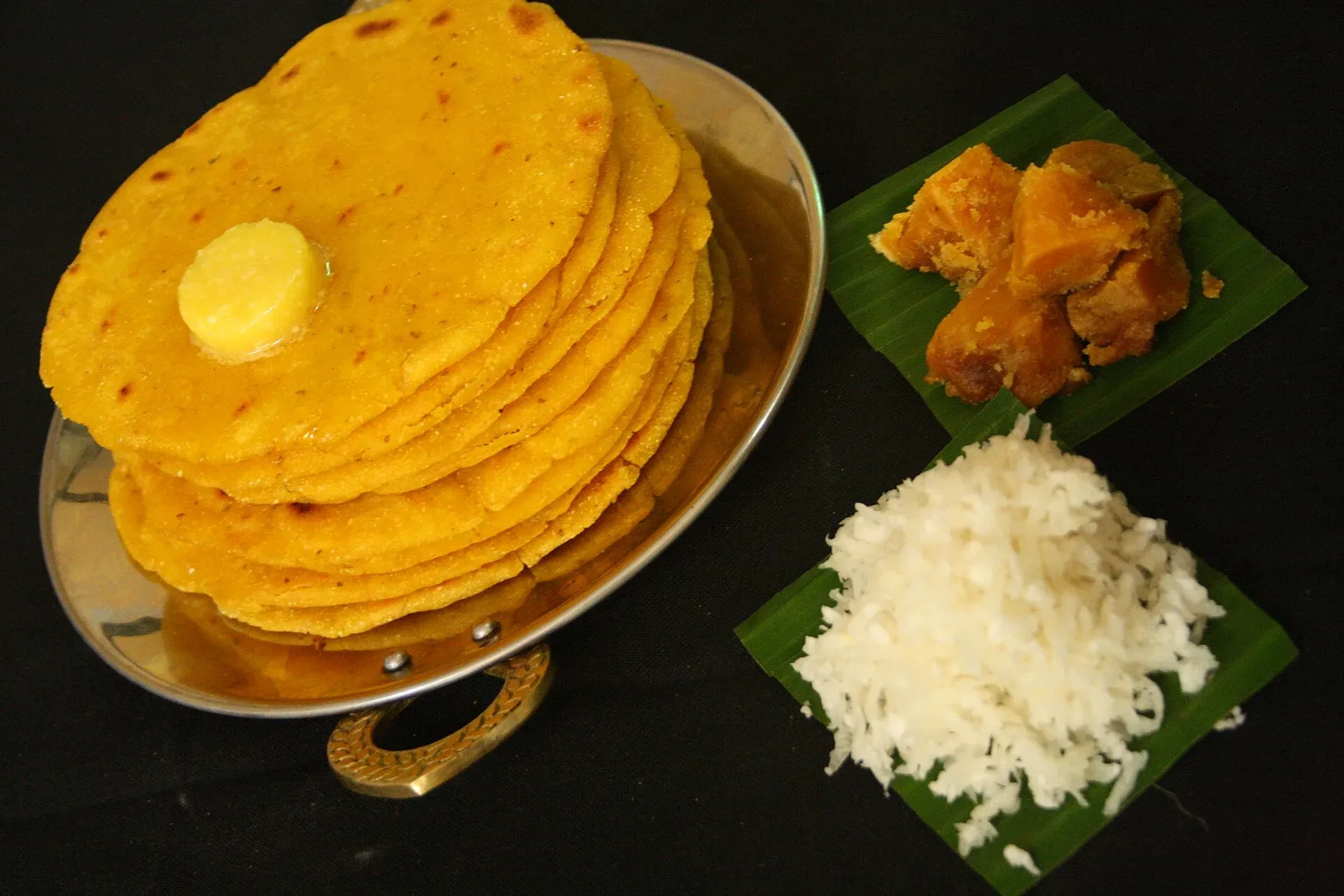
Photo: Vsigamany, with thanks · CC BY-SA 4.0 · via Wikimedia Commons · temporary stand-in photo

Sarson ka Saag and Makki ki Roti
A winter Punjab meal of slow-cooked mustard greens eaten with maize flatbread, white butter and jaggery. Warming, green and fully vegetarian.
What it is
Sarson ka saag is a thick, dark-green dish of mustard leaves cooked slowly with spinach and other greens, garlic, ginger and green chilli. It is served with makki ki roti, a flatbread made from maize (corn) flour, and a spoon of white butter or ghee. A small piece of jaggery (gur) and a glass of lassi often complete the meal.
How it is made
Mustard leaves are washed well, chopped and cooked with some spinach or other leafy greens until very soft. Cooks mash or churn the greens, then fry them in ghee or oil with onion, garlic, ginger and chilli. A little maize flour thickens the saag. The roti is made from maize flour and warm water, pressed or patted by hand, and cooked on a hot flat griddle (tawa). Maize dough does not hold together like wheat dough, so shaping it takes practice.
Where it comes from
Wikipedia lists Punjab as the dish's place of origin, while its text says it came from the wider Indian subcontinent. The name comes from Sanskrit words for mustard and greens. Mustard is a winter crop, which is why the dish belongs to the colder months. No single date or place of origin is recorded, so the story is best described as a farming tradition of the Punjab plains.
Where you will eat it
- Rural Punjab and village homes, where it is a family meal in winter.
- Lahore, in Punjabi restaurants that add it to winter menus, and in homes during cold weather.
- Faisalabad, Sargodha and Gujranwala, which sit in the Punjab farming belt.
- Rawalpindi and Islamabad, especially in winter food events and Punjabi restaurants.
Mustard is harvested in winter and spring, so restaurants usually serve the dish in the cooler months. Exact dates vary by place and year.
When people eat it
Mostly in winter lunches and dinners, and sometimes as a late breakfast. It is a comfort food for cold, foggy days. It is not usually eaten during the hot months.
Dietary notes
- Vegetarian: the greens and maize roti are plant-based. Saag is usually made with ghee or butter, so it is not vegan.
- Halal: no meat is used in the classic dish.
- Gluten: maize roti has no wheat, but check how it is cooked, as it may share a griddle with wheat bread.
- Spice: mild to medium, with a slight bitter edge from the mustard.
- Ingredients to ask about: some restaurants add a small amount of meat or stock.
How to order and eat it
Ask for "saag with makki roti". A usual serving is one or two rotis with a bowl of saag and a spoon of butter on top. Break the roti by hand, scoop the saag with it, and add a bite of jaggery or raw onion between mouthfuls. Eat with your right hand. Maize roti is fragile and crumbles when cold, so eat while it is hot. A glass of lassi or hot tea goes well.
Prices vary and are not given here.
Sources and last checked
Last checked Confidence medium1 source2 still to check
- Last checked
- Method
- Desk research from published sources
- Confidence
- medium
- Checked by
- trek.pk research team
Researched from published sources; not yet checked on the ground by our team. Spot something out of date? Report a mistake.
Sources
- Sarson da saag (English Wikipedia) · Wikipedia · checked
Still to be checked on the ground (2)
- Exact restaurant season: Wikipedia gives only 'winter and spring'; restaurant menus vary
- Spice and ghee use vary by cook