

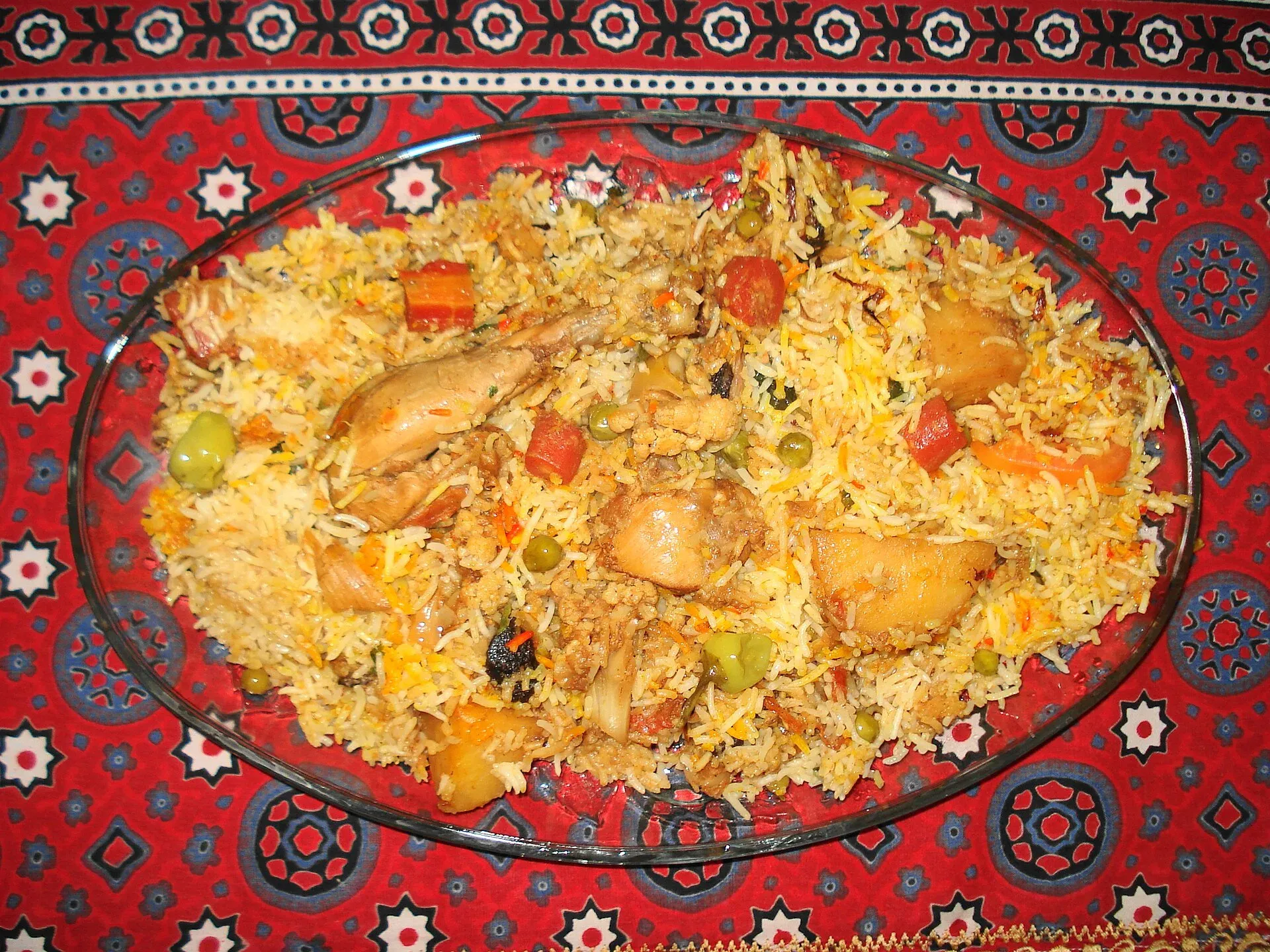
Photo: Miansari66, with thanks · Public domain (CC0) · via Wikimedia Commons · temporary stand-in photo

Sindhi Biryani
A sharper, spicier biryani from Sindh, made with meat, potatoes, tomatoes, yogurt and often dried plums or mint. Often pale and tangy rather than orange, and a staple of Sindhi celebrations.
What it is
Sindhi biryani is a biryani from Sindh, made with basmati rice, meat, potatoes, tomatoes, onions, yogurt and spices. Cooks often add dried plums (aloo bukhara) and mint, which give it a sour, fresh edge. It is generally spicier and tangier than many other biryanis.
How it is made
The meat is cooked in a thick masala of yogurt, tomato, fried onion and spices, with potatoes added to the pot. Rice is boiled until nearly done and layered over the masala with mint and green chilli, then the pot is sealed and left to finish on a gentle flame. Wikipedia lists mutton, chicken, fish or shrimp, and says prunes might be added. It is served with raita or plain yogurt.
Where it comes from
Sindh has a long tradition of rice and meat cooking, and Sindhi biryani is widely described as the biryani of Sindh. One food blogger quoted in a food article doubted that a Sindhi "biryani" exists as a distinct dish, describing a Sindhi pulao instead and saying the dish called Sindhi biryani belongs to the Muslim community of Sindh, now in Pakistan. We therefore do not claim a historic date, and the origin is best treated as local tradition. A 2014 Dawn food writer remembers Sindhi biryani served as charity food at the shrine of Lal Shahbaz Qalandar, with mutton, potatoes, prunes, sour yogurt, mint and green chilli.
Where you will eat it
- Hyderabad and other towns across Sindh, in family restaurants and at festivals.
- Karachi, where Sindhi biryani is a popular menu item next to the city's own style.
- Islamabad and Lahore, in restaurants serving Sindhi dishes.
Please avoid choosing from lists of "best" biryani.
When people eat it
Sindhi biryani is a lunch dish and a celebration food, served at weddings, Eid and shrine festivals (urs). It is also served as charity food at shrines.
Dietary notes
- Halal: normally made with halal meat.
- Not vegetarian in the traditional form.
- Spice level: medium to hot, and sour from plum and yogurt.
- Dairy: yogurt is part of the masala.
- Gluten: none in the dish itself.
How to order and eat it
Order a plate and say which meat you want. It is usually served with raita and salad. Eat with a spoon, or with your right hand. If you are offered biryani at a shrine as charity food, accept it politely with the right hand and eat it where you are asked to sit.
Prices vary by place and season and are not given here.
Sources and last checked
Last checked Confidence medium3 sources2 still to check
- Last checked
- Method
- Desk research from published sources
- Confidence
- medium
- Checked by
- trek.pk research team
Researched from published sources; not yet checked on the ground by our team. Spot something out of date? Report a mistake.
Sources
- Sindhi biryani (English Wikipedia) · Wikipedia · checked
- Food Stories: Sindhi Biryani (12 June 2014) · Dawn · checked
- Kolkata is not the only city to have alu in its biryani · Finely Chopped · checked
Still to be checked on the ground (2)
- Whether Sindhi biryani is an old, distinct dish (one source doubts it)
- Exact ingredients vary between cooks (Wikipedia and Dawn lists differ, for example on mint and prunes)