

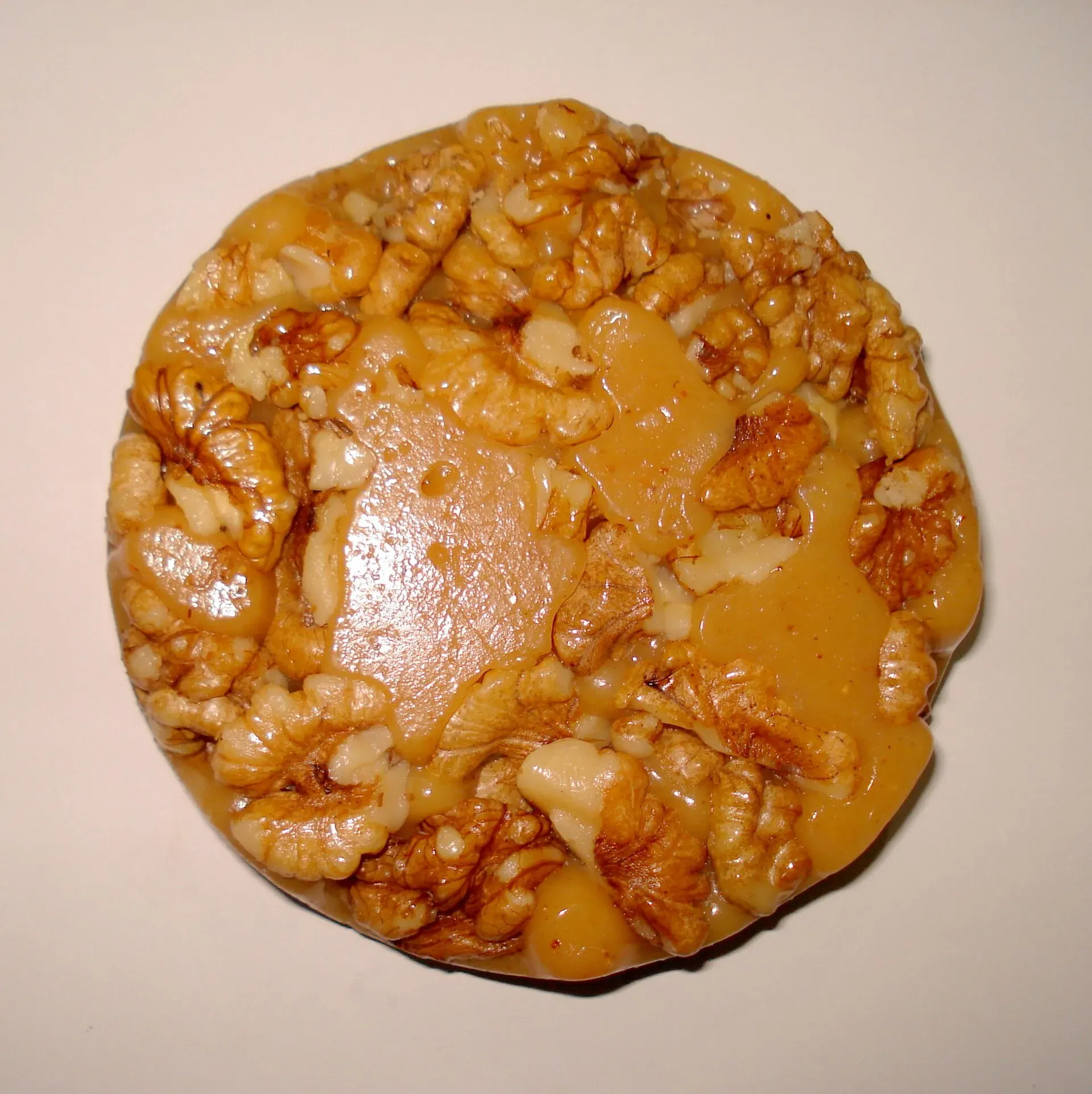
Photo: Miansari66, with thanks · Public domain (CC0) · via Wikimedia Commons · temporary stand-in photo

Sohan Halwa (Multan)
A dense, sweet, nutty sweet made from milk, sugar and cornflour. Multan is its best-known home in Pakistan, and it is often given as a gift.
What it is
Sohan halwa is a hard, chewy sweet, slightly like toffee, with a rich caramel flavour. It is cut into pieces and often topped with almonds, pistachios or walnuts. The version most closely linked to Pakistan is Multani sohan halwa, sold in decorated boxes and widely given as a gift.
How it is made
Writers list the main ingredients as sugar, milk, cornflour, water, ghee, saffron and nuts. The mixture is boiled and stirred constantly over a low flame until it thickens and sets into a solid mass. Ghee prevents it from sticking to the pan. Some cooks add cardamom or pistachio. The hot mass is spread on a tray, pressed flat and cut into pieces once it cools. It takes a long time and patience, and the sweet keeps for a good while.
Where it comes from
The sweet is traditionally linked with Multan, a city known for sweets, shrines and craft. Several stories about the origin are repeated. The name may come from a Sanskrit word for "beautiful". One dictionary says it was named after a confectioner called Sohan Lal, while others link it with a 19th-century governor of Multan or with Persia in the Mughal era. Food writers describe the origins as highly debated, so we treat these as tradition, not settled history.
Where you will find it
- Multan, in old bazaars and sweet shops, where it is a signature purchase.
- Other Punjab cities, in sweet shops that sell "Multani sohan halwa".
- Lahore, Islamabad, Karachi, in larger sweet shops.
When people eat it
Sohan halwa is a sweet to eat at any time of day. It is traditionally seen as a winter treat because it is rich and warming, and is a popular gift at Eid, weddings and festivals. People also carry it as a souvenir when travelling.
Dietary notes
- Vegetarian: it does not contain meat, but it is made with ghee and milk, so it is not vegan.
- Halal: the standard recipe is halal.
- Allergens: dairy, nuts and sometimes wheat or gluten if different starches are used. Check the box.
- Sugar: it is very sweet and rich.
- Spice: none.
How to buy and eat it
Ask for "sohan halwa" and say whether you want a loose weight or a box. Many shops let you taste a small piece first. Eat in small pieces with tea, as it is very rich. Store it in a cool place. If you carry it on a plane, choose a sealed box and check airline rules. A box makes a thoughtful gift. Prices vary and are not given here.
Sources and last checked
Last checked Confidence medium1 source2 still to check
- Last checked
- Method
- Desk research from published sources
- Confidence
- medium
- Checked by
- trek.pk research team
Researched from published sources; not yet checked on the ground by our team. Spot something out of date? Report a mistake.
Sources
- Sohan halwa (English Wikipedia) · Wikipedia · checked
Still to be checked on the ground (2)
- Origin stories are highly debated (Wikipedia lists Sohan Lal, Diwan Sawan Mal Chopra and Persia)
- Ingredient lists vary between makers (Wikipedia gives the cornflour version only)