

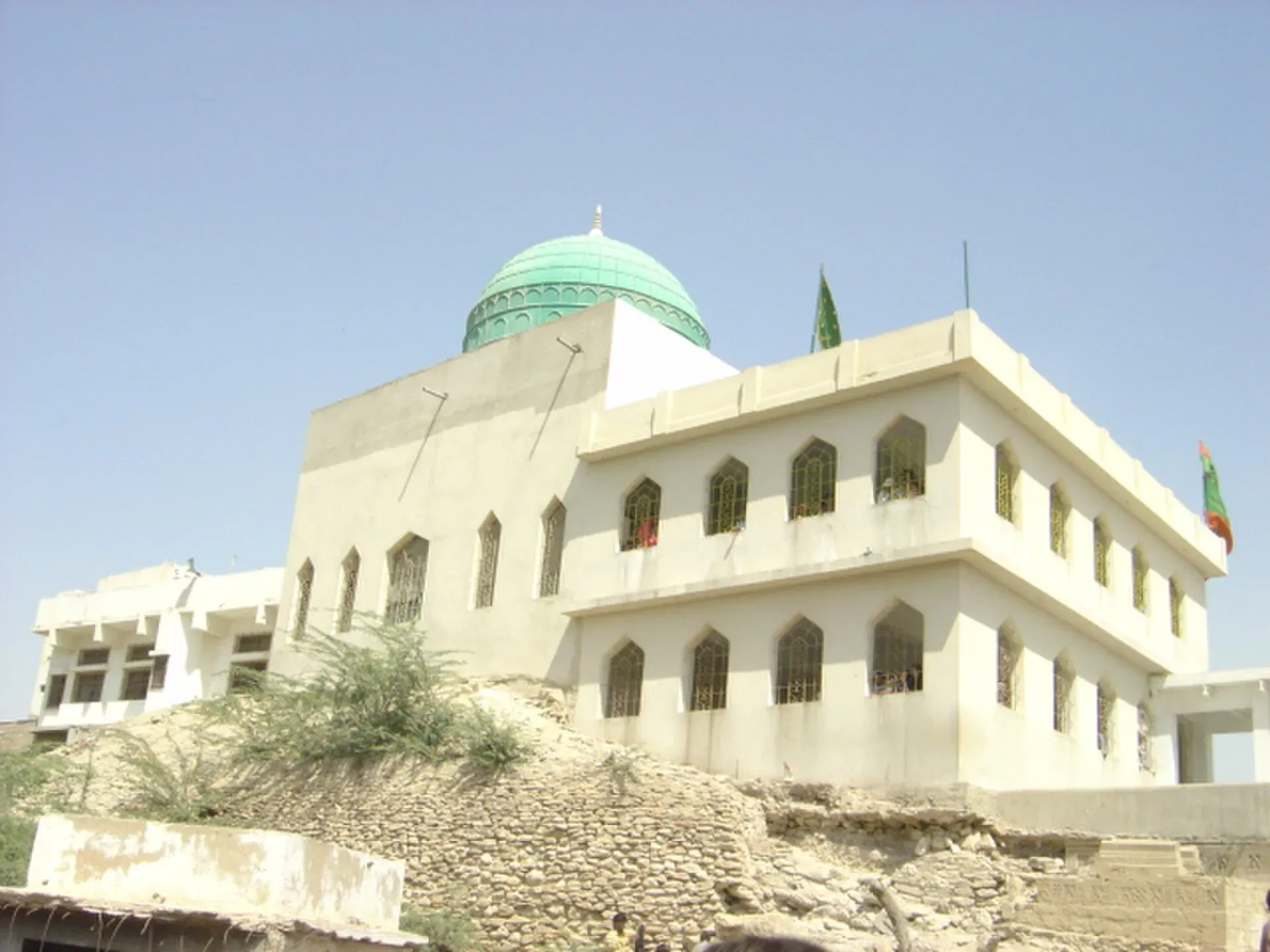
Photo: Muhammad Saqib Khan, with thanks · CC BY-SA 3.0 · via Wikimedia Commons · temporary stand-in photo
Mangho Pir Hot Springs
Sulphur springs near the shrine of Pir Mangho in Manghopir, north-west Karachi, together with a shrine pond kept for marsh crocodiles. A short city trip with respect and hygiene rules.
Overview
Manghopir is one of the oldest neighbourhoods of Karachi, in the north-west of the city (Orangi district). It grew up around the shrine of Pir Mangho, a 13th-century Sufi who is said to have been admitted to the Chishti order in 1263 or 1264 and to have been a disciple of Baba Farid. He is also called Sakhi Pir Mangho. Local Baloch names for the area include Garm-aap and Sard-aap, meaning hot water and cold water.
Plan your visit
- Nearest town
- Karachi
- Getting there
Manghopir is about 20 km and about 28 minutes by road from central Karachi (OSRM), in the north-west of the city. Taxi, ride-hailing or a private car all work. Ask for Manghopir mazar. Traffic can be heavy. More
Best months
Nov – Mar
History
Dawn (2016) says the saint is believed to have come from Iraq in the 13th century, travelled through southern Punjab and Sindh and settled on what was then a desolate hill among palm trees, when Karachi was only a scatter of fishing villages. Followers came from those villages, and after his death a small shrine was built. The shrine is mentioned in older local texts and in 19th-century British writings, and a 19th-century photograph shows visitors feeding the crocodiles.
Archaeology adds an older layer. A Bronze Age settlement dating to about 2500 to 1700 BC has been found at Manghopir, and its people are reported to have revered crocodiles. Scientists suggest that an ancient flood carried the crocodiles into the pond.
What to see and do
- The shrine. The complex has a large mosque and the saint's grave markers. Visit at a respectful pace, dress modestly and follow the custodians.
- The crocodile pond. The shrine pond holds dozens of marsh crocodiles, traditionally fed by visitors. Devotees see them as linked to the saint, and a local legend says they were once lice that the saint transformed. No exact count is published, so treat any number you hear loosely. Dawn describes them as largely docile and says no attack has been reported, though keepers advise caution.
- The hot and cold springs. The springs lie about a kilometre from the shrine. Warm, sulphur-rich water is used for bathing, with separate pools and shower rooms for men and women, and some people travel for the water for skin complaints. That is local belief; this page makes no medical claims. A scientific analysis found the water saturated with carbon dioxide and containing some sulphur. No source gives the water temperature.
Festivals
The Urs of Pir Mangho, the annual death anniversary, is held in the Islamic month of Dhu al-Hijjah. The Sheedi Mela is a separate festival held at the shrine. The Sheedi, mostly Balochi-speaking descendants of Africans brought to the region over several centuries, regard Pir Mangho as their patron saint and use the festival to celebrate their African roots. Dawn reported in 2016 that it had not been held for a couple of years because of violence in the area and was expected to resume.
A short city trip
Allow a morning or an afternoon: the shrine and pond first, then the springs, with time for tea at the stalls nearby. Combine it with other sights listed under Karachi rather than adding it to a long day.
When to visit
Cooler months from November to March are more comfortable. Fridays and festival days are crowded.
Where to stay and eat
Stay in central Karachi, about 20 km and 28 minutes by road (an OSRM estimate). Small stalls operate near the shrine.
Good to know
- Dress modestly, cover your head near the shrine and remove shoes where asked.
- Do not enter the crocodile enclosure or touch the animals. Keep children back. Feeding is a local custom; follow the keepers.
- No official fees or opening hours could be confirmed; ask Sindh tourism or the shrine's managers.
- Karachi security changes; check current news. Ask the district administration or local police about current conditions before you go. For foreign visitors: the UK FCDO page does not name Karachi, but it does advise against all but essential travel to Sindh north of and including Nawabshah.
- Test the water with your hand and mix in cold water before you get in. Water from some springs can scald.
- Do not stay in long, do not go in alone, and avoid hot water if you have heart problems, are pregnant or have been drinking.
- Rinse before you enter and do not use soap in shared pools. Hot springs are not sterile; avoid open wounds and keep your head out of the water.
- Use the separate arrangements for men and women, and ask before taking photos of people.
Highlights
- Sulphur springs near the shrine
- Marsh crocodile pond
- Shrine of Pir Mangho
- Urs and Sheedi Mela festivals
Getting there
Manghopir is about 20 km and about 28 minutes by road from central Karachi (OSRM), in the north-west of the city. Taxi, ride-hailing or a private car all work. Ask for Manghopir mazar. Traffic can be heavy.
Tips
- Dress modestly
- Do not enter the crocodile area
- Go in cooler months
- Mix hot water with cold
Photos we still need: the springs and bathing pools; the crocodile pond. Send us yours
Sources and last checked
Last checked Confidence medium3 sources4 still to check
- Last checked
- Method
- Desk research from published sources
- Confidence
- medium
- Checked by
- trek.pk research team
Researched from published sources; not yet checked on the ground by our team. Spot something out of date? Report a mistake.
Sources
- Pir Mangho · Wikipedia · checked
- From legend to science: the crocodiles of Manghopir (26 Feb 2016) · Dawn · checked
- Pakistan travel advice · UK FCDO (updated 27 October 2026) · checked
Still to be checked on the ground (4)
- Spring temperature and current condition of the pools (no source gives either)
- Opening times and any fee
- Distance from the shrine to the springs (about 1 km, one source)
- Whether the Sheedi Mela is currently held

