

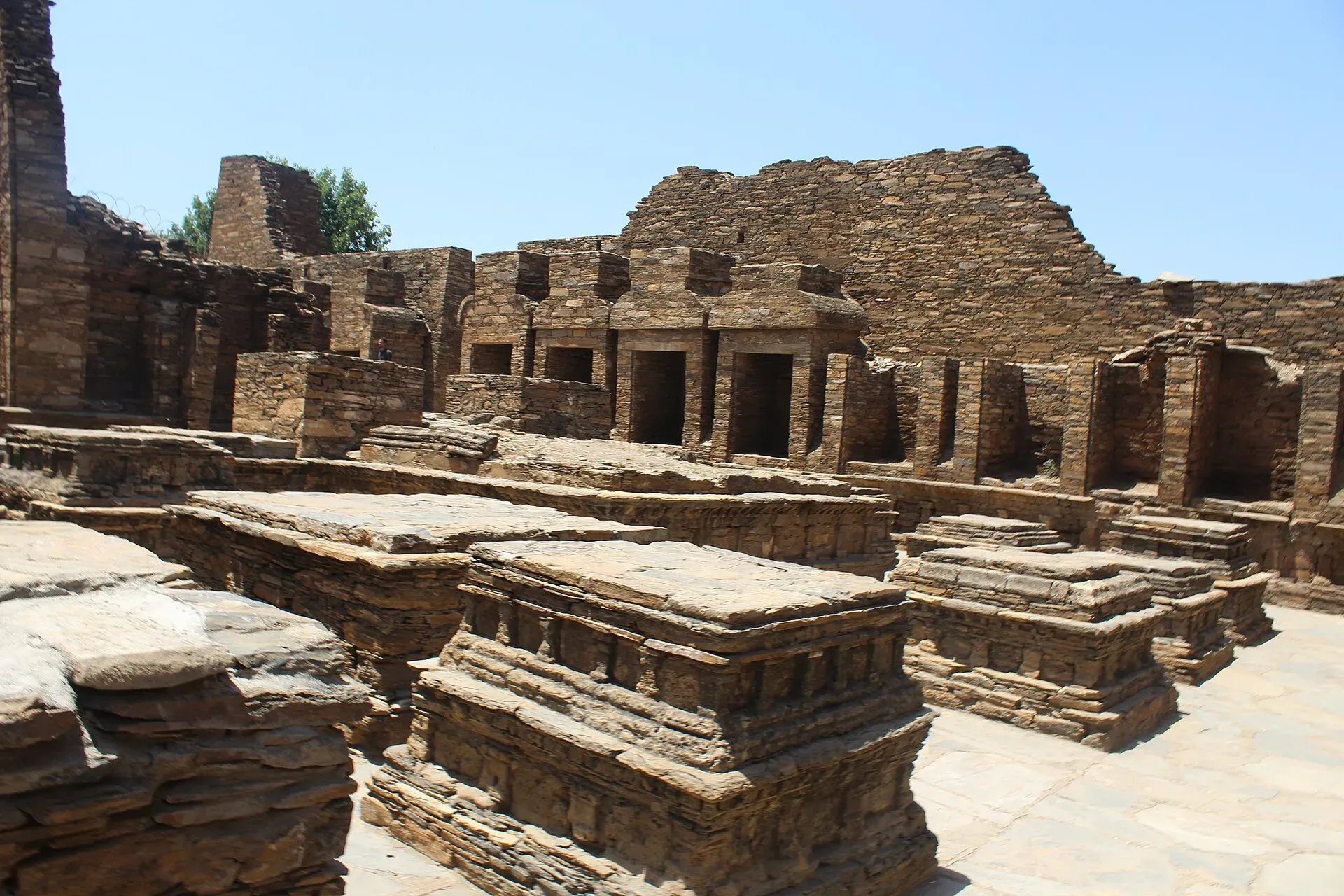
Photo: MSBK, with thanks · CC BY-SA 4.0 · via Wikimedia Commons · temporary stand-in photo

Mardan
The second-largest city in Khyber Pakhtunkhwa, set in the Peshawar valley, and the gateway to Gandhara's Takht-i-Bahi monastery (UNESCO), Shahbaz Garhi's Ashoka edicts and the Guides Memorial.
Overview
Mardan is a city in the fertile Valley of Peshawar, at about 283 m above sea level, and the second-largest city in Khyber Pakhtunkhwa. It is the headquarters of Mardan District and Mardan Division. The surrounding plains are farmland, and the city is best known to visitors as the base for some of the most important Buddhist sites in Pakistan.
At the 2023 census Mardan had 368,302 people, of whom 363,788 were in the municipal committee and 4,514 in the cantonment. Pashto is the main language, spoken by about 98 percent of residents, and the city is the de facto headquarters of the Yousafzai Pashtuns. Industry includes textile and edible-oil mills and one of the largest sugar mills in South Asia.
Plan your visit
- Getting there
Road: Peshawar about 65 km (about 1 hour); Islamabad about 141 km (about 1 hour 35 minutes). Air: use Peshawar's Bacha Khan International Airport. Rail: not practical. More
Best months
Oct – Apr
- Mardan
- Related places nearby: Peshawar, Kashmir Smast Cave Temple, Mardan, Shahbazgarhi Rock Edicts, Mardan, Sanghao Caves
History in brief
The land around Mardan is one of the richest archaeological areas in Pakistan. The Sanghao Caves, found in 1962, produced Middle Paleolithic tools more than 30,000 years old. Around 1800 BCE the area belonged to the Gandhara grave culture, and later it was part of the Buddhist kingdom of Gandhara.
Ashoka's rock edicts at Shahbaz Garhi, carved in the mid-3rd century BCE, are in Kharosthi script and count as the earliest clearly datable writing in South Asia. The monastery at Takht-i-Bahi was established around the 1st century CE. The Bakhshali manuscript, found near Mardan in 1891 and dated to the 3rd or 4th century CE, holds the earliest record of a zero symbol in the subcontinent. The hermit caves of Kashmir Smast date from the 4th to 9th century.
In the colonial period Mardan became a garrison town. The Guides' Memorial dates from 1892. Mardan was part of Peshawar District until 1937, when it became a district in its own right.
What to see and do
- Takht-i-Bahi: a Buddhist monastery complex on a hill about 15 km from Mardan, founded in the 1st century CE and used until the 7th century. It is a UNESCO World Heritage Site, listed in 1980. You can see the stupa court, monks' cells, assembly halls and a later temple complex. There is a road and car park below the hill, and the climb up the steps takes some effort.
- Shahbaz Garhi: rock edicts of the Mauryan king Ashoka, carved in Kharosthi script on a rock beside the road, about 12 km from Mardan on the Mardan-Swabi road.
- Mardan Museum: opened in 1991, with finds from the ancient Gandhara region. Check opening hours before you go.
- Guides Memorial: a monument built in 1892 for soldiers of the Corps of Guides who died in the 1879 defence of the British Residency in Kabul.
- Bacha Khan Monument: dedicated to Abdul Ghaffar Khan (Bacha Khan), the Pashtun independence activist known for his non-violent opposition to colonial rule.
- Sanghao Caves and Kashmir Smast: cave sites outside the city. The Sanghao caves yielded Middle Paleolithic artefacts. Kashmir Smast was used by Buddhist hermit monks and lies in the Babuzai Sakrah hills in the Katlang valley; it is reached from the villages of Babozai or Pirsai, and the cave entrance was hard to climb to when described in the 1890s. Some sites need a guide and a fair walk.
- City bazaars: busy and practical, with cloth, shoes, sweets and fruit.
Food
Expect Pashtun food: charcoal-grilled tikka and kebabs, rice dishes, fresh naan and strong tea. A travel guide names Mardan's paira, a local sweet, as well known across the region. Alcohol is not sold in the city. Ask locals which stalls are busiest.
Getting there and around
- Road: Peshawar is about 65 km and takes roughly an hour (OSRM estimate, checked 16 November 2026). Islamabad is about 141 km and roughly 1 hour 35 minutes by road (OSRM estimate). Check current road conditions and motorway links. The main bus station is Naway Adda; most long-distance routes end there.
- Rail: few trains stop at Mardan. The nearby town of Nowshera is on the main Peshawar line, so rail is not a practical way to arrive.
- Air: no airport. Use Peshawar's Bacha Khan International Airport.
- Around town: rickshaws and taxis. For the Buddhist sites, hire a car for a half day or a full day.
A suggested day
Start early at Takht-i-Bahi, about 15 km out, and allow two to three hours for the climb and the ruins before the heat builds. Drive back via Shahbaz Garhi to see the Ashoka rock beside the road. In the afternoon, visit the Mardan Museum and the Guides Memorial in the city, then finish at a kebab stall in the bazaar. Kashmir Smast needs a separate trip with a local guide.
Where to stay
Stay along the main road and cantonment area for a handful of mid-range hotels. Many visitors prefer to stay in Peshawar or Islamabad and visit Mardan as a day trip.
Day trips
- Takht-i-Bahi and Shahbaz Garhi: the main reason to visit, easily combined in a half day.
- Charsadda and Risalpur: neighbouring towns west and south.
- Peshawar: the provincial capital, about an hour away.
When to visit
October to April is the most comfortable time. Mardan has a hot semi-arid climate: June is the hottest month, with an average temperature of about 33 degrees C, and January the coldest at about 10 degrees C. August is the wettest month (about 122 mm); October is the driest.
Good to know
Dress modestly. Carry water and sun protection for the hill climb at Takht-i-Bahi. Check current security and travel advice for Khyber Pakhtunkhwa before visiting. Allow extra time for checkpoints.
Travel advice
Ask the district administration or local police about current conditions before you go. For foreign visitors: the UK FCDO advises against all but essential travel to Mardan (advice updated 27 October 2026, checked 16 November 2026). Read the live advice before you plan.
Highlights
- Takht-i-Bahi Buddhist monastery (UNESCO)
- Shahbaz Garhi Ashoka rock edicts
- Mardan Museum of Gandhara finds
- Guides Memorial from 1892
Hotels, food, fuel and services in Mardan
Places to stay
- Bilal Chargha House Resturantsبینک روڈ مردانCall Bilal Chargha House Resturantsبینک روڈ مردانMap of Bilal Chargha House Resturantsبینک روڈ مردان in Google Maps
- Toru Hotel MardanCall Toru Hotel MardanMap of Toru Hotel Mardan in Google Maps
- Shelton House MardanCall Shelton House MardanMap of Shelton House Mardan in Google Maps
- AWKUM Boys Hostel 1Call AWKUM Boys Hostel 1Map of AWKUM Boys Hostel 1 in Google Maps
- AWKUM Boys Hostel 2Map of AWKUM Boys Hostel 2 in Google Maps
- Mardan Retreat Guest HouseCall Mardan Retreat Guest HouseMap of Mardan Retreat Guest House in Google Maps
Places to eat
- Dam PukhCall Dam PukhMap of Dam Pukh in Google Maps
- Chapli Kabab, RashakaiCall Chapli Kabab, RashakaiMap of Chapli Kabab, Rashakai in Google Maps
- Cheezious MardanCall Cheezious MardanMap of Cheezious Mardan in Google Maps
- Platter House Restaurant Mardan, KPKCall Platter House Restaurant Mardan, KPKMap of Platter House Restaurant Mardan, KPK in Google Maps
- Badayuni Pera MardanCall Badayuni Pera MardanMap of Badayuni Pera Mardan in Google Maps
- Yaseen Malak Restaurant MardanCall Yaseen Malak Restaurant MardanMap of Yaseen Malak Restaurant Mardan in Google Maps
Essential services fuel stations, mechanics, ATMs, banks, pharmacies and hospitals and clinics
Fuel
- Green CNG Filling StationMap of Green CNG Filling Station in Google Maps
- PSO Fuel StationCall PSO Fuel StationMap of PSO Fuel Station in Google Maps
- PSO Petrol PumpCall PSO Petrol PumpMap of PSO Petrol Pump in Google Maps
- Frontier Mardan Filling Station- Total Petrol StationCall Frontier Mardan Filling Station- Total Petrol StationMap of Frontier Mardan Filling Station- Total Petrol Station in Google Maps
- PSOCall PSOMap of PSO in Google Maps
- Power Tech CNGMap of Power Tech CNG in Google Maps
Mechanics and tyre shops
- Mardan autos decoration muqam chowk mardanCall Mardan autos decoration muqam chowk mardanMap of Mardan autos decoration muqam chowk mardan in Google Maps
- Karamat Shah Auto Workshop MardanMap of Karamat Shah Auto Workshop Mardan in Google Maps
- NATIONAL TYRESMap of NATIONAL TYRES in Google Maps
ATMs
- United Bank - UBLMap of United Bank - UBL in Google Maps
- United Bank LimitedCall United Bank LimitedMap of United Bank Limited in Google Maps
- HabibMetro BankCall HabibMetro BankMap of HabibMetro Bank in Google Maps
Banks and money exchange
- Link International Exchange Co (Pvt) Ltd MardanCall Link International Exchange Co (Pvt) Ltd MardanMap of Link International Exchange Co (Pvt) Ltd Mardan in Google Maps
- HBLCall HBLMap of HBL in Google Maps
- HBL Currency Exchange Mardan BoothCall HBL Currency Exchange Mardan BoothMap of HBL Currency Exchange Mardan Booth in Google Maps
- MCB BankMap of MCB Bank in Google Maps
- Bank Al HabibMap of Bank Al Habib in Google Maps
Pharmacies
- Aryana MedicoseCall Aryana MedicoseMap of Aryana Medicose in Google Maps
- Star PharmacyCall Star PharmacyMap of Star Pharmacy in Google Maps
- Health nutz pharmacyCall Health nutz pharmacyMap of Health nutz pharmacy in Google Maps
Hospitals and clinics
- Mardan Medical ComplexMap of Mardan Medical Complex in Google Maps
- Dar ul Shifa Hospital MardanCall Dar ul Shifa Hospital MardanMap of Dar ul Shifa Hospital Mardan in Google Maps
- Noushad HealthcareCall Noushad HealthcareMap of Noushad Healthcare in Google Maps
- Mardan International HospitalCall Mardan International HospitalMap of Mardan International Hospital in Google Maps
- Children Specialist Dr. Rifaq Zeb, MBBS, FCPS(Pak), DCH(England), MRCPCH(England), MRCP(Ireland)Call Children Specialist Dr. Rifaq Zeb, MBBS, FCPS(Pak), DCH(England), MRCPCH(England), MRCP(Ireland)Map of Children Specialist Dr. Rifaq Zeb, MBBS, FCPS(Pak), DCH(England), MRCPCH(England), MRCP(Ireland) in Google Maps
- Mardan Children HospitalCall Mardan Children HospitalMap of Mardan Children Hospital in Google Maps
Listings come from Google Maps data and are unverified: phone numbers, opening months and prices may have changed. Report a problem · Own one of these? Claim it
Tips
- Combine Takht-i-Bahi and Shahbaz Garhi in a half-day trip.
- Visit between October and April.
- Wear sturdy shoes for the steps at Takht-i-Bahi.
- Check security advice and allow time for checkpoints.
Sources and last checked
Last checked Confidence medium6 sources3 still to check
- Last checked
- Method
- Desk research from published sources
- Confidence
- medium
- Checked by
- trek.pk research team
Researched from published sources; not yet checked on the ground by our team. Spot something out of date? Report a mistake.
Sources
- Mardan · Wikipedia · checked
- Takht-i-Bahi · Wikipedia · checked
- OSRM driving routes (road distances and times) · Project OSRM / OpenStreetMap · checked
- Shahbaz Garhi (about 12 km from Mardan city, on the Mardan-Swabi Road) · Wikipedia · checked
- Kashmir Smast (Babuzai Sakrah mountains, Katlang Valley; approached from Babozai or Pirsai) · Wikipedia · checked
- Mardan (Wikivoyage) · Wikivoyage · checked
Still to be checked on the ground (3)
- Takht-i-Bahi and museum opening hours (not published in Wikipedia; no Archaeology Department KP page opened; UNESCO page returned 403)
- Motorway links and best route to Islamabad (OSRM gives about 141 km; no source on the interchange)
- Access to Sanghao Caves and Kashmir Smast (only Wikipedia history and location; current access unconfirmed)
Nearby and related

Peshawar
Khyber Pakhtunkhwa's capital and one of South Asia's oldest living cities: the Gandhara museum, Qissa Khwani Bazaar, mosques and a strong food culture.

Islamabad
Pakistan's green, planned capital at the foot of the Margalla Hills: Faisal Mosque, hillside trails, cafes and the gateway to the north.
Kashmir Smast Cave Temple, Mardan
A system of limestone caves in the Babuzai hills of Katlang, Mardan district, used as a Buddhist and Hindu cave shrine from about the Kushan to the Shahi periods. A remote site, not set up for tourism.
Shahbazgarhi Rock Edicts, Mardan
Edicts of the Mauryan emperor Ashoka cut in Kharosthi on two large boulders at Shahbaz Garhi, near Mardan, in the 3rd century BCE. On Pakistan's UNESCO tentative list since 2004.
Sanghao Caves
A Palaeolithic cave site in Mardan District, Khyber Pakhtunkhwa, excavated in 1963. It yielded Middle Palaeolithic stone tools. Not set up for tourism. For foreign visitors: the UK FCDO advises against all but essential travel to Mardan.