

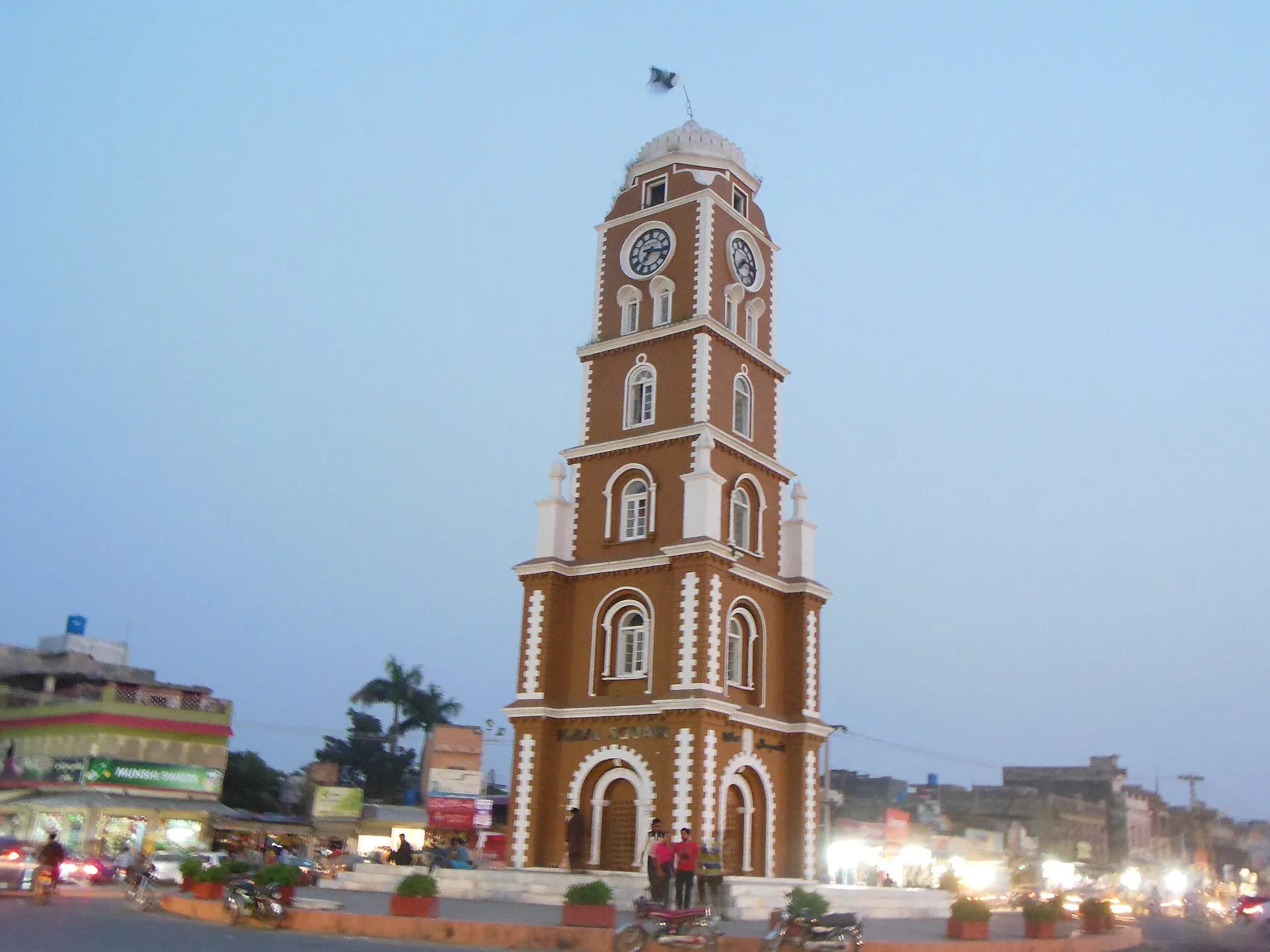
Photo: PakGuru99, with thanks · CC BY-SA 3.0 · via Wikimedia Commons · temporary stand-in photo

Sialkot
Industrial district capital near the Jammu border, famous for sports goods and surgical instruments and as the birthplace of the poet Allama Iqbal.
Overview
Sialkot is the capital of Sialkot District in north-east Punjab, close to the border with Indian-administered Jammu. It is thought to be the ancient Sagala. It is a major export centre, known as the world's largest producer of hand-sewn footballs and a leading maker of surgical instruments. The 2023 census figure on Wikipedia's city list is 911,817. Sialkot is also the birthplace of Muhammad Iqbal (born 1877), the poet and philosopher honoured as Pakistan's national poet.
Plan your visit
- Getting there
From Lahore: about 116 km, roughly 1 hour 40 minutes (OSRM, optimistic, checked 16 November 2026). The M-11 motorway links Sialkot with Lahore. From Wazirabad: about 41 km. More
Best months
Oct – Mar
- Sialkot
- Related places nearby: Gujrat, Gujranwala, Bajwat Wildlife Sanctuary, Head Marala (Marala Headworks)
History in brief
Sagala was probably the capital of the Madra kingdom. Wikipedia reports that Alexander the Great razed it in 326 BCE and that Menander I rebuilt it in the 2nd century BCE as a silk-trading centre. The Alchon Huns made it a major centre around 515 CE. The Chinese pilgrim Xuanzang, visiting in 633 CE, recorded a city rebuilt about 2.5 miles from the ruined site.
Muhammad of Ghor took Punjab in 1185 and repaired the fort. Under the Mughals the city became known for scholarship and for Hariri paper. The Sikh Empire took Sialkot in 1808 and the British took Punjab in 1849. In the 1965 war its defence earned the city the Hilal-e-Istaqlal flag in 1966.
Main sights
- Iqbal Manzil. Iqbal's family house was bought in 1861 by his great-grandfather and grew over generations into a three-storey building. The government bought it in 1971 and it opened as a library and museum in 1977. Displays include furniture used by the family, rare photographs and Iqbal's handwritten poetry. The library holds over 4,000 books, and visitors can read there free of charge. See Allama Iqbal Manzil.
- Sialkot Fort. Punjabi folklore credits the 2nd-century Raja Salban with building it. Shahab ud-Din Ghori rebuilt it, and Raja Man Singh repaired it in Akbar's time. Newspaper headlines cited by Wikipedia describe it as neglected, so expect ruins, not a restored monument.
- Clock tower. A century-old landmark in Saddar Bazaar, according to Wikivoyage.
- Imam Ali-ul-Haq shrine. The shrine of a 13th-century Sufi saint from Arabia, revered as a martyr, on Imam Sahib Road. Visitor arrangements are not confirmed.
- Sialkot Cathedral. Consecrated in 1857, in the cantonment.
- Murray College. Where Iqbal studied, with the Allama Iqbal Library.
- Baba Bari Sahib. An old Sikh shrine on Zafarwal Road.
Industry and shopping
Sialkot's factories make an estimated 40 to 60 million footballs a year, according to Wikipedia, which also lists surgical instruments, hockey sticks, cricket and boxing gear, leather garments and musical instruments among local products. Around 250,000 residents work in local industry, and the Sialkot Dry Port, opened in 1985, was funded largely by the business community. Wikivoyage says the Sialkot Chamber of Commerce can arrange visits to manufacturing units. Sports goods, leather jackets and sportswear are the usual things to buy.
Food
Wikivoyage mentions fried fish, barbecue and biryani among local restaurant fare, and kulfi and falooda in the old city. No dish is documented as specific to Sialkot, so ask locally.
Day trip: Marala Headworks
Marala Headworks on the Chenab, about 20 km from the city, is a popular picnic spot, with fish, boating and views towards the Shivalik hills, according to Wikivoyage. See Head Marala.
A day in Sialkot
A realistic outline: Iqbal Manzil in the morning, then the old city, the clock tower and Saddar Bazaar, a look at Sialkot Fort, and the Imam Sahib shrine or the cantonment churches in the afternoon. Business visitors can add a factory visit through the Chamber of Commerce. Marala is a half-day extra.
When to visit
October to March. Wikipedia's climate figures show about 1,009 mm of rain a year, with July and August the wettest months at about 290 to 300 mm each. Winter highs rarely fall below 15 C.
Where to stay and eat
Sialkot has a good range of hotels because of the business trade, plus many restaurants. No verified rates are given here.
Good to know
- Wikivoyage describes Sialkot as safer than many Pakistani cities, with violent crime rare. Treat this as general guidance, not a current assessment.
- As a district headquarters it should have hospitals, pharmacies, banks with ATMs and fuel stations. Fill up and withdraw cash before heading into the countryside.
- Safety. The UK FCDO Pakistan page (updated 27 October 2026, checked 16 November 2026) advises against all but essential travel to Dera Ghazi Khan, the only Punjab area it lists, and against all but essential travel within 5 miles of the India border. Sialkot is close to the border, and parts of the district may fall inside the 5-mile zone, so check the live page and the FCDO map before you go.
Highlights
- Birthplace of Allama Iqbal
- World centre for hand-sewn footballs and surgical instruments
- Own international airport
- Close to the Jammu border
Getting there
From Lahore: about 116 km, roughly 1 hour 40 minutes (OSRM, optimistic, checked 16 November 2026). The M-11 motorway links Sialkot with Lahore. From Wazirabad: about 41 km. Sialkot Junction is on the Pakistan Railways network (the Allama Iqbal Express runs to Karachi via Lahore, per Wikipedia). Sialkot International Airport has flights mainly to Gulf cities and Karachi; Wikipedia and Wikivoyage give its distance from the city as 14 km to about 20 km. Check current schedules. In the city, auto-rickshaws and taxis are the usual transport.
Hotels, food, fuel and services in Sialkot
Places to stay
- Royaute Luxury Hotel SialkotCall Royaute Luxury Hotel SialkotMap of Royaute Luxury Hotel Sialkot in Google Maps
- Rest house Sialkot cantonmentCall Rest house Sialkot cantonmentMap of Rest house Sialkot cantonment in Google Maps
Places to eat
- Qissah Restaurant,Brand Village,قصہ ریسٹورینٹ،برینڈز ویلیجCall Qissah Restaurant,Brand Village,قصہ ریسٹورینٹ،برینڈز ویلیجMap of Qissah Restaurant,Brand Village,قصہ ریسٹورینٹ،برینڈز ویلیج in Google Maps
- McDonald'sMap of McDonald's in Google Maps
- Zak ShinwariCall Zak ShinwariMap of Zak Shinwari in Google Maps
- National Tea StallCall National Tea StallMap of National Tea Stall in Google Maps
- Shinwari KahaniCall Shinwari KahaniMap of Shinwari Kahani in Google Maps
- Retro PizzaCall Retro PizzaMap of Retro Pizza in Google Maps
Essential services fuel stations, mechanics, ATMs, pharmacies, hospitals and clinics and Rescue 1122
Fuel
- Total Parco FR PetroleumMap of Total Parco FR Petroleum in Google Maps
- S.S Filling Station- Total Petrol StationCall S.S Filling Station- Total Petrol StationMap of S.S Filling Station- Total Petrol Station in Google Maps
- Askari Filling StationCall Askari Filling StationMap of Askari Filling Station in Google Maps
- PSO Petrol PumpMap of PSO Petrol Pump in Google Maps
- PSO Petrol PumpCall PSO Petrol PumpMap of PSO Petrol Pump in Google Maps
- Hascol Petrol StationMap of Hascol Petrol Station in Google Maps
Mechanics and tyre shops
- Sohail Suzuki Service CentreCall Sohail Suzuki Service CentreMap of Sohail Suzuki Service Centre in Google Maps
- ILYAS TYRE CENTER SIALKOTCall ILYAS TYRE CENTER SIALKOTMap of ILYAS TYRE CENTER SIALKOT in Google Maps
- Abduljabbar AutosCall Abduljabbar AutosMap of Abduljabbar Autos in Google Maps
- Honda Home WorkshopCall Honda Home WorkshopMap of Honda Home Workshop in Google Maps
- Decent wheel alignmentCall Decent wheel alignmentMap of Decent wheel alignment in Google Maps
- Yamaha Sialkot Service CenterMap of Yamaha Sialkot Service Center in Google Maps
ATMs
- HABIB METROPOLITAN BANKCall HABIB METROPOLITAN BANKMap of HABIB METROPOLITAN BANK in Google Maps
- MCB Bank LimitedCall MCB Bank LimitedMap of MCB Bank Limited in Google Maps
- JS BankCall JS BankMap of JS Bank in Google Maps
- HBLCall HBLMap of HBL in Google Maps
- Habib Bank,HBL Defence Road BranchMap of Habib Bank,HBL Defence Road Branch in Google Maps
- HBLCall HBLMap of HBL in Google Maps
Pharmacies
- CLINIX MEDICALCall CLINIX MEDICALMap of CLINIX MEDICAL in Google Maps
- Pharmakon plus pharmacyCall Pharmakon plus pharmacyMap of Pharmakon plus pharmacy in Google Maps
- Health Corner PharmacyMap of Health Corner Pharmacy in Google Maps
- CureX PharmacyCall CureX PharmacyMap of CureX Pharmacy in Google Maps
- Servaid PharmacyCall Servaid PharmacyMap of Servaid Pharmacy in Google Maps
- Jafar pharmacyCall Jafar pharmacyMap of Jafar pharmacy in Google Maps
Hospitals and clinics
- Imran Idrees Teaching HospitalCall Imran Idrees Teaching HospitalMap of Imran Idrees Teaching Hospital in Google Maps
- Bashir Hospital SialkotCall Bashir Hospital SialkotMap of Bashir Hospital Sialkot in Google Maps
- Islam Central HospitalCall Islam Central HospitalMap of Islam Central Hospital in Google Maps
- Idrees HospitalCall Idrees HospitalMap of Idrees Hospital in Google Maps
- Amra medical centerCall Amra medical centerMap of Amra medical center in Google Maps
- Memorial Christian Hospital ,مشن ہسپتالCall Memorial Christian Hospital ,مشن ہسپتالMap of Memorial Christian Hospital ,مشن ہسپتال in Google Maps
Rescue 1122
- Rescue 1122Call Rescue 1122Map of Rescue 1122 in Google Maps
- Rescue 1122,Katchehry RoadCall Rescue 1122,Katchehry RoadMap of Rescue 1122,Katchehry Road in Google Maps
Listings come from Google Maps data and are unverified: phone numbers, opening months and prices may have changed. Report a problem · Own one of these? Claim it
Tips
- Check the FCDO 5-mile border zone before you go.
- Allama Iqbal Manzil is the key cultural stop.
- Hotels fill up during trade fairs.
Photos we still need: Iqbal Manzil; Sialkot Fort; football or sports-goods workshop (with permission). Send us yours
Sources and last checked
Last checked Confidence medium8 sources6 still to check
- Last checked
- Method
- Desk research from published sources
- Confidence
- medium
- Checked by
- trek.pk research team
Researched from published sources; not yet checked on the ground by our team. Spot something out of date? Report a mistake.
Sources
- Sialkot · Wikipedia · checked
- List of cities in Pakistan by population (2023 census figures) · Wikipedia · checked
- OSRM driving routes (road distances and times, optimistic) · Project OSRM · checked
- Pakistan travel advice: warnings and insurance · UK FCDO (GOV.UK) · checked
- Iqbal Manzil (Wikipedia) · Wikipedia · checked
- Sialkot International Airport (Wikipedia) · Wikipedia · checked
- Sialkot · Wikivoyage · checked
- Sialkot Fort · Wikipedia · checked
Still to be checked on the ground (6)
- Hotels and services (no sourced names or rates)
- Opening hours and any fee at Allama Iqbal Manzil (Wikipedia says museum since 1977 and a free library; no official hours)
- Current flights and rail (Wikipedia lists Gulf and Karachi flights and the daily Allama Iqbal Express; undated, so check current schedules)
- Exact FCDO border-zone extent around Sialkot district (FCDO text says within 5 miles of the India border and does not name Sialkot)
- Current condition and access to Sialkot Fort
- Current opening hours of Sialkot Cathedral, Imam Sahib shrine and Baba Bari Sahib
Nearby and related

Allama Iqbal Manzil (Sialkot)
The family house in Sialkot where the poet and philosopher Allama Muhammad Iqbal was born in 1877. It is a three-storey house-museum with family photographs, personal objects and a library. Check hours before you go.

Allama Iqbal Museum (Javed Manzil)
Javed Manzil, the Lahore house where the poet-philosopher Allama Muhammad Iqbal lived his last years, is now a museum of his manuscripts, photographs, medals and degrees.

Lahore
Punjab's capital and Pakistan's cultural city: Mughal forts, mosques and gardens, a lively Walled City, and some of the best food in the country.

Gujrat
A Mughal-era city on the Chenab in Pakistan's Golden Triangle, with Akbar's fort, the Shah Daula shrine, old city gates and the setting of the Sohni Mahiwal love story.

Gujranwala
The City of Wrestlers and grilled chicken on the Grand Trunk Road, a short run from Lahore, with Sikh-era memorials, a Sheranwala Bagh baradari and the old gates of the bazaar quarter.
Bajwat Wildlife Sanctuary
A 5,400-hectare riverside sanctuary in Sialkot District, Punjab, along the Chenab and two of its tributaries, up to the border with India. Waterfowl, hog deer and nilgai are recorded, but it has no visitor facilities and lies close to the border.
Head Marala (Marala Headworks)
Headworks on the Chenab near Sialkot, begun in the Triple Canals scheme of 1906 to 1912. It feeds the Upper Chenab Canal and the Marala-Ravi Link Canal.