

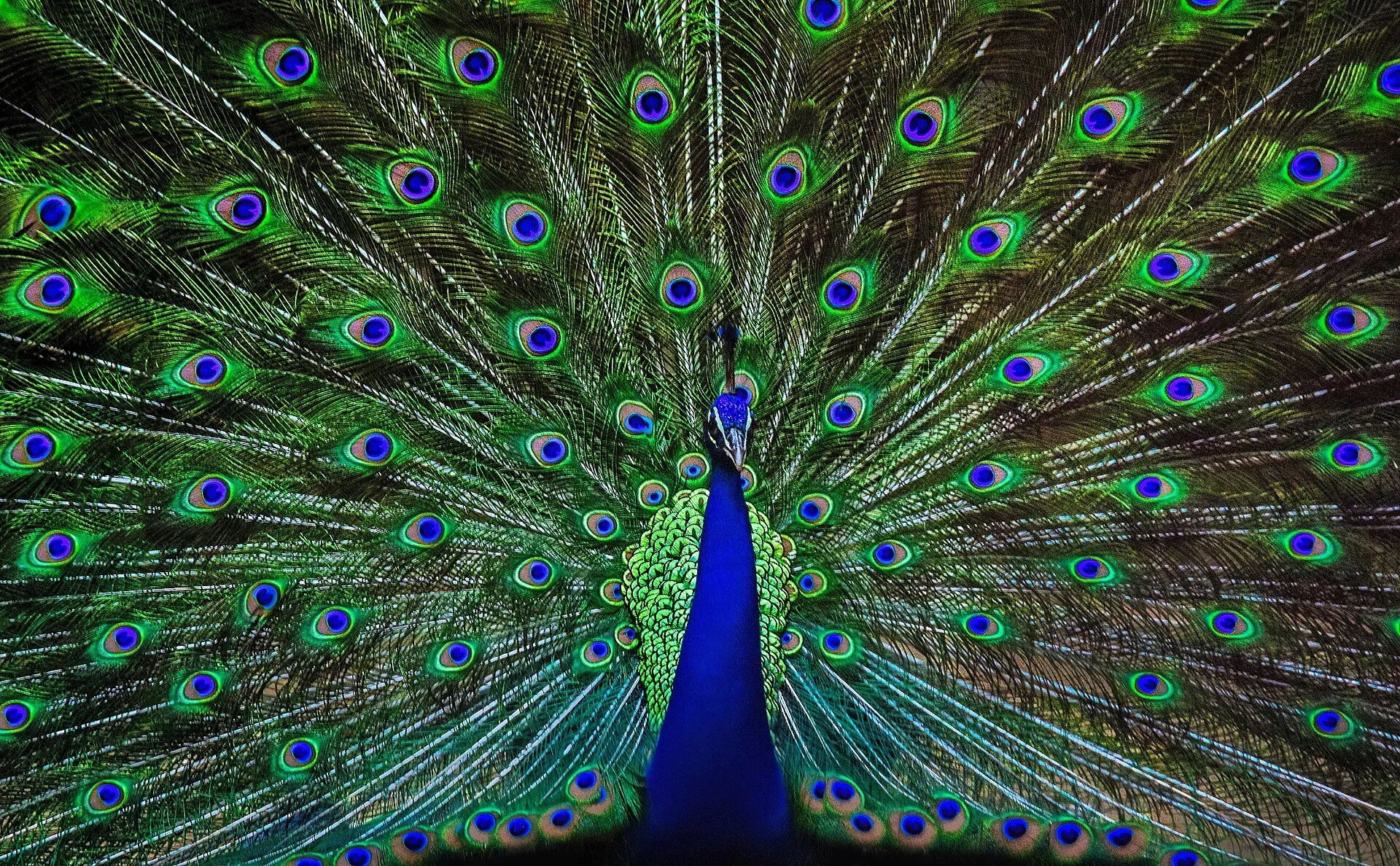
Photo: Abdul Momin, with thanks · CC BY-SA 4.0 · via Wikimedia Commons · temporary stand-in photo

Indian Peafowl
The blue peacock is unmistakable. In Pakistan wild peafowl are most numerous in Tharparkar, Sindh, with a smaller group in north-east Punjab.
Overview
The Indian peafowl (Pavo cristatus) is the blue peafowl, whose male is the peacock and female the peahen. It is a large ground bird of open woodland and farmland.
Identification
- Peacock: 100 to 120 cm from bill to tail, and 200 to 230 cm to the end of the full train. It weighs about 4.1 to 5.2 kg. Metallic blue crown and neck, a fan-shaped crest, a white patch under the eye, and a train of long feathers with eye-spots.
- Peahen: duller, with no long train.
- Call: a loud pia-ow or may-awe, most often before the monsoon. Peafowl also shriek when alarmed.
Where and when to see it in Pakistan
Wild peafowl in Pakistan are concentrated in Tharparkar in south-east Sindh. The Sindh Wildlife Department said in 2021 that numbers looked higher in Mithi, Islamkot and Nagarparkar than elsewhere in Tharparkar, though this was unconfirmed. Kallar Kahar in the Salt Range was once a natural sanctuary of peacocks, according to Wikipedia, but their numbers have fallen because of population growth and illegal capture. Early morning and evening, near villages and scrub, are good times. The birds call more as the monsoon approaches.
Behaviour
Peafowl forage on the ground in small groups for berries, grain, lizards, snakes and rodents. They avoid flying and run through undergrowth, but roost in tall trees at night.
Threats and conservation
The IUCN lists the Indian peafowl as Least Concern (IUCN, 2016). Counts in Pakistan are patchy. A 2021 Express Tribune report said the Sindh Wildlife Department had started its first count in Tharparkar, prompted by peafowl deaths; it had counted 42,000 birds in 52 villages at the time and gave no total. Other published estimates conflict, so treat any single figure with caution. Disease and illegal capture have been reported as concerns.
Birding etiquette
Keep your distance and use binoculars. Never play recorded calls near nests, and do not use flash. Stay on paths, keep dogs away, and follow the instructions of park staff and local guides. Do not feed or chase peafowl.
Sources and last checked
Last checked Confidence medium5 sources2 still to check
- Last checked
- Method
- Desk research from published sources
- Confidence
- medium
- Checked by
- trek.pk research team
Researched from published sources; not yet checked on the ground by our team. Spot something out of date? Report a mistake.
Sources
- Indian peafowl · Wikipedia · checked
- Pavo cristatus (assessment 2016) · IUCN Red List · checked
- SWD launches first peafowl survey in Tharparkar (21 March 2021) · The Express Tribune · checked
- Kallar Kahar · Wikipedia · checked
- Pavo cristatus (IUCN Red List category) · GBIF, IUCN Red List checklist · checked
Still to be checked on the ground (2)
- Total Tharparkar population: no published total (the 2021 Sindh Wildlife Department count had reached 42,000 birds in 52 villages with most villages still to count)
- Whether peafowl are still common at Kallar Kahar (Wikipedia says numbers have fallen)