

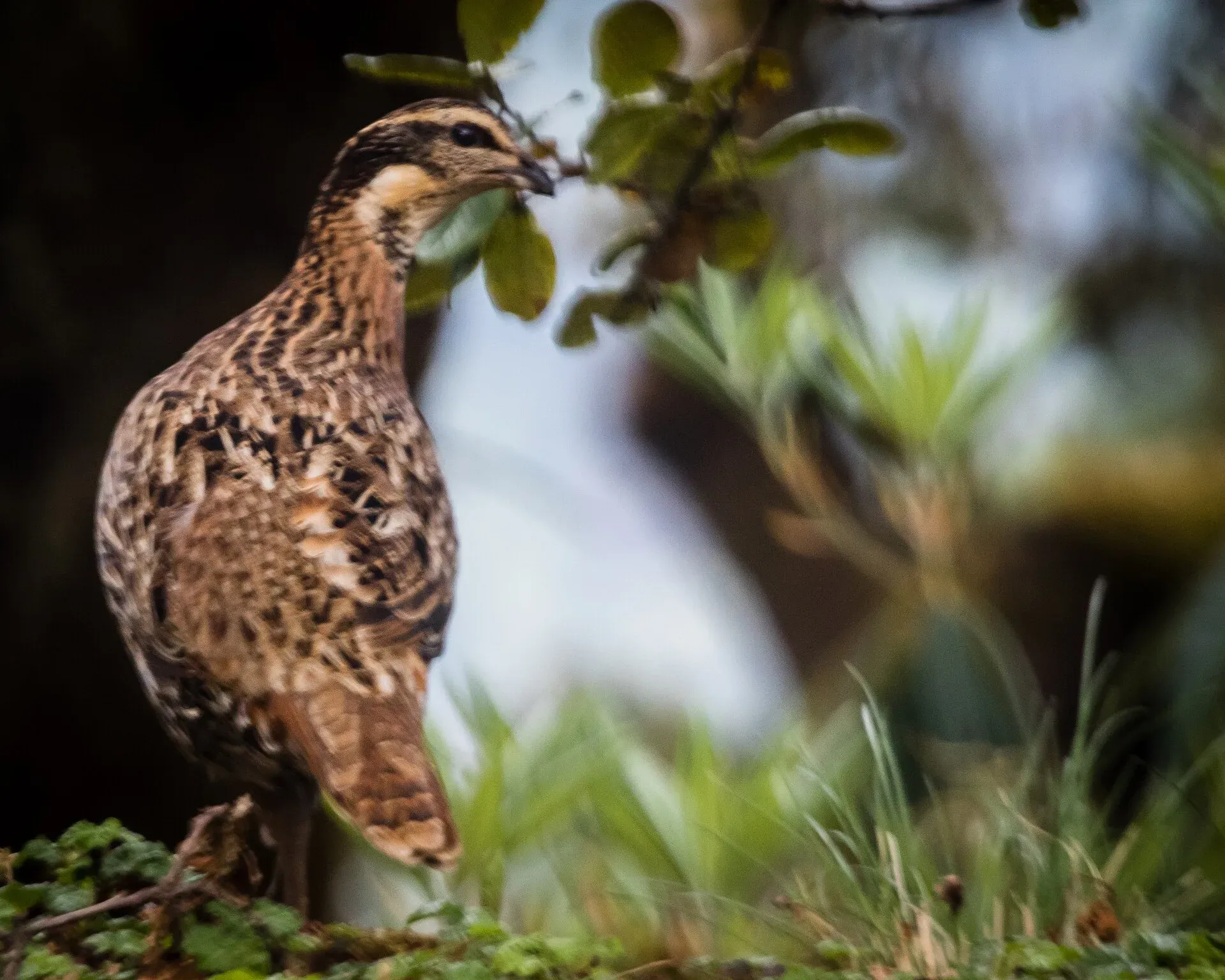
Photo: Sheila Mary Castelino, with thanks · CC BY-SA 4.0 · via Wikimedia Commons · temporary stand-in photo

Koklass Pheasant
A secretive pheasant of high Himalayan forest, easier to hear than see: its loud pre-dawn chorus gives the bird its name. Recorded in the Kaghan valley.
Overview
The koklass pheasant (Pucrasia macrolopha) is a medium-sized, elusive forest bird that lives at high altitude from Afghanistan to central Nepal and beyond. Its name comes from its territorial call.
Identification
- Male: a black head, chestnut breast and prominent white patches on the sides of the neck. The upper parts are silver-grey streaked with black down the centre of each feather.
- Female: pale brown above, plainer.
- Both sexes have a long tail with pale-tipped feathers. Young birds look like females.
- Call: loud chorus calls before dawn in the breeding season and in autumn. This is how surveys find it.
Where and when to see it in Pakistan
The koklass lives in high forest and, like the western tragopan, does not go above the tree line. A study of pheasants in the Kaghan valley found koklass, monal, kalij and western tragopan in its study areas. The Palas valley has also been surveyed for pheasants using dawn call counts, and researchers there describe the habitat as good but under pressure. Because the bird skulks under bushes, listen at dawn in spring and autumn instead of expecting to see it.
Behaviour
Koklass stay in pairs or small family groups all year. They are largely vegetarian for much of the year, eating pine nuts, shoots and seeds, and take many insects, especially ants, when raising chicks. They nest on the ground and roost in trees or under rock overhangs. They can fly uphill and sometimes cover long distances.
Threats and conservation
The IUCN lists the koklass as Least Concern (BirdLife International 2016 assessment). The pheasant studies in Palas and Kaghan point to habitat fragmentation, illegal hunting and deforestation as pressures on mountain pheasants. Pakistan-wide counts for koklass are scarce.
Birding etiquette
Keep your distance and use binoculars. Never play recorded calls near nests, and do not use flash. Stay on paths, keep dogs away, and follow the instructions of park staff and local guides.
Sources and last checked
Last checked Confidence medium3 sources3 still to check
- Last checked
- Method
- Desk research from published sources
- Confidence
- medium
- Checked by
- trek.pk research team
Researched from published sources; not yet checked on the ground by our team. Spot something out of date? Report a mistake.
Sources
- Koklass pheasant · Wikipedia · checked
- Status and conservation of pheasants in Kaghan Valley · Researchers Links · checked
- Pucrasia macrolopha (IUCN Red List category) · GBIF, IUCN Red List checklist · checked
Still to be checked on the ground (3)
- Size figures (Wikipedia gives conflicting lengths, so none are given)
- Exact Pakistani sites and elevations for koklass (Wikipedia gives none; the Kaghan and Palas studies could not be opened on 17 November 2026)
- IUCN page returned access denied; the 2016 Least Concern assessment rests on Wikipedia's BirdLife citation