

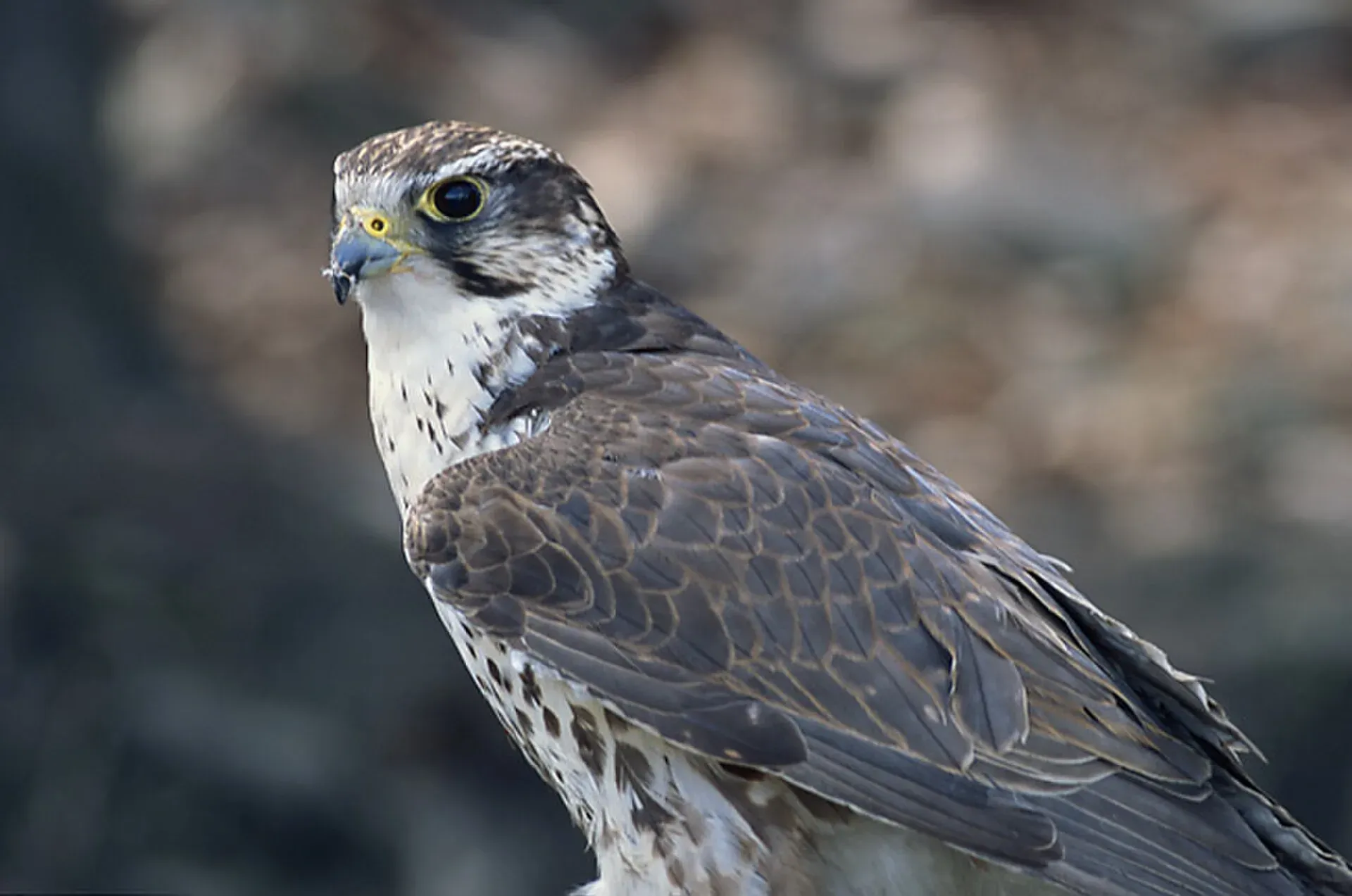
Photo: Marek Szczepanek, with thanks · CC BY-SA 3.0 · via Wikimedia Commons · temporary stand-in photo

Saker Falcon
A large, brownish falcon of open steppe. It is listed as Endangered and is a scarce migrant through Pakistan, where illegal trapping is a serious threat.
Identification
The saker falcon is 45 to 57 cm long, with a wingspan of 97 to 126 cm. It is larger than a lanner and browner than a gyrfalcon. Plumage varies a lot, and the sexes look alike apart from size. Young birds are darker and more heavily streaked. It hunts low, often in horizontal chases rather than the steep dive of the peregrine.
Status
IUCN Red List: Endangered (BirdLife International, 2021). The main reason is a rapid fall in numbers on Central Asian breeding grounds.
Where and when to see it in Pakistan
Sakers from Europe and West Asia winter mainly in Africa, and the route takes them over the Middle East, Arabia and Pakistan, so Pakistan is a passage area on migration. It is scarce and wary, and it is not a bird you can plan a trip around. Reports from Balochistan say a saker was caught in Loralai in 2018, which shows that birds do pass through the province. Ask the district administration or local police about current conditions before you go. For foreign visitors: the UK FCDO advises against all travel to Balochistan (page updated 27 October 2026, checked 17 November 2026), so do not go looking for falcons there.
Behaviour
Sakers eat mostly rodents and birds. Most do not build a nest, but use old stick nests of storks, ravens or buzzards in trees, or nest on cliffs. In Europe, young birds migrate more than adults.
Threats and conservation
Illegal trapping for falconry, mainly for buyers in the Gulf, is the major threat. Trapping and trade in falcons is banned in Pakistan, and a Balochistan wildlife official told Dawn that trapping of sakers has been prohibited since 2005. The species is also vulnerable to loss of habitat and to avian influenza.
If you see a trapped bird, a net, or a falcon for sale, do not confront anyone. Note the place, take a photo from a safe distance and tell the provincial wildlife department.
Birding etiquette
- Use binoculars or a telescope and keep your distance. Never use recorded calls to draw a bird in, and do not use flash.
- Stay away from nests and roosts, and keep dogs out of wetlands.
- Do not use drones near birds.
- Never buy a captive or trapped wild bird, or take part in trapping.
- Hire a licensed local guide where you can, and ask the local wildlife department about access and timing.
Sources and last checked
Last checked Confidence medium6 sources2 still to check
- Last checked
- Method
- Desk research from published sources
- Confidence
- medium
- Checked by
- trek.pk research team
Researched from published sources; not yet checked on the ground by our team. Spot something out of date? Report a mistake.
Sources
- Saker falcon · Wikipedia · checked
- Saker Falcon – BirdLife DataZone factsheet · BirdLife International · checked
- WWF-Russia alerts conservationists to Saker Falcon in Balochistan · Dawn · checked
- Poachers' paradise: Gulf hunts fuel falcon trafficking in Pakistan · Dawn · checked
- Pakistan travel advice · UK FCDO · checked
- Falco cherrug (IUCN Red List category) · GBIF, IUCN Red List checklist · checked
Still to be checked on the ground (2)
- Peak passage months in Pakistan (not found in any source; the best-months field is unsourced)
- Hero photo is small (650 px) and not from Pakistan