

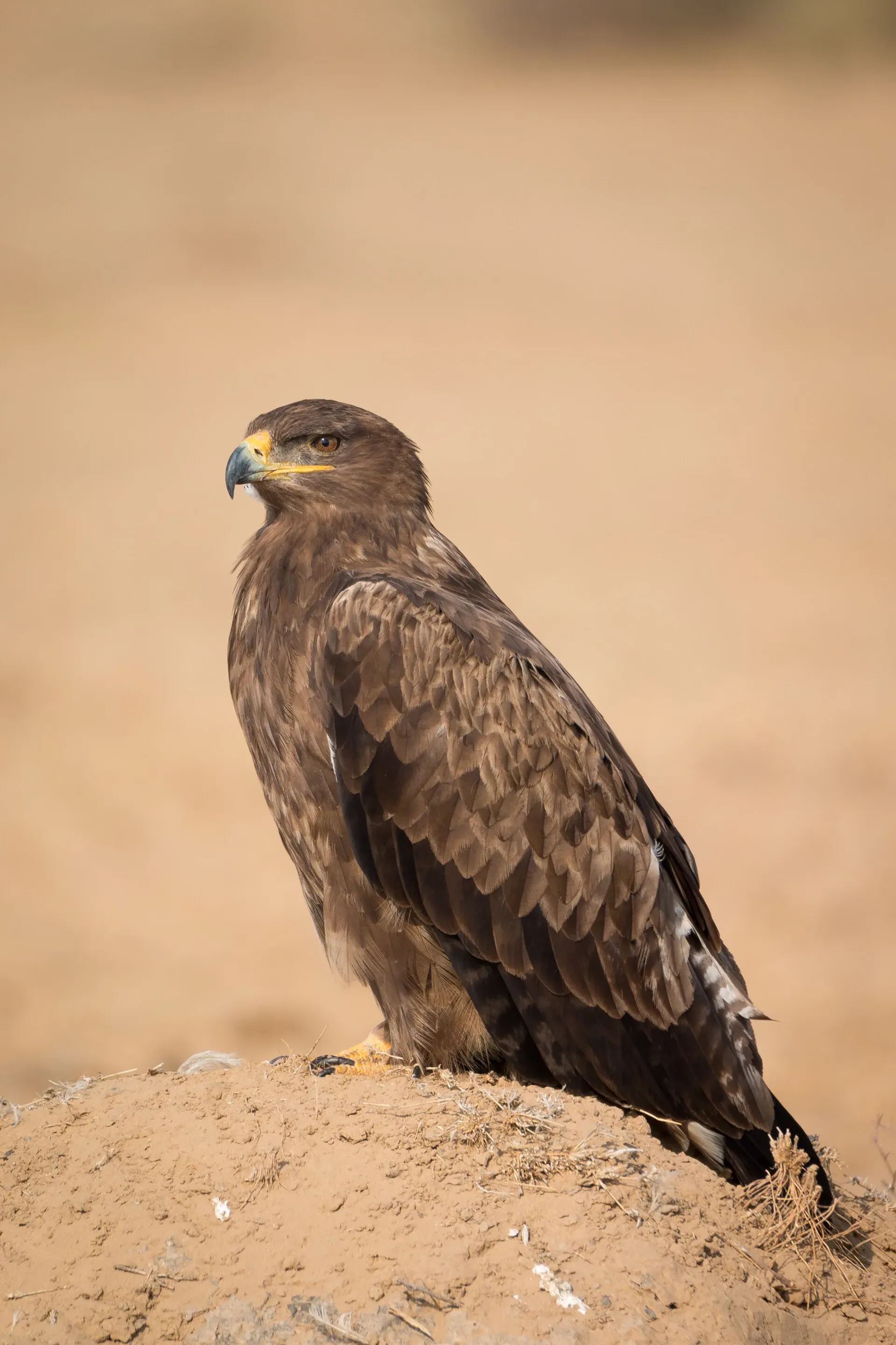
Photo: Sumeet Moghe, with thanks · CC BY-SA 3.0 · via Wikimedia Commons · temporary stand-in photo

Steppe Eagle
A large, dark-brown eagle that breeds on the Central Asian steppe and winters in South Asia, including Pakistan. It is listed as Endangered by the IUCN.
Identification
The steppe eagle is a big, bulky raptor, 60 to 89 cm long, with a wingspan that is usually over 1.6 m. Adults are mostly dark brown, often with a paler, rusty-yellow patch on the nape. The gape (the corner of the mouth) reaches past the middle of the eye, which helps separate it from the spotted eagles. Young birds are paler, with a white band across the wing and a whitish "U" above the tail. Juveniles can be confused with young tawny and imperial eagles, so take your time.
Status
IUCN Red List: Endangered (IUCN, 2020). Wikipedia names steppe fires, disturbance, trampling of nests and electrocution as causes of decline.
Where and when to see it in Pakistan
The steppe eagle is a winter migrant. Birds arrive from about October, and spring movement north begins around February, so the best months are roughly November to February. A tracking study of young birds found many wintering in southern Pakistan, and studies also record wintering eagles in the Poonch and Jhelum valleys of Azad Kashmir. In winter it uses open country, farmland, rubbish dumps, carcass dumps and wetlands, so look over the Indus plains and around the edges of towns.
Behaviour
Away from its breeding grounds the eagle feeds on carrion, insect swarms and rubbish as well as small mammals. It spends much of the day gliding or soaring,
Threats and conservation
Electrocution on power lines and pylons, steppe fires, disturbance at nests and loss of habitat are the main concerns named in the literature. Look at pylons and poles for roosting eagles, and report injured birds to the provincial wildlife department rather than handling them yourself.
Birding etiquette
- Use binoculars or a telescope and keep your distance. Never use recorded calls to draw a bird in, and do not use flash.
- Stay away from nests and roosts, and keep dogs out of wetlands.
- Do not use drones near birds.
- Never buy a captive or trapped wild bird, or take part in trapping.
- Hire a licensed local guide where you can, and ask the local wildlife department about access and timing.
Sources and last checked
Last checked Confidence medium4 sources2 still to check
- Last checked
- Method
- Desk research from published sources
- Confidence
- medium
- Checked by
- trek.pk research team
Researched from published sources; not yet checked on the ground by our team. Spot something out of date? Report a mistake.
Sources
- Steppe eagle · Wikipedia · checked
- Steppe Eagle – BirdLife DataZone factsheet · BirdLife International · checked
- Factors affecting habitat selection of endangered steppe eagle (Aquila nipalensis) in Pakistan · AMiner / peer-reviewed study · checked
- Aquila nipalensis (IUCN Red List category) · GBIF, IUCN Red List checklist · checked
Still to be checked on the ground (2)
- Best wintering sites for visitors (Wikipedia: Poonch and Jhelum valleys of Azad Kashmir, mean 154 eagles per study area; southern Pakistan for tracked juveniles; no visitor site)
- Hero photo is not from Pakistan