

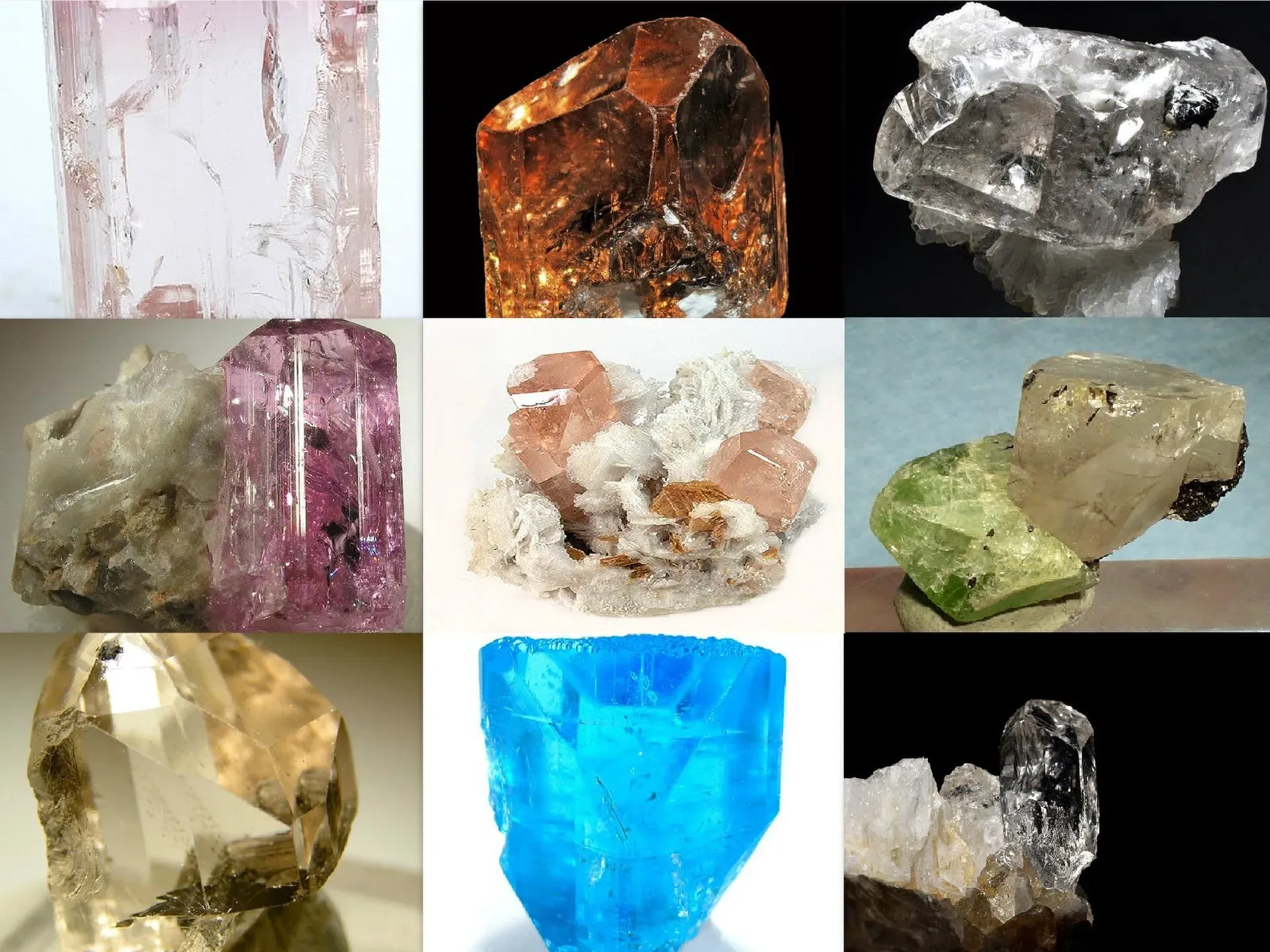
Photo: Robert M. Lavinsky, with thanks · CC BY-SA 3.0 · via Wikimedia Commons · temporary stand-in photo

Gemstones and Onyx of Gilgit-Baltistan
Gilgit-Baltistan's mountains yield aquamarine, topaz, tourmaline and other gems, with Shigar, Hunza and the Braldu valley best documented. Pakistan's onyx comes mainly from Balochistan, not the north.
What it is
The mountains of Gilgit-Baltistan are a known source of gemstones. Wikipedia's list for the region includes aquamarine, topaz, tourmaline, peridot, garnet, apatite and agate. Aquamarine is found in zoned pegmatites, in cavities or veins, according to the Gemological Institute of America (GIA).
Materials and technique
Gems are mined by hand, then cut, polished and set. GIA reports that aquamarine comes mostly from Gilgit-Baltistan, including the Shigar valley and the Hunza and Braldu valleys. A published study of the Shigar valley describes a variety of gems being mined there.
Onyx
Onyx in Pakistan is a different story. Dawn names Chagai, Lasbela and Khuzdar in Balochistan as having marble and onyx reserves, with Chagai the largest. There is no reliable source for onyx mining in Gilgit-Baltistan, so we do not list it as a northern product. Dawn also reports that much of Balochistan's raw marble is exported as blocks, mostly to China.
Where it is traded
Skardu, Gilgit and Shigar are the places to ask about northern stones. Wikipedia describes Peshawar as the hub of Pakistan's gem trade, and says the government has set up gem identification laboratories in major cities. Which labs and bazaars are open in Skardu and Gilgit has not been confirmed. Gem shows are held in Peshawar and Islamabad.
How to recognise good work
Ask for the stone's name, source and treatment, since heat and other treatments are common in the trade. Ask for a certificate from a recognised gemmological lab for any valuable stone. Cheap glass, dyed quartz and synthetic stones are sold as the real thing. Look for chips, cracks and cloudiness under good light.
Buying ethically
Ask where the stone was mined and how. Mining at altitude is dangerous, and unregulated digging can harm miners and land. Buy from licensed dealers, keep receipts, and check customs rules on carrying stones out of Pakistan before you leave. Do not buy fossils, relics or protected material. We do not quote prices.
Where to see it made
Cutters and jewellers work in the bazaars of Skardu and Gilgit. Ask permission before photographing. Do not go to mines without a local guide and local permission.
Care
Store stones separately so harder ones do not scratch softer ones. Clean with a soft cloth and mild soapy water.
Safety
For foreign visitors: the UK FCDO does not advise against Gilgit-Baltistan in general, but it does advise against travel on the Karakoram Highway between Mansehra and Chilas, which many travellers use to get there, and Peshawar, the main gem-trading city, is also covered. Check the UK FCDO travel advice for Pakistan (updated 27 October 2026, checked 17 November 2026) before you plan a trip.
Sources and last checked
Last checked Confidence medium5 sources4 still to check
- Last checked
- Method
- Desk research from published sources
- Confidence
- medium
- Checked by
- trek.pk research team
Researched from published sources; not yet checked on the ground by our team. Spot something out of date? Report a mistake.
Sources
- Gemstones of Pakistan · Wikipedia · checked
- Gemstones of the Shigar valley, Skardu, Pakistan · Arabian Journal of Geosciences (Springer) · checked
- Aquamarine from Pakistan · GIA · checked
- Losing our marble (onyx in Balochistan) · Dawn · checked
- Pakistan travel advice · UK FCDO · checked
Still to be checked on the ground (4)
- Onyx mining in Gilgit-Baltistan: no reliable source found (the plan's title mentions onyx, the evidence points to Balochistan)
- Current gem-testing labs and bazaars in Skardu and Gilgit: none confirmed
- Customs rules for carrying stones out of Pakistan: no official page reached
- Topaz and tourmaline locality names (Roundu, Haramosh) and the Shigar study details: they were removed from the page for lack of a source