

Photo: Sutyarashi, with thanks · CC BY-SA 4.0 · via Wikimedia Commons · temporary stand-in photo
Culture
Music from qawwali to folk songs, crafts by region, festivals, sports from cricket to polo, and traditional dress in Pakistan.
Key facts
- Qawwali, ghazal and regional folk music
- Crafts: truck art, blue pottery, ajrak, Chitrali caps, Swati wood
- Festivals from Eid and Basant-style spring fairs to Shandur Polo
- Cricket, hockey, squash and polo
- Shalwar kameez in many local styles
Overview
Pakistan's culture comes from many streams: Indus Valley traditions, Persian and Central Asian influences, Sufi poetry, Mughal arts and the folk customs of the mountains. Each province has its own flavour. This page gives you a brief tour.
Music
- Qawwali: devotional Sufi music, sung by a group with harmonium and hand-claps, often building to ecstatic climaxes. The late Nusrat Fateh Ali Khan made it known across the world. Qawwali is performed at shrines, especially on Thursday evenings, and at urs festivals.
- Ghazal and classical music: poetry set to music, popular in Lahore and Karachi, with strong traditions in North Indian classical forms.
- Folk and Sufi music: Punjabi folk songs and kafi, Sindhi sur music in the tradition of Shah Abdul Latif Bhittai, Pashto songs with the rubab and attan dance, Balochi suroz and zahirok, and the drum and sorna (a reed instrument) of Gilgit-Baltistan.
- Modern: Pakistan has a lively pop, rock and fusion scene, and a popular music series called Coke Studio that mixes folk and modern styles.
Photo: King Eliot, with thanks · CC BY-SA 4.0 · via Wikimedia Commons · temporary stand-in photo
Crafts
- Punjab: Multan blue pottery, khussa shoes, phulkari embroidery, brass and woodwork in Lahore.
- Sindh: ajrak (block-printed shawls), Hala pottery and tiles, Sindhi embroidery and lacquerware.
- Khyber Pakhtunkhwa: Peshawari chappal sandals, Swati woodcarving, the Chitrali woollen cap (pakol or patti cap), and copperware.
- Balochistan: intricate hand embroidery on dresses, rugs and camel-hair wear.
- Gilgit-Baltistan: woollen shawls and caps, apricot-wood items, silver jewellery and gemstones.
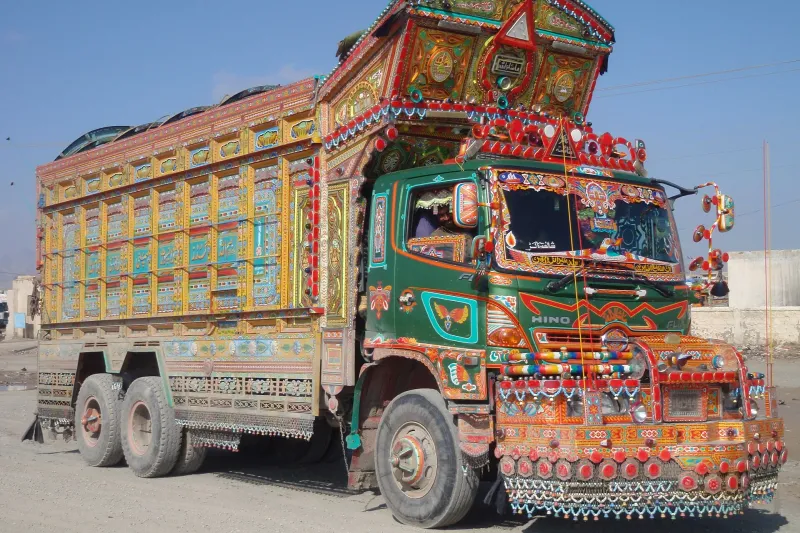
- Everywhere: truck art, the bright painted and decorated lorries and buses that are found across Pakistan. Painters in Karachi and Rawalpindi are famous for it.
Festivals
Many festivals follow the Islamic lunar calendar, so their dates move each year.
- Eid al-Fitr (after Ramadan) and Eid al-Adha: the biggest holidays, with family meals, new clothes and gifts.
- Muharram and Ashura: a time of mourning, especially for Shia communities.
- Urs: annual festivals at Sufi shrines.
- Pakistan Day (23 March) and Independence Day (14 August): parades, flags and fireworks.
- Spring and harvest fairs: the Horse and Cattle Show in Lahore, Lok Mela folk festival in Islamabad, and Nowruz in the north.
- Kalash festivals: Chilimjusht, Uchau and Chaumos.
- Shandur Polo Festival: an annual polo match between Chitral and Gilgit teams, high on Shandur Pass, usually in early July.
- Christmas, Easter and Baisakhi: celebrated by Pakistan's Christian and Sikh communities.
Basant, the spring kite festival of Punjab, was banned for many years because of deaths and injuries from kite string, gunfire and rooftop falls. It returned to Lahore in February 2026, and the Punjab government has announced 12 to 14 March 2027 for the next one (as of November 2026). Punjab lifted the ban in December 2025 and allowed a three-day festival in Lahore only, in February 2026, with strict rules on kites and string. Kite-flying elsewhere remains restricted, so check the current rules for the city you visit.
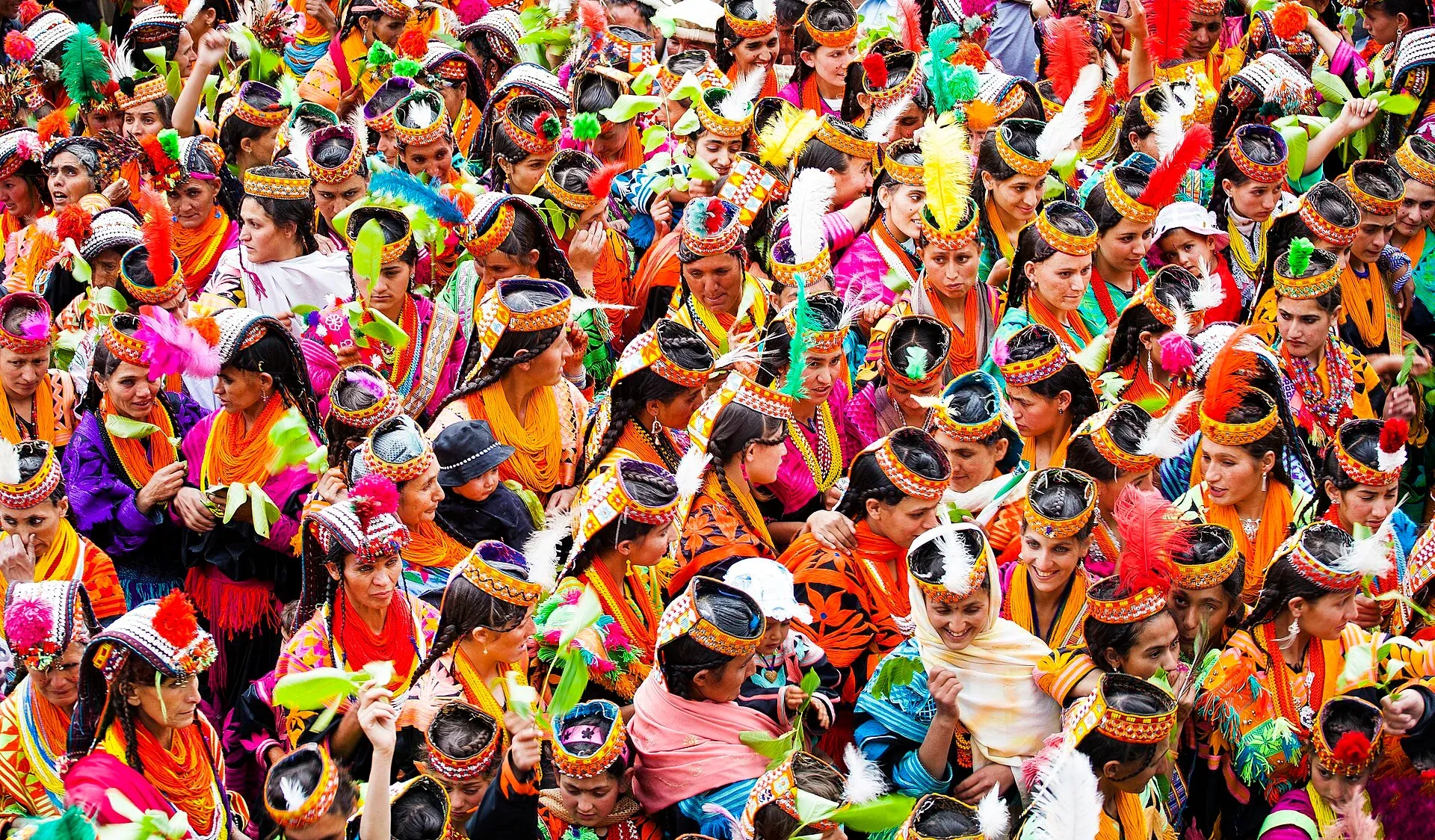
Photo: Tariqsulemani, with thanks · CC BY-SA 4.0 · via Wikimedia Commons · temporary stand-in photo
Sports
- Cricket is the national passion. Pakistan won the 1992 World Cup, the 2009 T20 World Cup and the 2017 Champions Trophy, and matches fill streets and living rooms.
- Hockey: Pakistan has won the World Cup four times.
- Squash: Jahangir Khan and Jansher Khan dominated the sport for years.
- Polo and mountain sports: polo in the north is played with few rules and a lot of drumming. Mountaineering and trekking are growing, led by Pakistani high-altitude porters and climbers.
- Kabaddi, wrestling and kite flying are popular local games.
Dress
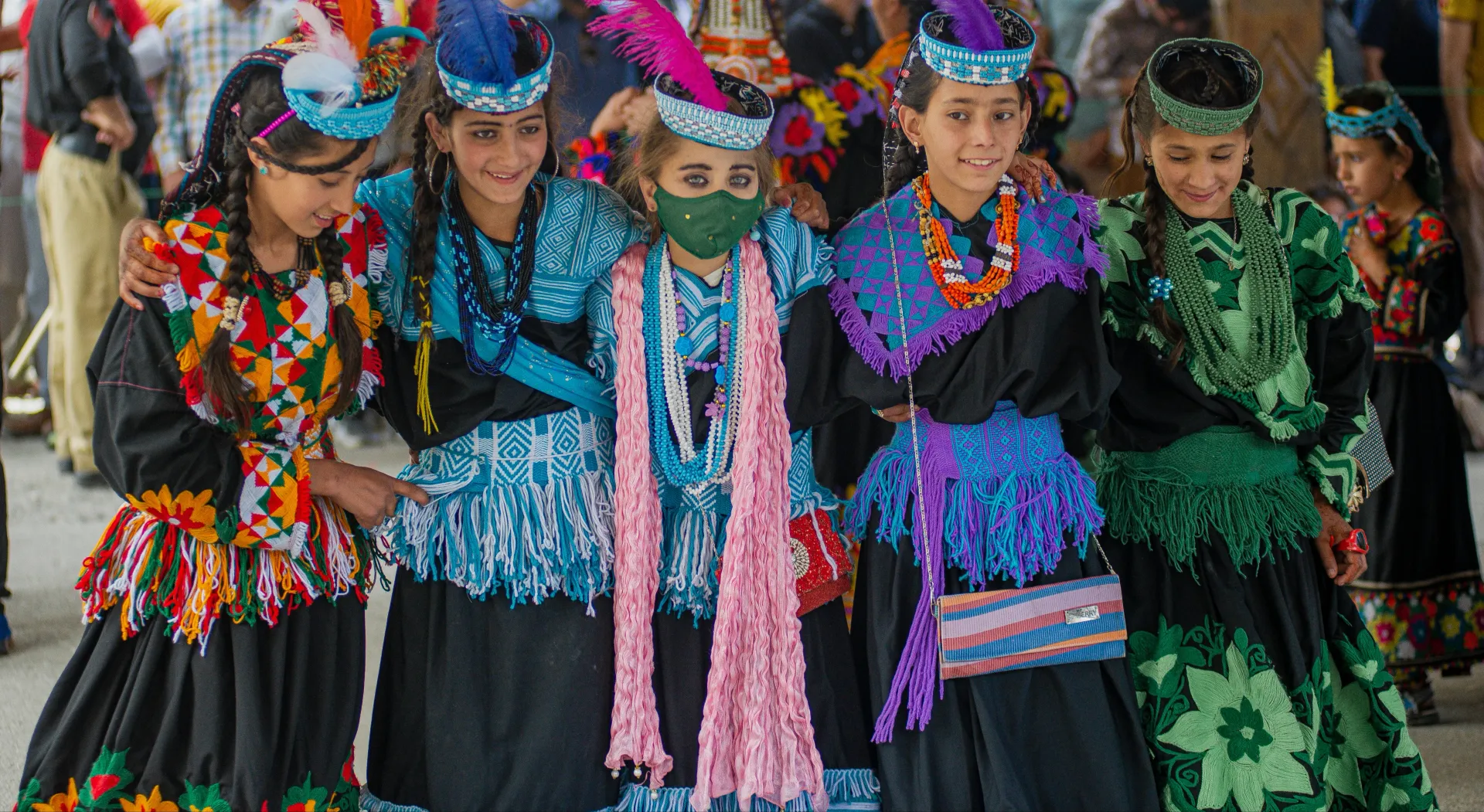
The shalwar kameez, a long tunic with loose trousers, is worn by men and women across the country, in styles that vary by region. Women often add a dupatta (scarf), and men may wear a waistcoat. In Sindh you will see the Sindhi cap and ajrak shawl. In Khyber Pakhtunkhwa and the north, you will see the pakol and woollen shawls. In Balochistan, men wear wide shalwar and turbans, and women wear embroidered dresses. Kalash women wear black robes with colourful beads and headdresses. For weddings and festivals, people dress in vivid colours and fine fabrics.
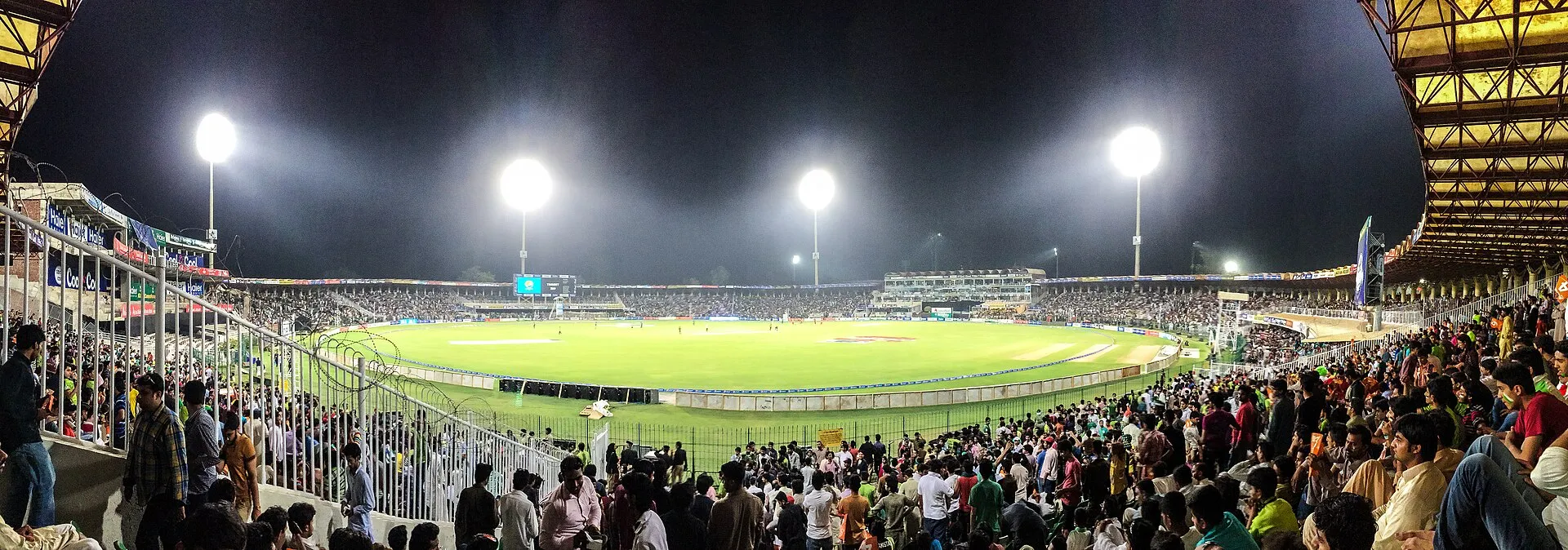
Photo: Younisjunejo, with thanks · CC BY-SA 4.0 · via Wikimedia Commons · temporary stand-in photo
Experiencing culture as a visitor
- Visit workshops and bazaars in Lahore, Multan, Peshawar and Hyderabad.
- Attend a qawwali night where visitors are welcome, with a local host if possible.
- Try on local dress in a market, and ask the shopkeeper how to wear it.
- Watch a cricket match, even a street game, and ask someone to explain it.
Good to know
Respect the places where culture meets faith, such as shrines and mosques. Entry fees for museums and festivals vary; current fees will be added soon.
Culture: explore
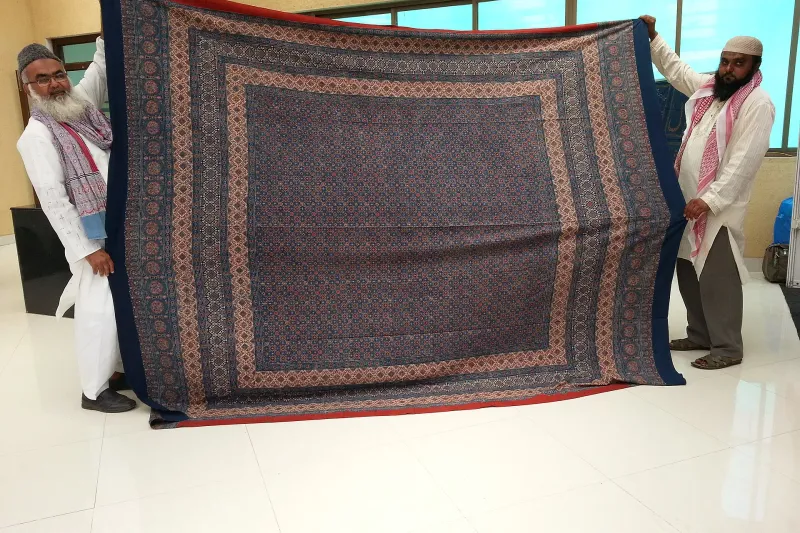
Ajrak (Sindh)
Ajrak is Sindh's block-printed cloth, usually deep indigo and crimson with white and black geometric patterns. It is given to guests as a mark of respect and worn as a shawl or wrap.
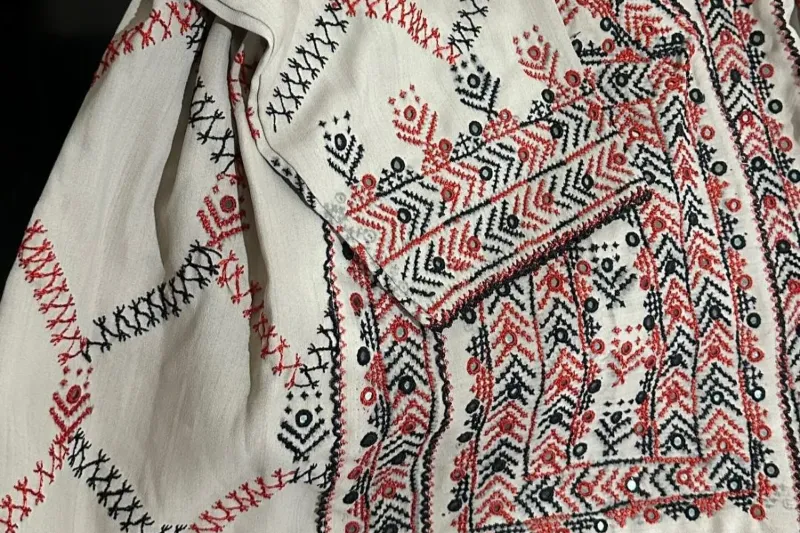
Balochi Embroidery
Balochi needlework is dense hand embroidery on dresses and household cloth, in geometric motifs with small mirrors. It is traditionally women's work, and each tribe has its own designs.
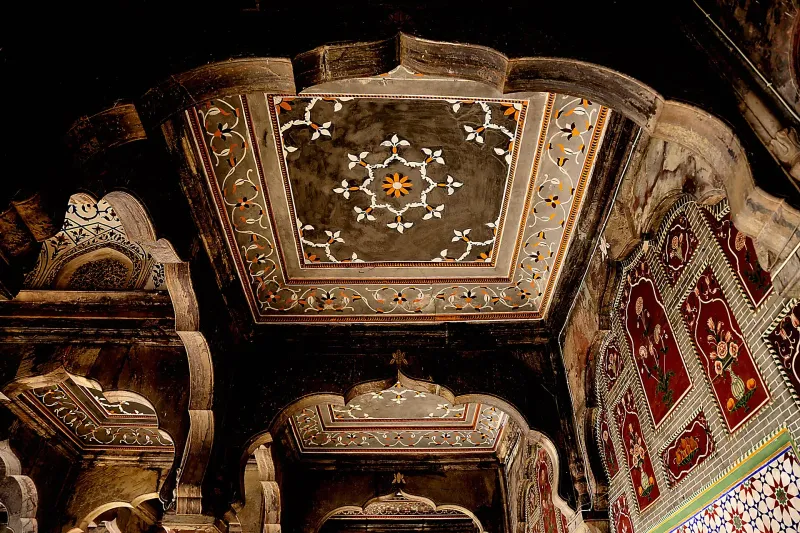
Chiniot Woodwork
Chiniot, on the Chenab in Punjab, is known for carved shisham furniture and doors, often with brass inlay. Most of the work is done by hand in small workshops.
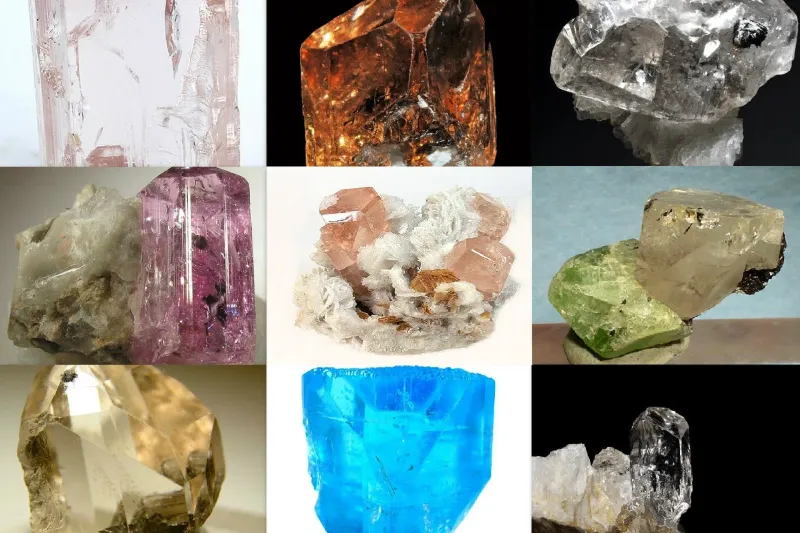
Gemstones and Onyx of Gilgit-Baltistan
Gilgit-Baltistan's mountains yield aquamarine, topaz, tourmaline and other gems, with Shigar, Hunza and the Braldu valley best documented. Pakistan's onyx comes mainly from Balochistan, not the north.
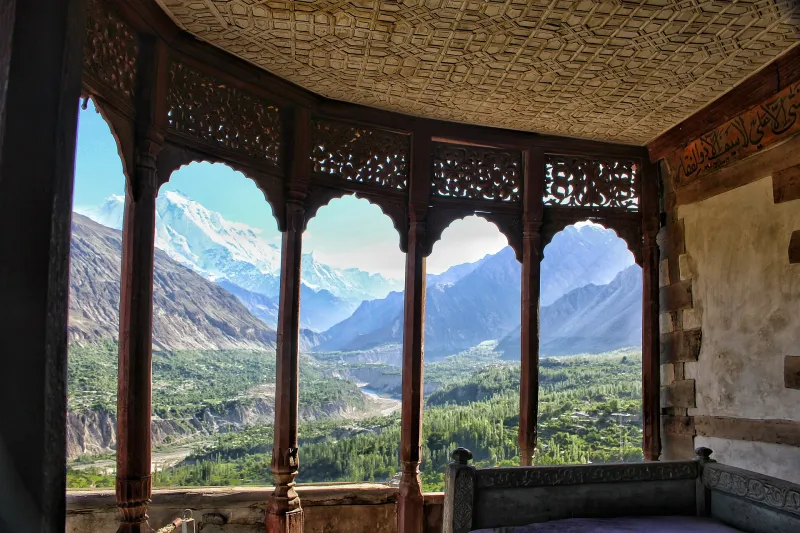
Hunza Carpets and Woodwork
Hunza is known for carved wood, from the fort's old doors and pillars to small household items, and for hand-knotted carpets and woollen goods. Women now work as carpenters too.
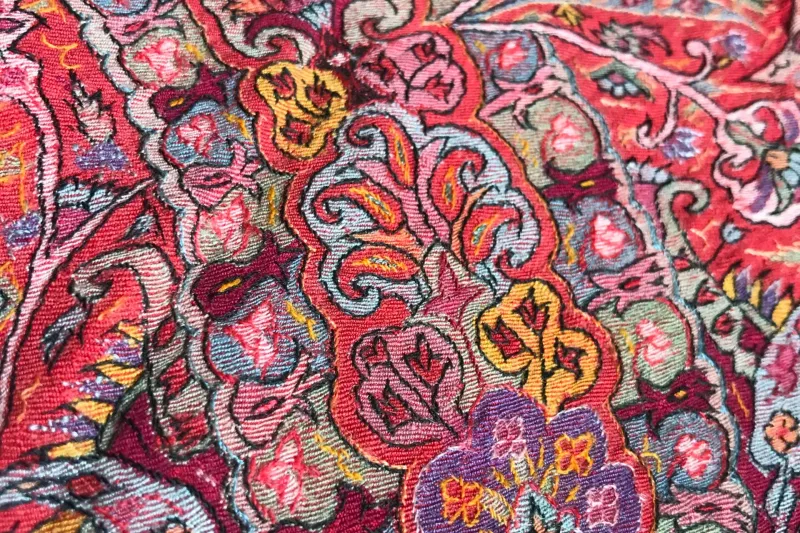
Kashmiri Shawls and Pashmina
Kashmiri shawls are fine woven and embroidered wraps. Pashmina is a very fine goat-wool fibre, and the name is often misused. Shahtoosh, made from a protected antelope, is illegal.
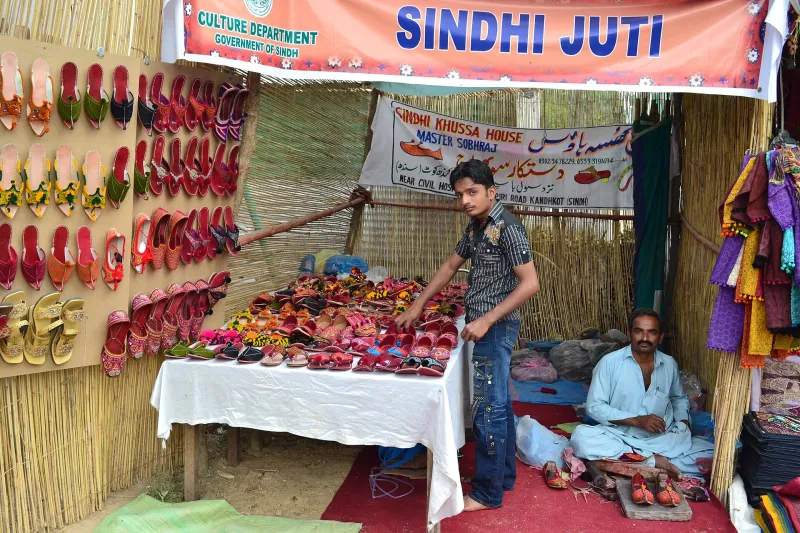
Khussa (Traditional Shoes)
Khussa is a hand-made leather shoe with a curled toe, often embroidered. Multan and Chakwal are among the places linked to it, and it is worn at weddings and festivals.
Multani Blue Pottery
Multan's blue pottery, called kashi or kashigari, is glazed ceramic painted in cobalt and turquoise. The same blue tilework decorates the city's famous shrines.
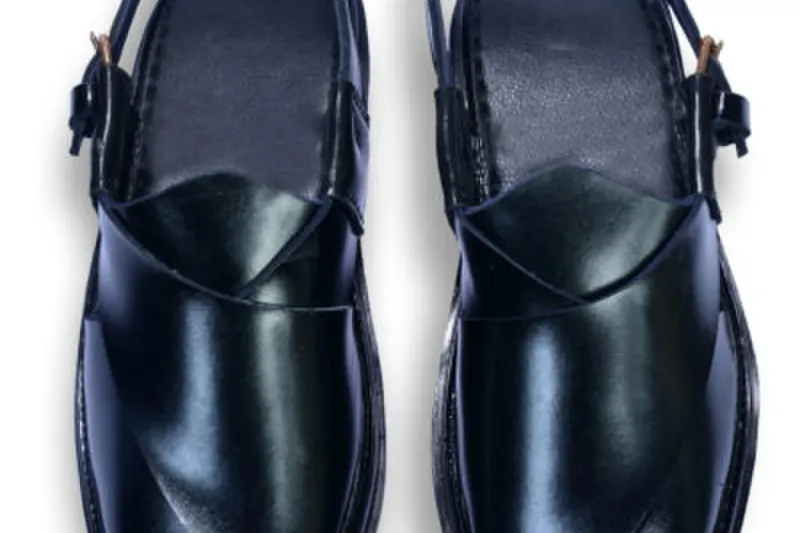
Peshawari Chappal
The Peshawari chappal is a sturdy leather sandal, also called kheri, with a two-strap front and a heel strap. Peshawar gave it its name, but it is made across northern Punjab and Khyber Pakhtunkhwa.
Rilli (Sindh)
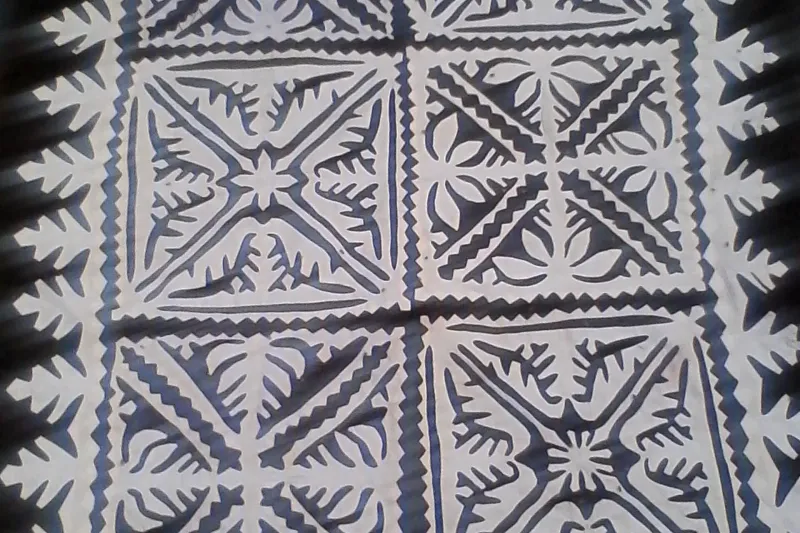
Rilli (also ralli) is a handmade patchwork, appliqué or embroidered quilt from Sindh and nearby areas, traditionally made by women and often passed on within families.
Swati Embroidery
Swati embroidery is the colourful needlework of the Swat valley, made mostly by women on dark cloth in bright geometric patterns. It is called bagh, meaning flower garden.
Truck Art
Pakistan's decorated trucks and buses carry painting, calligraphy, mirror work and carved wood, usually done in workshops. Karachi is the best-known centre.


Sources and last checked
Last checked Confidence medium6 sources2 still to check
- Last checked
- Method
- Desk research from published sources
- Confidence
- medium
- Checked by
- trek.pk research team
Researched from published sources; not yet checked on the ground by our team. Spot something out of date? Report a mistake.
Sources
- Population and Housing Census 2023 (results) · Pakistan Bureau of Statistics · checked
- Pakistan · Wikipedia · checked
- Pakistan Tourism Guide 2021 · TDAP · checked
- Pakistan: UNESCO World Heritage properties · UNESCO World Heritage Centre · checked
- Basant (festival) · Wikipedia · checked
- Pakistan's historic kite festival to return in March 2027 after successful revival · Arab News Pakistan · checked
Still to be checked on the ground (2)
- Festival dates change each year; check official calendars
- Basant rules outside Lahore


