

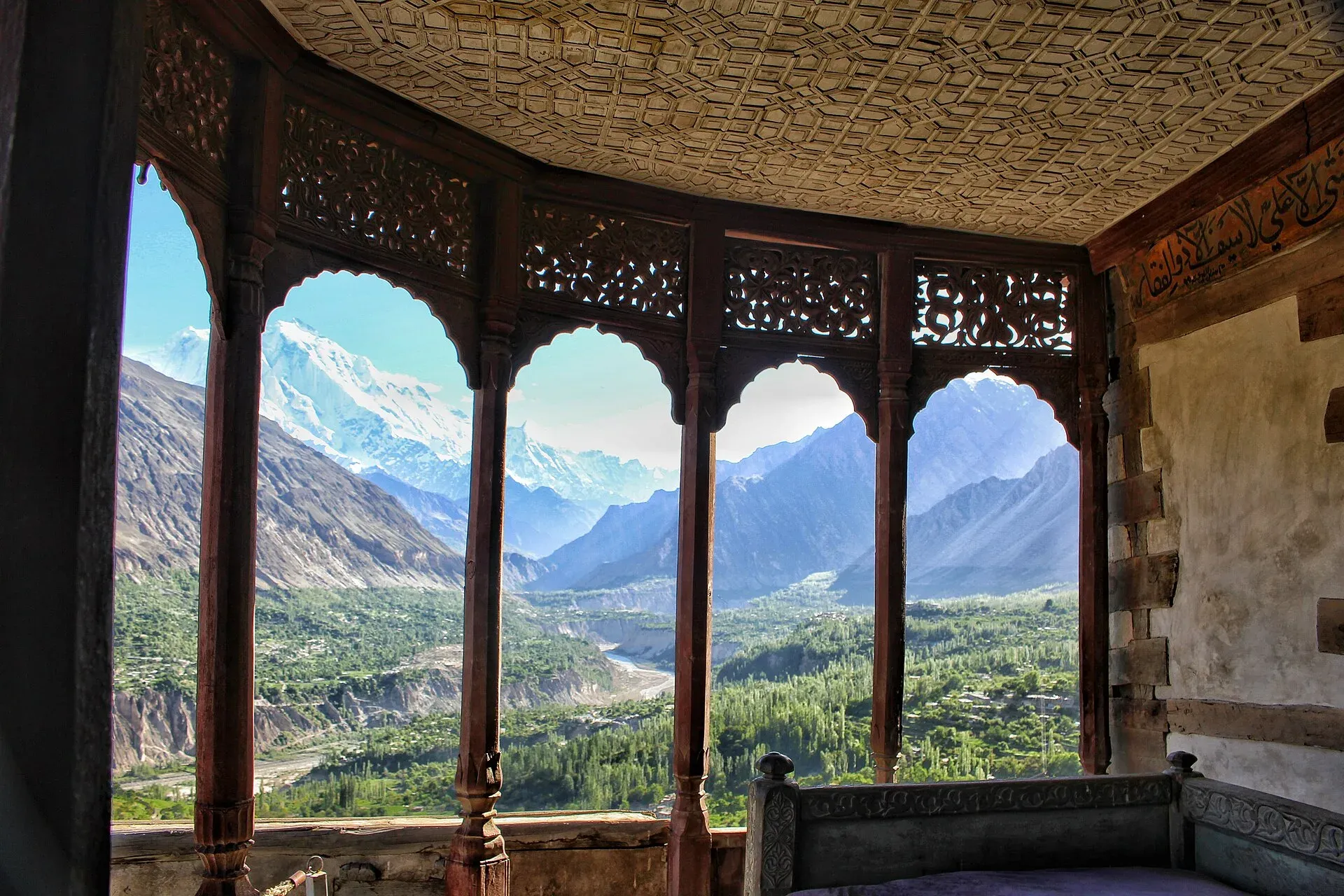
Photo: Fassifarooq, with thanks · CC BY-SA 4.0 · via Wikimedia Commons · temporary stand-in photo

Hunza Carpets and Woodwork
Hunza is known for carved wood, from the fort's old doors and pillars to small household items, and for hand-knotted carpets and woollen goods. Women now work as carpenters too.
What it is
In Hunza, in Gilgit-Baltistan, wood carving is a long-standing craft, visible in old houses and in Baltit Fort. Today it is a cottage industry making smaller items, such as boxes, frames and household objects. Carpets and woollen shawls are also made and sold in the valley.
Materials and technique
Woodwork is done with local timber, with hand carving of patterns and borders. Hunza has always had more carpentry than most mountain valleys because wood was used in house and fort construction. Carpets are handmade, though sources disagree on how old local production is, and some say Hunza families once bought carpets in trade. Woollen shawls are woven by hand from local sheep and yak wool, according to tourism accounts.
Where it is made
Shops and workshops are found in the main villages, such as Karimabad and Aliabad, so ask your hotel which are open. A women's carpentry workshop in the Hunza Valley was covered by Arab News in 2023, showing that women now work as carpenters, something that used to be mostly done by men.
History
Wood carving was used to decorate forts and houses. Baltit Fort is known for its wood carvings, and the style spread to later buildings in the valley. Different sources give very different founding dates for the fort, so we do not give one here.
How to recognise good work
On carved wood, look for crisp lines, smooth finishes and joints that fit tightly. Wood should be dry, with no splits. For carpets, turn one over and look at the knots: they should be even, and the pattern should show clearly on the back. Ask whether the wool and dyes are natural and local, as some carpets are imported.
Buying ethically
Ask whether the item was made locally, and by whom. Buying from workshops and women's groups puts money where it belongs. Do not buy items made of protected wildlife material. We do not quote prices here.
Where to see it made
Baltit Fort and Altit Fort show the heritage. In Karimabad and Aliabad you may be able to watch carvers and ask about their work.
Care
Wipe wood with a dry or slightly damp cloth and keep it away from heat and damp. Vacuum carpets gently and shake them out in shade.
Sources and last checked
Last checked Confidence low3 sources3 still to check
- Last checked
- Method
- Desk research from published sources
- Confidence
- low
- Checked by
- trek.pk research team
Researched from published sources; not yet checked on the ground by our team. Spot something out of date? Report a mistake.
Sources
- Baltit Fort · Google Arts & Culture · checked
- In Pakistan's mountainous north, women take up carpentry to fend for their families · Arab News · checked
- The women carpenters of Hunza Valley · Dialogue Earth · checked
Still to be checked on the ground (3)
- Carpet-making history in Hunza is contested: Google Arts & Culture says carpets were not made in the area until the late 1990s, while also calling rugs the main production of Hunza
- Specific workshops and what they sell must be checked on site
- Shawl wool claims come from travel sources and were not found in any source opened