

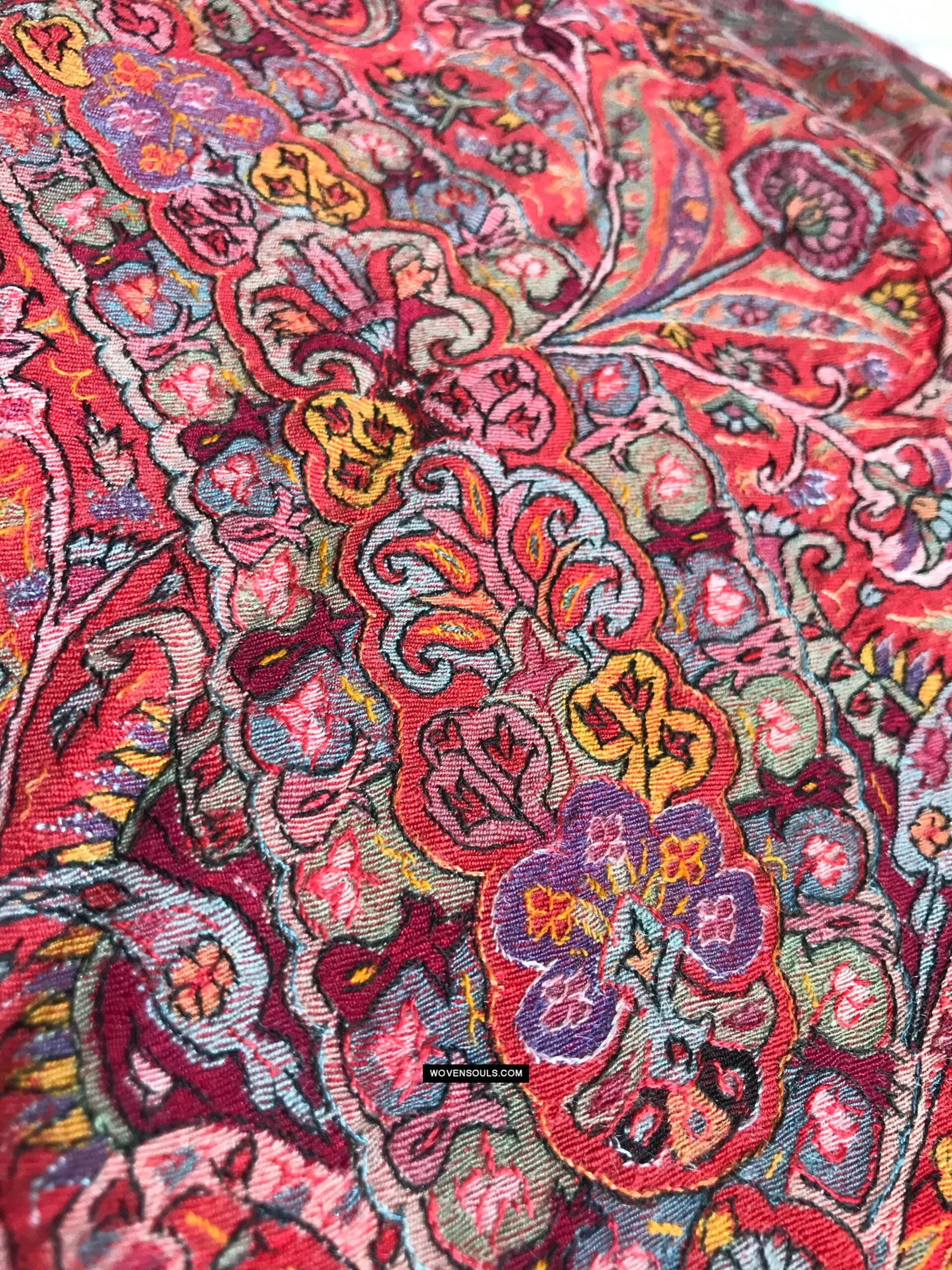
Photo: Jainamishra, with thanks · CC BY-SA 4.0 · via Wikimedia Commons · temporary stand-in photo

Kashmiri Shawls and Pashmina
Kashmiri shawls are fine woven and embroidered wraps. Pashmina is a very fine goat-wool fibre, and the name is often misused. Shahtoosh, made from a protected antelope, is illegal.
What it is
Kashmiri shawls are fine wraps, historically woven in the Kashmir region and embroidered by hand. In Azad Kashmir, shawl and embroidery work is sold in the markets of Muzaffarabad, where women often do needlework at home.
Materials and technique
Pashmina is cashmere wool from the undercoat of the Changthangi goat. It is combed out each spring, not shorn. The fibre is very fine, around 12 to 21 microns for cashmere. Traditional pashmina is hand-spun and hand-woven. Embroidery adds the finish: sozni is fine needlework, tilla uses metallic thread, and heavier thread work is also done. A single embroidered shawl can take months. Most famous pashmina weaving is centred on Srinagar, on the Indian-administered side. Muzaffarabad's strength is embroidery and shawl finishing.
History
Mughal rulers used these shawls to show rank. The word pashm is Persian for wool. Pashmina blankets were also part of a wealthy woman's dowry in the region. In recent history Kashmiri shawls reached Europe and became a fashion item.
Shahtoosh: do not buy it
Shahtoosh is wool from the chiru, or Tibetan antelope, which has to be killed to take the fleece. The chiru is listed in CITES Appendix I, which bars commercial international trade, and a shahtoosh ban has been called a necessary partner to that listing. It was moved from Endangered to Near Threatened by IUCN in 2016, but trade continues illegally. Carrying shahtoosh across borders can lead to confiscation and fines. Never buy a shawl that is offered as shahtoosh, or one that seems impossibly light, fine and rare.
How to recognise good work
Read the label. Genuine pashmina states its fibre. Blends often say something like 70 percent cashmere and 30 percent silk. Many cheap shawls sold as pashmina are viscose, acrylic or sheep wool. Do not rely on a burn test in a shop. Ask for a fibre label or lab test instead.
Buying ethically
Ask who embroidered the shawl, and prefer sellers who can answer. Pay a fair price for the hours of handwork, and avoid dealers who cannot explain what the fibre is. Prices are not quoted here.
Where to see it made
In Muzaffarabad's markets you can ask where shawls and embroidery are made. Visits to workshops are best arranged locally.
Care
Dry clean or wash in cold water with a wool detergent, dry flat, and store with cedar or lavender, not mothballs.
Safety
Ask the district administration or local police about current conditions before you go. For foreign visitors: the UK FCDO advises against all but essential travel to Azad Jammu and Kashmir, and against all travel within 10 miles of the Line of Control. Check the UK FCDO travel advice for Pakistan (checked 17 November 2026) before you plan a trip.
Sources and last checked
Last checked Confidence medium6 sources4 still to check
- Last checked
- Method
- Desk research from published sources
- Confidence
- medium
- Checked by
- trek.pk research team
Researched from published sources; not yet checked on the ground by our team. Spot something out of date? Report a mistake.
Sources
- Pashmina · Wikipedia · checked
- Shahtoosh · Wikipedia · checked
- CITES Resolution Conf. 11.8 (Rev. CoP17) · CITES · checked
- Tibetan antelope · Wikipedia · checked
- Madina Market, Muzaffarabad · The Express Tribune · checked
- Pakistan travel advice · UK FCDO · checked
Still to be checked on the ground (4)
- Little documented about shawl making on the Pakistani side of Kashmir
- IUCN category for the chiru (Near Threatened, 2016) is as cited on Wikipedia, not read from the IUCN Red List itself
- Workshop access for visitors unknown
- Pakistani national wildlife law on shahtoosh not found (neither Wikipedia page mentions Pakistan law)