

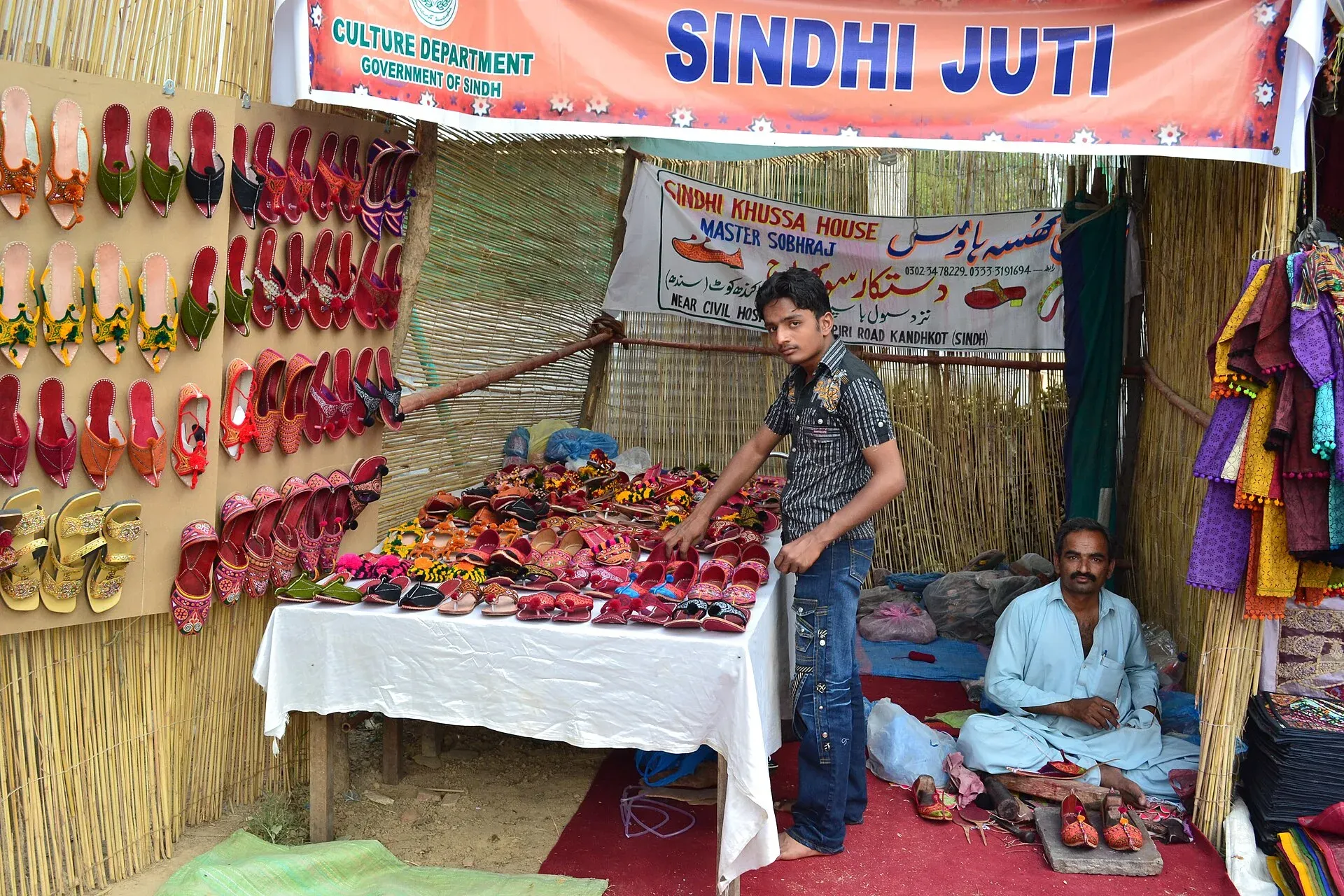
Photo: Khalid Mahmood, with thanks · CC BY-SA 3.0 · via Wikimedia Commons · temporary stand-in photo

Khussa (Traditional Shoes)
Khussa is a hand-made leather shoe with a curled toe, often embroidered. Multan and Chakwal are among the places linked to it, and it is worn at weddings and festivals.
What it is
A khussa, also written khussay, and sometimes called a jutti or mojari, is a traditional flat leather shoe with a pointed or curled toe. Women's khussas are often richly embroidered. Men wear plainer ones, especially for festivals and weddings.
Materials and technique
Khussas are made from leather, often vegetable-tanned, and stitched together by hand. The parts are the upper, insole and outsole. The leather is dyed and then cut, shaped and sewn. Embroidery is a separate step, with thread, beads or sequins added by hand. Reports from Chakwal say one pair can take about two weeks to make.
Where it is made
Multan is the most often cited home of the craft, and it is also made in other parts of Pakistan. In Chakwal, embroidered shoes are made in villages such as Karsal and Jhamra, and the town has a shoemakers' bazaar. Lahore's museum shows old examples.
History
Sources describe wooden precursors that gave way to leather, and later versions worn at court and richly decorated with gold thread. The detail is hard to confirm, as most accounts come from commercial writers. Regional names and styles vary, and the shoe is also known as mojari.
How to recognise good work
Check the stitching around the edges, which should be tight and even. The leather should feel soft and have no cracks. The embroidery should be firmly sewn, with no loose threads. A pair that is well made should be comfortable after a short break-in period. Cheap pairs may have plastic soles or stiff synthetic uppers.
Buying ethically
Ask whether the pair is genuine leather and who stitched and embroidered it. Ask who embroidered the pair and how they are paid. Buy from a workshop or cooperative when possible. Prices differ with leather and decoration, and we do not give one.
Where to see it made
Shoemakers' lanes in Multan and Chakwal are good places to watch the work. Ask permission before photographing.
Care
Keep them dry and wipe with a soft cloth. Do not soak embroidered ones. Stuff with paper when not in use, and store away from damp.
Sources and last checked
Last checked Confidence low3 sources3 still to check
- Last checked
- Method
- Desk research from published sources
- Confidence
- low
- Checked by
- trek.pk research team
Researched from published sources; not yet checked on the ground by our team. Spot something out of date? Report a mistake.
Sources
- Tale of the khussa · Gulf News · checked
- Chakwal's Mochi Bazaar, home to Pakistan's finest shoes · Gulf Times · checked
- Sindhi Mojari · Wikipedia · checked
Still to be checked on the ground (3)
- History is from journalism (Gulf News, 2007) and commercial writing; Wikipedia's Mojari article credits Mughal-era origin and Saleem Shahi style, which conflicts in detail with the 'wooden precursors' story
- Chakwal production details need checking on site (Gulf Times 2015: Karsal and Jhamra villages, about two weeks per pair)
- Who does the embroidery and how it is done were not found in any source opened