

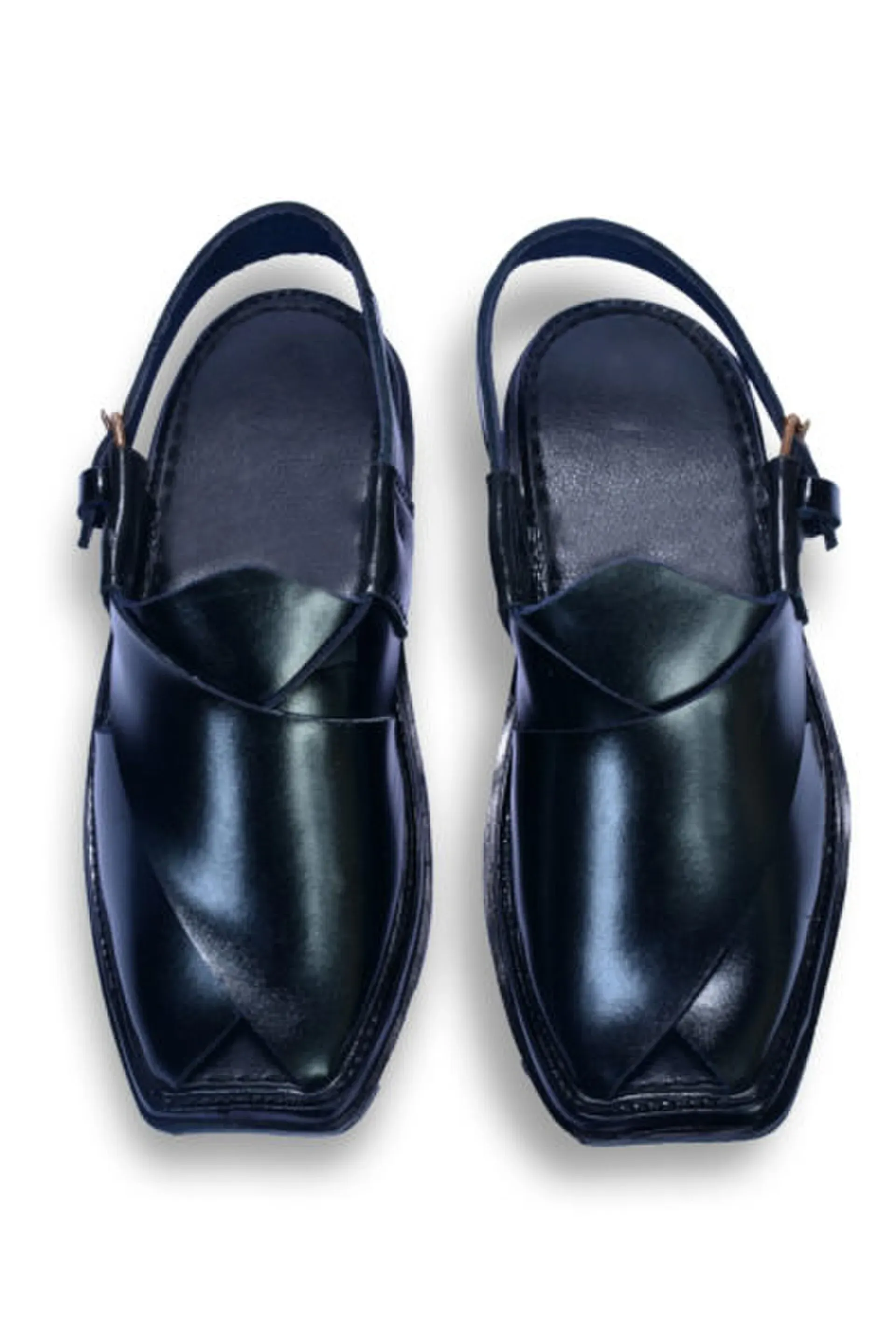
Photo: Smsulari, with thanks · CC BY-SA 4.0 · via Wikimedia Commons · temporary stand-in photo

Peshawari Chappal
The Peshawari chappal is a sturdy leather sandal, also called kheri, with a two-strap front and a heel strap. Peshawar gave it its name, but it is made across northern Punjab and Khyber Pakhtunkhwa.
What it is
The Peshawari chappal is a traditional leather sandal, often seen as Pakistan's national footwear and worn with shalwar kameez. It is also called kheri and, in a recent style, Kaptaan chappal. It has two wide straps that cross at the front, joined to the sole, and a heel strap that buckles to fit.
Materials and technique
It is made from leather, and traditional versions have a sole cut from a truck tyre. Some are decorated with gold or silver embroidery. We have not confirmed how much of the work is done by hand today, so ask the workshop.
Where it is made
Peshawar is the name on the label, but production centres include Hazro, Chakwal, Sargodha, Talagang, Kohat and Dera Ismail Khan, plus other cities in Punjab and Khyber Pakhtunkhwa. Good chappals are therefore easy to find outside Peshawar.
History
The sandal originated in the hill regions of northern Punjab, where it was built for rough terrain. After 1947, craftsmen in Peshawar refined it with softer leather, and it became known as the Peshawari chappal. The Kaptaan chappal became popular in 2015 after a pair was presented to Imran Khan.
How to recognise good work
Check the stitching along the straps and sole edge, which should be tight and even. The leather should be supple, not stiff or cracked. A sole that is glued but not stitched is likely to part sooner. Try both sandals: the strap should lie flat and the heel strap should adjust without strain. Fake leather feels plasticky and lacks a leather smell.
Buying ethically
Ask whether the workshop uses real leather and how it is sourced, and pay a price that covers the cutter, stitcher and finisher. Buying direct from a workshop often passes more money to makers. We do not quote prices because they depend on leather and finish.
Where to see it made
Workshop streets in Punjab towns such as Chakwal and Sargodha, and Peshawar's old city when it is safe, are where the shoemakers work. Ask before photographing.
Care
Rub in a little leather conditioner, let wet sandals dry slowly away from heat, and store with straps flat. A cobbler can replace a worn sole.
Safety
Ask the district administration or local police about current conditions before you go. For foreign visitors: the UK FCDO advice is against all travel to Peshawar and Kohat. Check the UK FCDO travel advice for Pakistan (checked 17 November 2026) before you plan a trip.
Sources and last checked
Last checked Confidence medium2 sources3 still to check
- Last checked
- Method
- Desk research from published sources
- Confidence
- medium
- Checked by
- trek.pk research team
Researched from published sources; not yet checked on the ground by our team. Spot something out of date? Report a mistake.
Sources
- Kheri (footwear) · Wikipedia · checked
- Pakistan travel advice · UK FCDO · checked
Still to be checked on the ground (3)
- Quality checks are general advice, not sourced from workshops
- Peshawar and Kohat: FCDO advises against all travel to both (page updated 27 October 2026, checked 17 November 2026); re-check before any visit
- Whether Charsadda still has a workshop cluster is unverified (not in Wikipedia; FCDO also advises against all travel to Charsadda)