

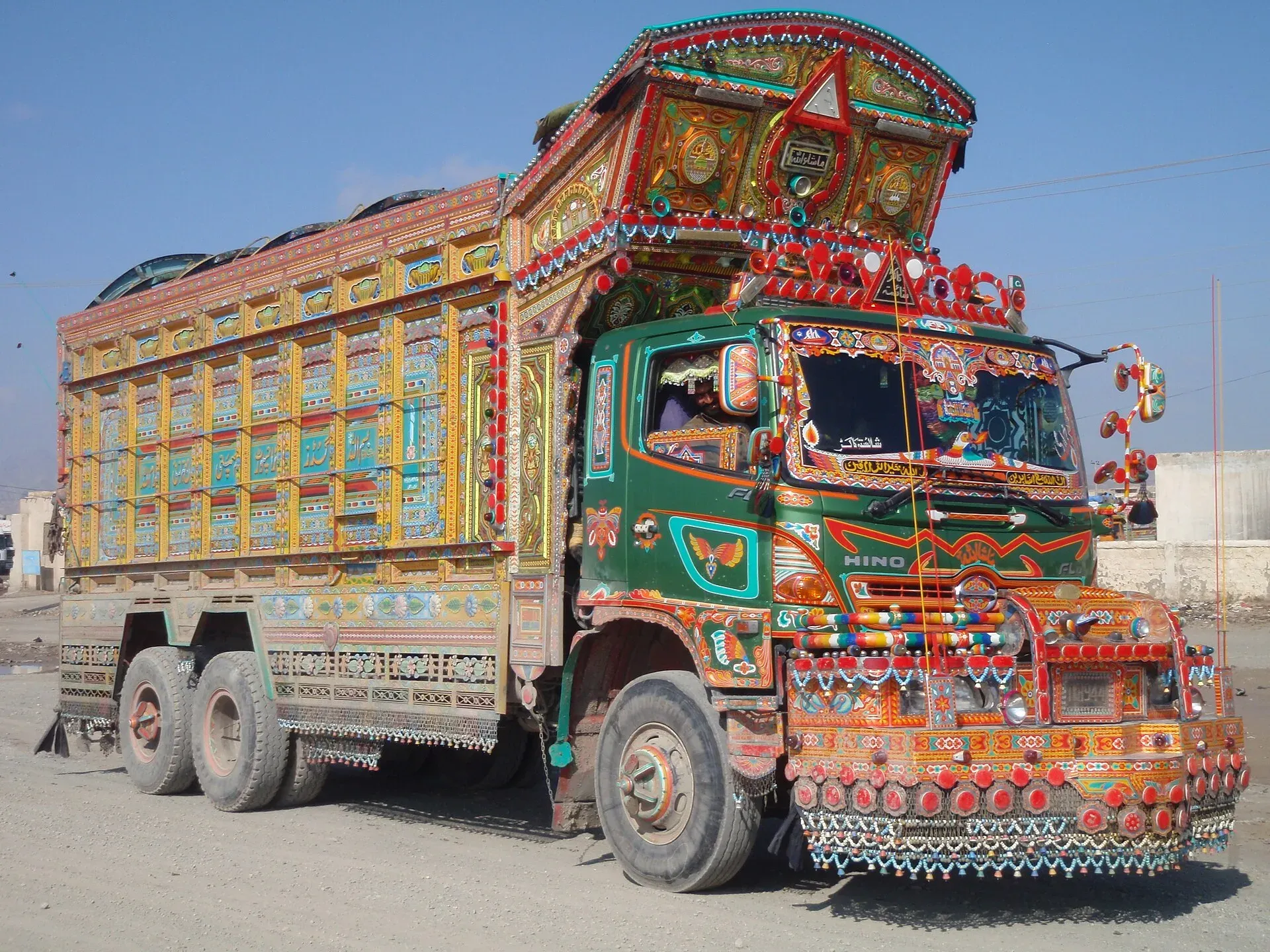
Photo: Alexandros.Papadopoulos, with thanks · CC BY-SA 2.0 · via Wikimedia Commons · temporary stand-in photo

Truck Art
Pakistan's decorated trucks and buses carry painting, calligraphy, mirror work and carved wood, usually done in workshops. Karachi is the best-known centre.
What it is
Truck art is the decoration of lorries and buses in Pakistan with painted panels, calligraphy, mirror work, chains and carved wood. It is also seen on rickshaws and, in recent years, in galleries and on souvenirs.
Materials and technique
Painters work on the body panels, doors and back boards. The common techniques are painting, calligraphy, mirror work on the front and back, and carved wooden door panels. Chains and pendants hang from the bumpers, and the sound led foreign soldiers to call them jingle trucks. Modern artists also use digital prints and vinyl stickers to copy traditional designs.
Where it is made
Karachi is the main centre, with a flashy style using bulbs, glass and mirrors. Other hubs include Rawalpindi, Swat, Peshawar, Quetta and Lahore. Peshawar and Balochistan trucks often carry a lot of woodwork. Rawalpindi and Islamabad trucks often use plastic work. Sindh trucks often use camel bone ornament and strong red.
History
The tradition is generally dated to the 1920s, when trucks imported under British rule were decorated with local folk art, though the sources for this are weak. General Motors is said to have brought trucks to Karachi in the 1930s, and by Partition Karachi had become the centre. A 2014 newspaper estimate gave around 250,000 people working in major centres. It comes from a single article and we have not confirmed it.
Motifs
Common themes are Islamic religious imagery, poetry, folklore, regional pride, historical scenes and political messages. Each truck is a personal statement from its owner.
How to recognise good work
Hand-painted work shows small brush differences and rich colour. Printed stickers are flat and uniform. Quality workshops finish edges cleanly and use durable paint. Check how mirrors and wood panels are fixed.
Buying ethically
Buying a painted panel, a small board or a commissioned piece from the artist pays the maker. Ask whether the piece was painted by hand and by whom. Commissions need time, so agree what is made and the schedule in advance. Prices vary and we do not quote them.
Where to see it made
Truck workshops cluster on the outskirts of big cities, especially in Karachi and Rawalpindi. Go with a local guide, ask before taking photographs, and keep clear of working machinery.
Care
Keep painted boards away from damp and direct sun. Wipe with a dry cloth.
Safety
Ask the district administration or local police about current conditions before you go. For foreign visitors: the UK FCDO advice is against all travel to Peshawar and Quetta, which are listed as truck art centres. Check the UK FCDO travel advice for Pakistan (checked 17 November 2026) before you plan a trip.
Sources and last checked
Last checked Confidence medium2 sources3 still to check
- Last checked
- Method
- Desk research from published sources
- Confidence
- medium
- Checked by
- trek.pk research team
Researched from published sources; not yet checked on the ground by our team. Spot something out of date? Report a mistake.
Sources
- Truck art in South Asia · Wikipedia · checked
- Pakistan travel advice · UK FCDO · checked
Still to be checked on the ground (3)
- The 250,000 workers figure is a single 2014 newspaper estimate
- Which workshop areas welcome visitors is not documented
- Regional style differences are taken from Wikipedia and need checking with painters