

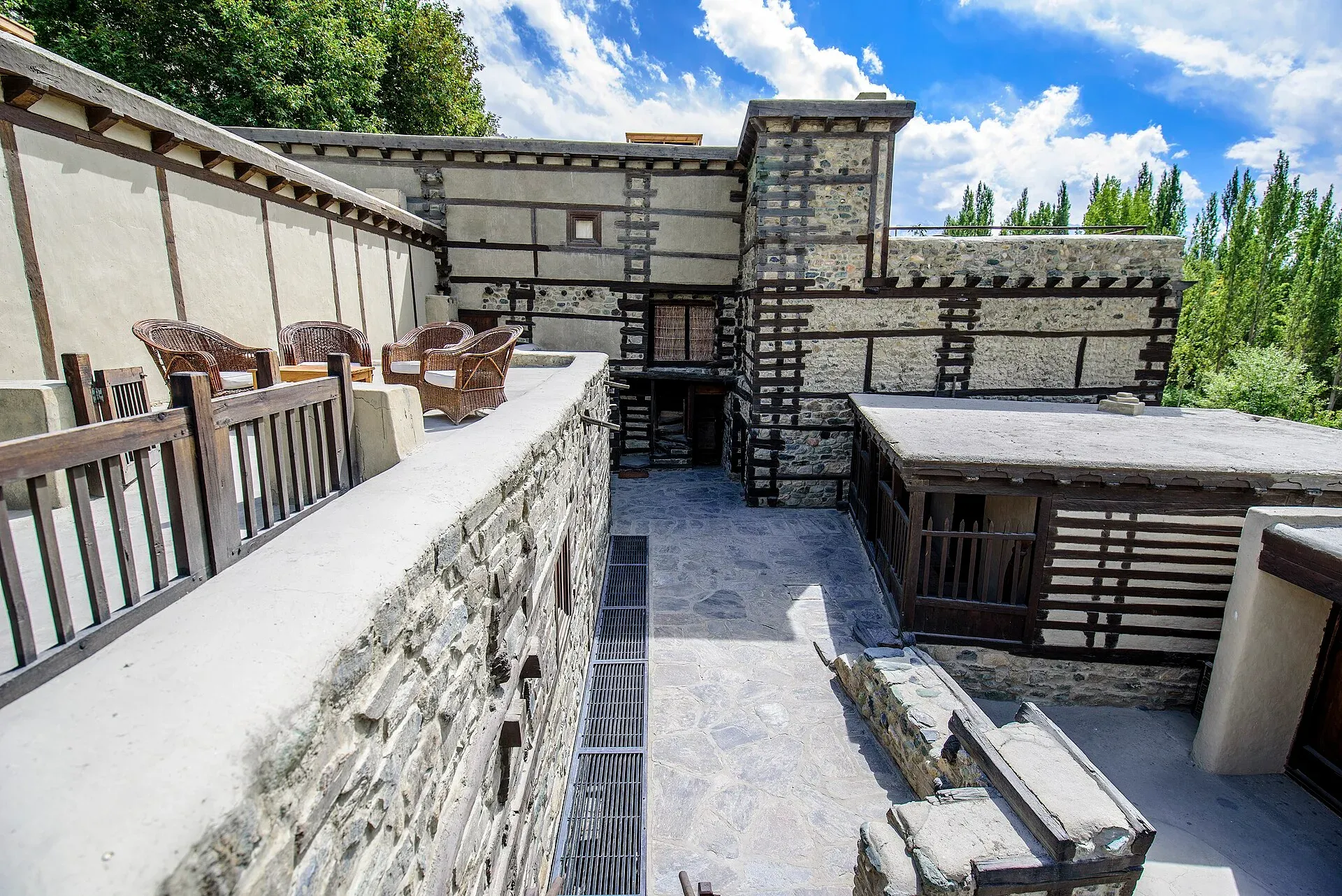
Photo: ZILL NIAZI, with thanks · CC BY-SA 4.0 · via Wikimedia Commons · temporary stand-in photo

Balti People
The Balti live in Baltistan, around Skardu, Shigar and Khaplu, and speak Balti, a Tibetic language. Faith, culture, architecture, food and visitor etiquette.
Who they are
The Balti are a Tibetic-speaking people of Baltistan, in the upper Indus and Shyok valleys of Gilgit-Baltistan. They call their homeland Balti-yul, "the land of the Balti". Wikipedia's table from the 2023 census lists Balti as the first language of 0.02 per cent of people in Pakistan, but the same article says the census excludes data from Gilgit-Baltistan and Azad Kashmir, so that figure does not describe the Balti population. Wikipedia's Balti article gives about 393,000 Balti people, citing a January 2021 news report. The Baltistan Division had about 582,619 people in 2023, according to Wikipedia, which also includes people who are not Balti.
Language and faith
Balti belongs to the Tibetic family. Scholars disagree whether it is a dialect of Ladakhi or a sister language, and it is closer to Classical Tibetan than other Tibetan languages. Urdu is the second language for many. Baltis were traditionally Bön and Tibetan Buddhist, and Islam arrived around the 14th century through Sufi missionaries, and most Baltis had converted by the end of the 17th. Wikipedia gives roughly 60 per cent Shia, 30 per cent Noorbakhshia and 10 per cent Sunni, citing sources from 1997 and 1998, so treat it as approximate. The Baltistan article says most people adopted Noorbakhshia Islam and that most Noorbakhshis live in Ghanche, so shares differ by district.
Where they live
Skardu is the traditional centre, with Shigar, Khaplu, Kharmang and Chorbat valleys nearby. Balti villages sit on terraces beside rivers, with dense clusters of houses. Notable buildings include Shigar Fort, Khaplu Palace and the Chaqchan Mosque in Khaplu, which blend Tibetan and Mughal influence. The Manthal Buddha Rock near Skardu is a surviving Buddhist site.
Culture
Polo is popular in Baltistan, and the English word "polo" comes from the Balti word for the ball. Baltistan is also the base for many mountaineering expeditions, with more than 20 peaks above 6,100 m including K2; many Balti men work as porters, cooks and guides on the Baltoro and Biafo glaciers.
Food and crafts
Balti food and clothing show Tibetan roots, as does yak herding, according to the trekking book. See Balti food and the Skardu and Baltistan local kitchens trail. Gemstones from the region are sold in Skardu; see gemstones and onyx of Gilgit-Baltistan.
Visiting respectfully
- Dress modestly, particularly in villages. Women should carry a scarf for mosques and shrines.
- Ask before photographing people, houses and religious buildings. During Muharram, observe the local mourning customs.
- Remove shoes before entering a home or mosque.
- Treat your guide and porters as partners. Agree pay, weights and conditions before you start.
- Carry out your rubbish and respect water sources.
Community-based tourism
Baltistan's guesthouses and porter-guide networks are the main form of community tourism, but we have not confirmed a specific named scheme. Book through licensed operators.
Travel advice
Ask the district administration or local police about current conditions before you go. For foreign visitors: the UK FCDO does not advise against Gilgit-Baltistan as a whole (updated 27 October 2026, still current on 17 November 2026), but it advises against travel on the Karakoram Highway between Mansehra and Chilas. Check the page and current road and flight conditions.
Help us get this right
We wrote this page from published sources, and it has not yet been reviewed by members of the community it describes. If you belong to this community and something here is wrong, missing or worded in a way you would not use, please tell us through Report a mistake. We will correct it.
Sources and last checked
Last checked Confidence medium6 sources5 still to check
- Last checked
- Method
- Desk research from published sources
- Confidence
- medium
- Checked by
- trek.pk research team
Researched from published sources; not yet checked on the ground by our team. Spot something out of date? Report a mistake.
Sources
- Languages of Pakistan (mother-tongue shares, Census 2023 and 2017, citing PBS Table 11) · Wikipedia · checked
- Digital Census 2023 · Pakistan Bureau of Statistics · checked
- Trekking in the Karakoram and Hindukush, 'Population & People' section (Lonely Planet, c. 2002; used for background facts only) · Lonely Planet · checked
- Balti people · Wikipedia · checked
- Baltistan · Wikipedia · checked
- Pakistan travel advice (last updated 27 October 2026) · UK FCDO · checked
Still to be checked on the ground (5)
- Review with Balti community members
- Religious percentages are from 1997-98 sources and may be out of date
- Porter-guide wording from the trekking book, c. 2002 (not confirmed by a newer source)
- Music and dance details (instruments removed; no source opened)
- Review by members of the community (owner decision 17 Nov 2026: team to arrange reviewers)