

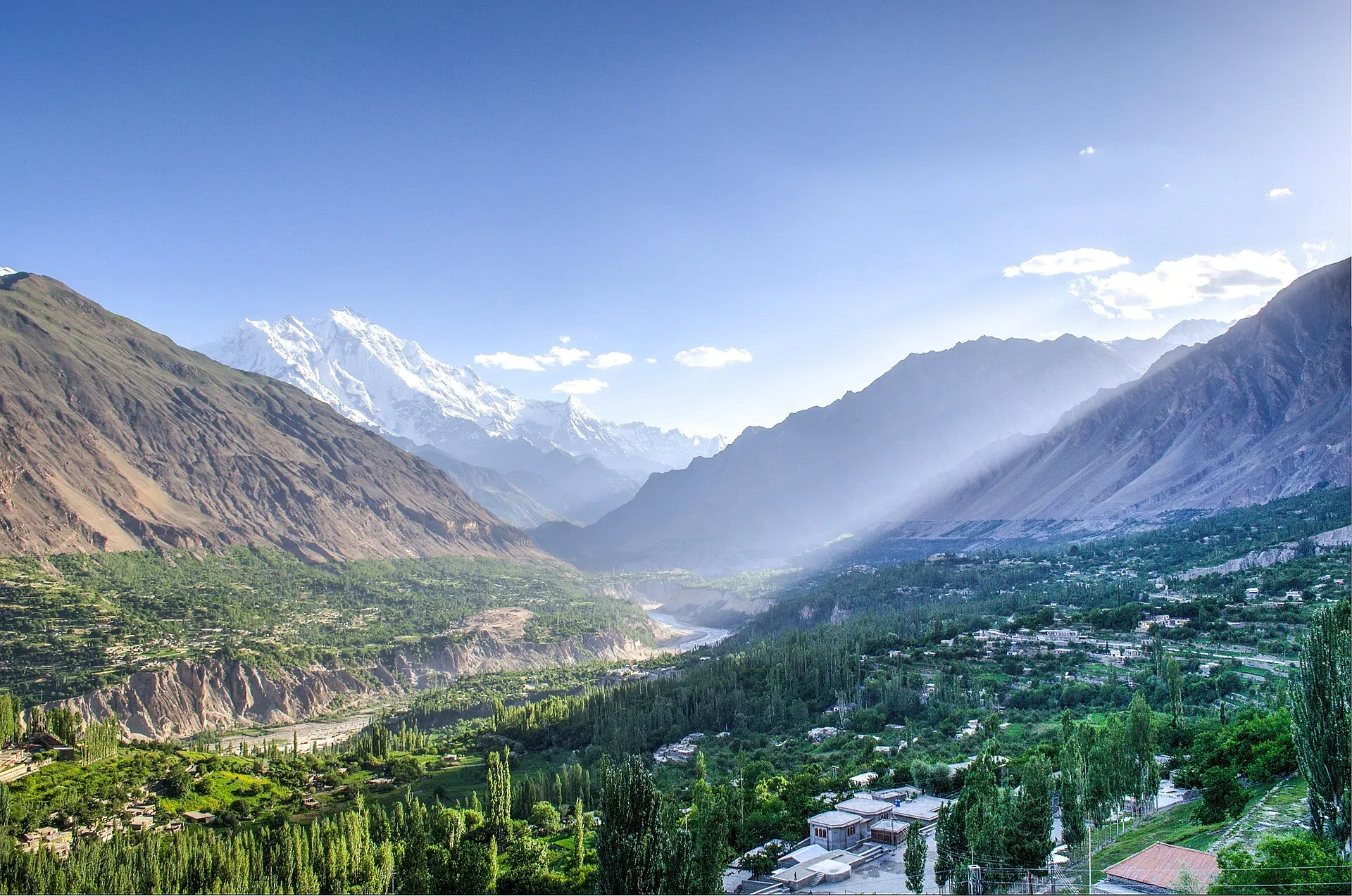
Photo: FaizanAhmad, with thanks · CC BY-SA 3.0 · via Wikimedia Commons · temporary stand-in photo

Burusho People
The Burusho speak Burushaski, a language with no known relatives, in Hunza, Nagar and Yasin. Faith, festivals such as Ginani, food, forts, and respectful visiting, plus a note on the Hunza longevity myth.
Who they are
The Burusho, also called Brusho, are the people who speak Burushaski, a language isolate with no proven relatives. They live mainly in Hunza, Nagar and the Yasin valley in Gilgit-Baltistan. People of Hunza are sometimes called Hunzakuts, and people of Nagar Nagarkuts; the trekking book notes these terms also include non-Burushaski speakers living in the valleys. The census does not publish a separate Burushaski share in the main mother-tongue table, so we give no census figure. Wikipedia lists about 126,300 people (2018), citing Ethnologue for the language, which is a language-speaker estimate and not a census count.
Faith and language
Most Burusho in Hunza and Yasin are Ismaili Muslims, and most in Nagar are Shia, according to the trekking book (c. 2002). Wikipedia describes the community as mostly Ismaili and Twelver Shia. Urdu is the national language, and Wakhi and Shina are spoken in neighbouring parts of Hunza. Hunza's literacy rate is reported to be above 95 per cent, which Wikipedia links to community schools.
Where they live
Villages run along the Hunza River: Karimabad, Altit, Ganish and Aliabad in Hunza, and Nagar on the opposite bank. Baltit Fort and Altit Fort, both restored, are the best-known landmarks; see Baltit Fort and Altit Fort. The Sacred Rock of Hunza carries ancient inscriptions. Burusho villages are known for terraced fields and irrigation channels.
Culture and festivals
Ginani is a harvest festival held on the summer solstice, 21 June, in Hunza and Nagar, according to Wikipedia. It describes music played at Altit Fort for about ten days before it, wheat cooked and mixed into a lassi-like drink offered to all, and dancing. Navroz is also celebrated; see Navroz in Gilgit-Baltistan and Chitral. Polo is played across the region, and music and dance are an important part of social life. Hunza apricots, walnuts and dried fruit appear in the local diet; see Hunza chapshuro and dawdo and the Hunza local kitchens trail. Traditional woodwork and carpets are described on Hunza carpets and woodwork.
The longevity myth
Western writers in the 20th century described Hunza as a place of extraordinary long life. The trekking book calls this fiction, and Wikipedia notes there is no reliable documentation of the ages claimed. Please do not ask people their age as a curiosity.
Visiting respectfully
- Greet people with a salaam. Accept tea, and dried fruit if offered.
- Dress modestly. Women should wear long sleeves and a scarf in villages.
- Ask before photographing people, houses and prayer halls. Do not enter a jamatkhana without invitation.
- Leave the walkways and fields as you find them, as irrigation channels are community work.
- Hire local guides and stay in family guesthouses, and agree prices in advance.
Community-based tourism
Guesthouses run by local families are common in Karimabad, Altit and Ganish. We have not confirmed a named community scheme for this page; ask Gilgit-Baltistan Tourism or a licensed operator.
Travel advice
Ask the district administration or local police about current conditions before you go. For foreign visitors: the UK FCDO does not advise against Gilgit-Baltistan generally but advises against travel on the Karakoram Highway between Mansehra and Chilas (updated 27 October 2026). Check it before you travel.
Help us get this right
We wrote this page from published sources, and it has not yet been reviewed by members of the community it describes. If you belong to this community and something here is wrong, missing or worded in a way you would not use, please tell us through Report a mistake. We will correct it.
Sources and last checked
Last checked Confidence medium7 sources5 still to check
- Last checked
- Method
- Desk research from published sources
- Confidence
- medium
- Checked by
- trek.pk research team
Researched from published sources; not yet checked on the ground by our team. Spot something out of date? Report a mistake.
Sources
- Languages of Pakistan (mother-tongue shares, Census 2023 and 2017, citing PBS Table 11) · Wikipedia · checked
- Digital Census 2023 · Pakistan Bureau of Statistics · checked
- Trekking in the Karakoram and Hindukush, 'Population & People' section (Lonely Planet, c. 2002; used for background facts only) · Lonely Planet · checked
- Burusho people · Wikipedia · checked
- Ginani · Wikipedia · checked
- Hunza Valley · Wikipedia · checked
- Pakistan travel advice (last updated 27 October 2026) · UK FCDO · checked
Still to be checked on the ground (5)
- Review with Burusho community members
- Population: only Wikipedia's Ethnologue-based 2018 figure of 126,300 (language speakers); no census or academic figure for the Burusho found
- Ginani rituals are described by one source (Wikipedia) only
- Religious breakdown from the c. 2002 book; Wikipedia says mostly Ismaili and Twelver Shia
- Review by members of the community (owner decision 17 Nov 2026: team to arrange reviewers)