

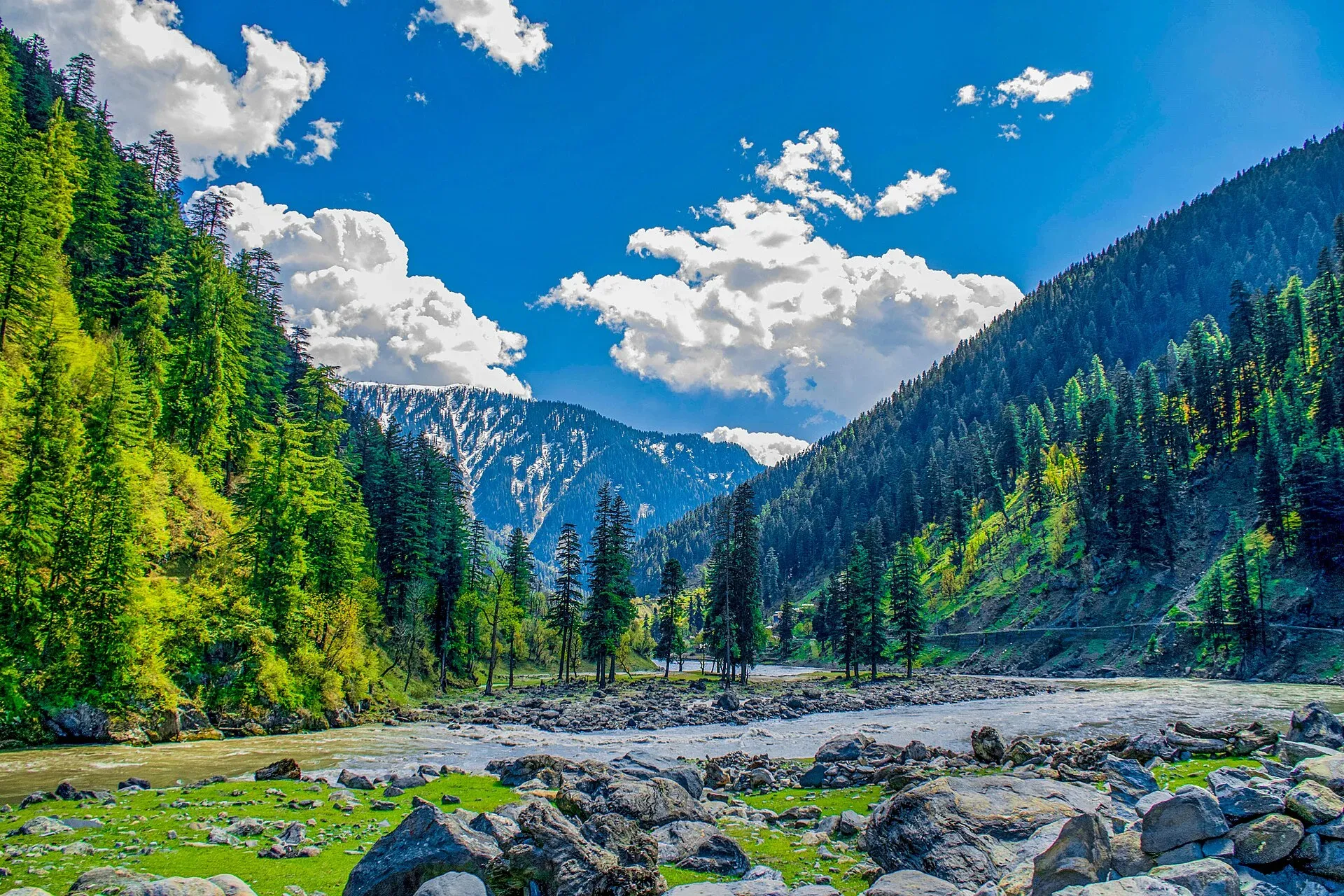
Photo: Umar Jamshaid, with thanks · CC BY-SA 3.0 · via Wikimedia Commons · temporary stand-in photo

Kashmiri People
Kashmiri speakers live in Muzaffarabad and the Neelum valley and in cities across Pakistan. Language, shawls, wazwan and noon chai, and respectful visiting, with neutral wording.
Who they are
Kashmiri people are those whose first language is Kashmiri, called Koshur by its speakers. In the 2023 census about 0.11 per cent of people in Pakistan gave Kashmiri as their mother tongue. Mother-tongue shares come from the Pakistan Bureau of Statistics 2023 census table as reported on Wikipedia; they measure the language people say they speak first, not ethnic identity. Wikipedia gives 155,088 Kashmiri speakers in Punjab in the 2023 census and notes that up to 350,000 people declared Kashmiri as a first language in the 2017 census, and that language counts may not match everyone who identifies as Kashmiri. Urdu is widely used across the region. This page covers Pakistan only and takes no position on the status of Kashmir.
Language
Kashmiri is an Indo-Aryan language, written in Perso-Arabic script. Within Pakistan it is spoken in pockets of Muzaffarabad, Neelum and Hattian, and by diaspora communities in Punjab and other cities. Neelum is where Kashmiri is the second most widely spoken language, according to Wikipedia.
Where they live
Kashmiri speakers live in and around Muzaffarabad, in the Neelum valley, and in cities such as Lahore and Rawalpindi. The Neelum valley follows the Neelum River, and Muzaffarabad has the Red Fort on the river. Leepa Valley lies to the south-east.
Culture
Sufi traditions, Kashmiri poetry and Sufi kalam (devotional song) are valued. Kashmiri shawls and pashmina are a famous craft; see Kashmiri shawls and pashmina. Papier-mâché and woodwork are other crafts known elsewhere, but workshops in Pakistan are not covered on this page yet.
Food
Meat and rice are staples. Wazwan is a multi-course feast prepared by skilled cooks called wazas; see Kashmiri wazwan. Noon chai, the pink salted tea, and kahwa are traditional drinks; see Kashmiri noon chai. Breads include sheermal, bakarkhani and kulcha.
Visiting respectfully
- Greet people and accept tea. Offering food is a mark of respect.
- Dress modestly. Women should carry a scarf for mosques and shrines.
- Ask before photographing people and especially women.
- Avoid political discussion about borders and the Line of Control. Listen, and ask general questions about places and food.
- In valleys near the Line of Control, follow all local security instructions and signs.
Community-based tourism
We have not confirmed a specific community-based tourism scheme for this page. Guesthouses and homestay-style stays exist in places such as the Neelum valley, but check current arrangements locally.
Travel advice
Ask the district administration or local police about current conditions before you go. For foreign visitors: the UK FCDO advises against all travel within 10 miles of the Line of Control and against all but essential travel to Azad Jammu and Kashmir (updated 27 October 2026). Many Neelum valley areas lie close to the line. Read the page and the local conditions before planning.
Help us get this right
We wrote this page from published sources, and it has not yet been reviewed by members of the community it describes. If you belong to this community and something here is wrong, missing or worded in a way you would not use, please tell us through Report a mistake. We will correct it.
Sources and last checked
Last checked Confidence medium4 sources6 still to check
- Last checked
- Method
- Desk research from published sources
- Confidence
- medium
- Checked by
- trek.pk research team
Researched from published sources; not yet checked on the ground by our team. Spot something out of date? Report a mistake.
Sources
- Languages of Pakistan (mother-tongue shares, Census 2023 and 2017, citing PBS Table 11) · Wikipedia · checked
- Digital Census 2023 · Pakistan Bureau of Statistics · checked
- Kashmiris · Wikipedia · checked
- Pakistan travel advice (last updated 27 October 2026) · UK FCDO · checked
Still to be checked on the ground (6)
- Review with Kashmiri community members
- Wording on the status of Kashmir must remain neutral
- Census counts are language speakers, not total Kashmiri ethnicity (Wikipedia: 155,088 in Punjab, 2023; about 350,000 nationally, 2017)
- Papier-mâché and crafts in Pakistan not confirmed (not in Wikipedia)
- Homestay availability not confirmed
- Review by members of the community (owner decision 17 Nov 2026: team to arrange reviewers)