

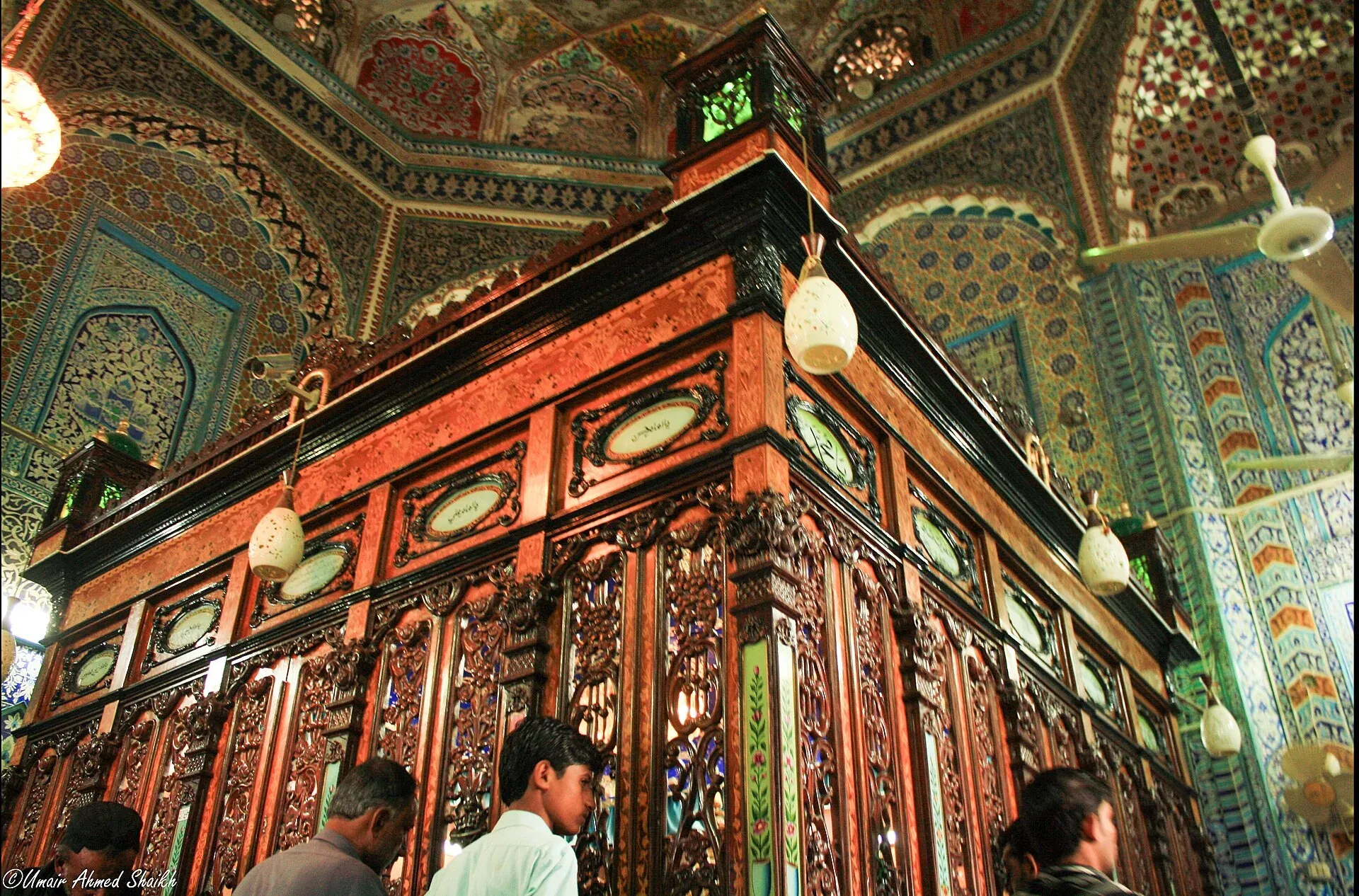
Photo: Umasha79, with thanks · CC BY-SA 3.0 · via Wikimedia Commons · temporary stand-in photo

Sindhi People
Sindhi speakers live along the lower Indus in Sindh. Language, Sufi shrines, ajrak and topi, Sindhi Cultural Day, Hindu and Muslim communities, food and visitor etiquette.
Who they are
Sindhis are the people of Sindh, the lower Indus valley, and the name comes from the Sanskrit word for the river. In the 2023 census about 14 per cent of people in Pakistan gave Sindhi as their mother tongue. Mother-tongue shares come from the Pakistan Bureau of Statistics 2023 census table as reported on Wikipedia; they measure the language people say they speak first, not ethnic identity. Most Sindhis are Muslim. Sindh also has Pakistan's largest Hindu population, about 8.7 per cent of the province at the 2017 census, according to Wikipedia. Sindhi culture grows from the Indus valley and the region around Moenjodaro, one of the world's oldest cities.
Language
Sindhi is written in a Perso-Arabic script and is an official provincial language. Urdu is also widely spoken in Sindh, especially in Karachi and Hyderabad. Other languages are also spoken at home across the province.
Where they live
Sindhi speakers are concentrated across the Indus plain: Hyderabad, Sukkur, Larkana, Khairpur, Thatta, Dadu and Jamshoro, with large communities in Karachi. Heritage places include Moenjodaro, the Makli Necropolis near Thatta, Kot Diji and the shrine at Bhit Shah.
Culture and festivals
Sufi poetry and music are central. Shah Abdul Latif Bhittai, whose collected verse is the Shah Jo Risalo, is the most celebrated poet; see the Urs of Shah Abdul Latif Bhittai. The Urs of Lal Shahbaz Qalandar at Sehwan Sharif draws huge crowds, with the dhamal dance. Hindu Sindhis celebrate Holi and Diwali; see Holi and Diwali in Sindh. Sindhi Cultural Day is held on the first Sunday of December, when people wear ajrak and the Sindhi cap and exchange them as gifts, according to Wikipedia. Muharram and Ashura are also observed widely across Sindh.
Crafts and food
Ajrak, block-printed cloth in indigo and crimson, is a gift of honour. Rilli is a patchwork quilt, and the Sindhi cap (topi) is worn with the ajrak. Dishes to know are Sindhi biryani, sai bhaji, dal pakwan, and sohan halwa. The nearby Karachi biryani and haleem are also popular in the south.
Visiting respectfully
- If a host offers you an ajrak or topi, accept it with both hands. It is an honour.
- Dress modestly at shrines. Remove shoes, cover your head and follow local custom. Women may have separate areas.
- Ask before photographing people, worshippers and dhamal at shrines.
- Respect Hindu temples and festivals as living places of worship, and ask before entering.
- During Muharram, dress sombrely and avoid loud music near processions.
Community-based tourism
Sindh has craft cooperatives and village-stay projects, but we have not confirmed a specific scheme for this page. Buy ajrak, rilli and pottery directly from workshops where you can.
Travel advice
Ask the district administration or local police about current conditions before you go. For foreign visitors: the UK FCDO advises against all but essential travel to Sindh north of and including Nawabshah, and notes continuing security concerns. Last updated 27 October 2026. Check it before you travel to Sukkur, Larkana or the interior.
Help us get this right
We wrote this page from published sources, and it has not yet been reviewed by members of the community it describes. If you belong to this community and something here is wrong, missing or worded in a way you would not use, please tell us through Report a mistake. We will correct it.
Sources and last checked
Last checked Confidence medium5 sources4 still to check
- Last checked
- Method
- Desk research from published sources
- Confidence
- medium
- Checked by
- trek.pk research team
Researched from published sources; not yet checked on the ground by our team. Spot something out of date? Report a mistake.
Sources
- Languages of Pakistan (mother-tongue shares, Census 2023 and 2017, citing PBS Table 11) · Wikipedia · checked
- Digital Census 2023 · Pakistan Bureau of Statistics · checked
- Sindhi people · Wikipedia · checked
- Sindhi Cultural Day · Wikipedia · checked
- Pakistan travel advice (last updated 27 October 2026) · UK FCDO · checked
Still to be checked on the ground (4)
- Review with Sindhi community members (not done)
- Current village-stay or craft-visit schemes: none confirmed from an official source
- Hindu share of Sindh: 8.7% is from the 2017 census; no 2023 figure found (the Pakistan Bureau of Statistics page found gives no results tables)
- Review by members of the community (owner decision 17 Nov 2026: team to arrange reviewers)