

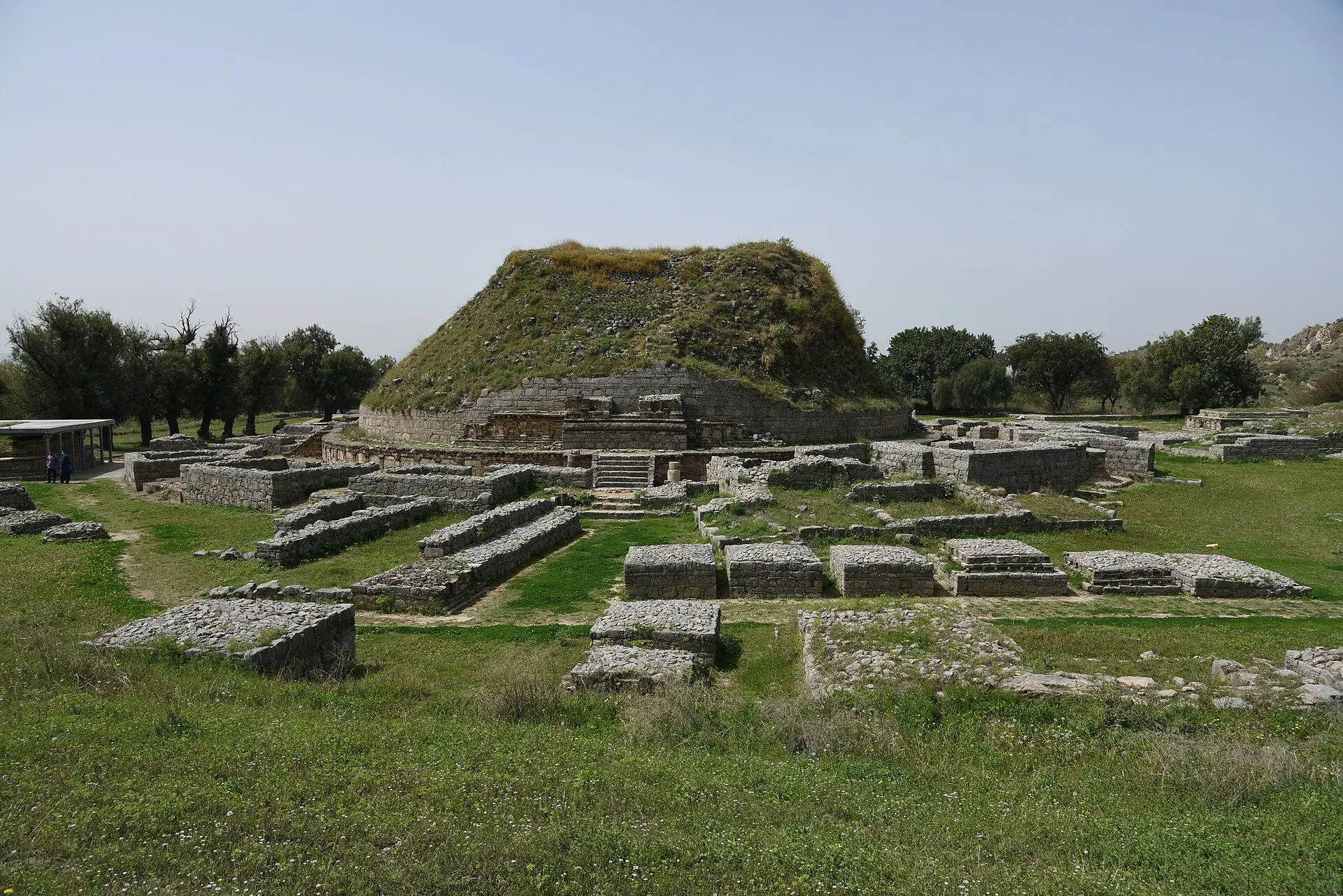
Photo: Mhtoori, with thanks · CC BY-SA 4.0 · via Wikimedia Commons · temporary stand-in photo
Dharmarajika Stupa
The largest stupa in the Taxila region, linked by tradition to Emperor Ashoka and later rebuilt under the Kushans. Part of the Taxila World Heritage Site, inscribed in 1980.
Overview
Dharmarajika is the largest stupa in the Taxila region and one of the oldest Buddhist monuments in Pakistan. A great round mound stands among the ruins of a monastery, about 1 km outside the ancient city of Sirkap. The site is part of the Taxila World Heritage Site, inscribed by UNESCO in 1980.
The name comes from Dharmaraja, "Lord of the Law", a title of the Buddha. John Marshall, who excavated the site, also linked it to the same title used for the Mauryan emperor Ashoka. Locally the mound is also called Chir Tope, "scarred hill".
Plan your visit
- Nearest town
- Taxila
- Getting there
Dharmarajika is about 1 km from the ancient city of Sirkap and roughly 3 km east of Taxila Museum, along PMO Colony Road. From Taxila, hire a rickshaw or taxi; More
Best months
Feb – Apr, Oct – Dec
- Dharmarajika Stupa
- Related places nearby: Rawalpindi, Islamabad
History
Tradition links the stupa to the Mauryan emperor Ashoka in the 3rd century BCE, and it is believed to have been built over an older stupa. The Department of Archaeology and Museums is careful to say this is a claim. Indo-Greek coins found here date from the 2nd century BCE, which hints at an early religious monument on the spot. The stupa was re-established in the 2nd century CE under the Kushans to house relics of the Buddha, which may have come from earlier monuments. A silver casket with a Kharosthi inscription found in a chapel says that bone relics were placed there in 78 CE.
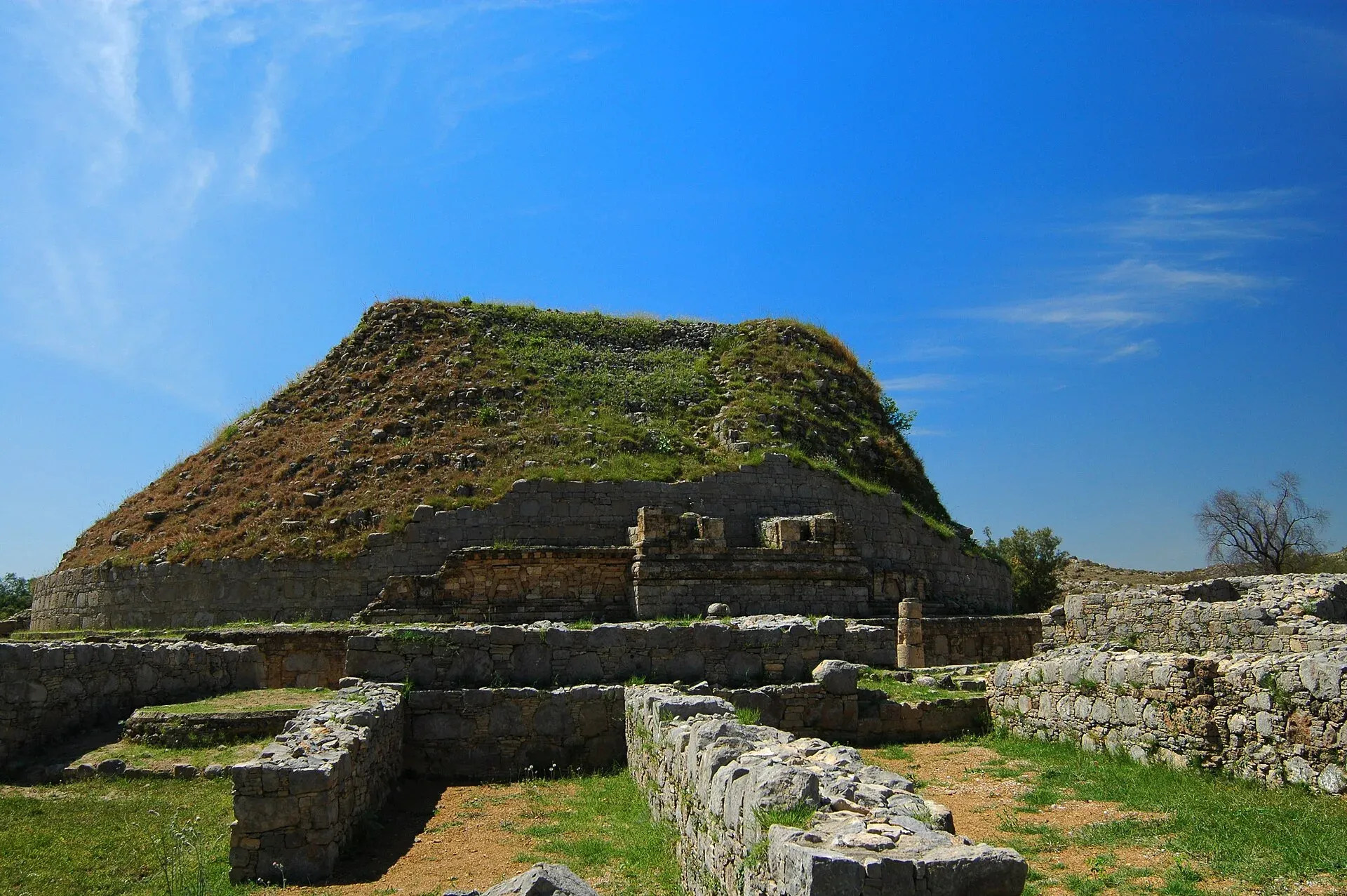
Photo: Usman.pg, with thanks · CC BY-SA 3.0 · via Wikimedia Commons · temporary stand-in photo
Later Kushan and Kidarite rulers added many monasteries and stupas. The White Huns devastated the site in the 5th century CE and it was abandoned. Sir John Marshall excavated it from 1913. The stupa had been looted several times before, and a large trench dug through it in the past had damaged it badly. By 1934 enough had been uncovered to show the scale of the complex. Skeletons found in the open area south of the stupa may be those of monks killed in the Hun invasion.
What to see and do
The layout is easier to read if you know the order in which the site grew.
- The main stupa. The hemispherical dome (anda) was built of ashlar stone and is damaged, but the plinth (medhi) is largely intact. The fence-like structure (harmika) that once stood on top is lost. A passage around the mound allowed pilgrims to walk round it, an old practice called pradakshina.
- The ring of small stupas. A circle of smaller stupas was added about 200 years after the main stupa, probably as one project paid for by a single patron. Further stupas along the northern side were funded by individual donors in the Indo-Scythian period. They form a "Northern Avenue", a processional route with small shrines that held devotional images.
- Monasteries. Early monks lived in a row of rooms with a verandah. Later quadrangles were built to the north, north-east and east. Monastery G, just west of the stupa, has at least 50 cells and a stupa and was probably several storeys high.
- Stucco sculpture. Fragments of stucco Buddha figures and heads were found around the stupa. The remains of a very large stucco Buddha, of which only the feet survive, are among the finds recorded here.
- Context. Taxila Museum, a few kilometres away, holds many finds, including the relic vessels. Eighteen reliquaries came from the small stupas around the main one. They held gold jewellery, pearls, shells and lapis lazuli from Afghanistan, which points to the trade links of Taxila.
When to visit
October to April is the most comfortable. Summer days can be very hot.
Where to stay and eat
Taxila has simple restaurants and hotels, and Islamabad and Rawalpindi have a wider choice.
Good to know
- Do not climb on the stupa or the walls.
- Respect the site: it is a holy place for Buddhists.
- Combine with Taxila Museum, Sirkap and Jaulian.
- Opening hours and any ticket price were not confirmed by an official source when this page was written. Current fees will be added soon; check with the Taxila Museum or the Department of Archaeology and Museums.
Highlights
- Largest stupa in the Taxila region
- Traditionally linked to Ashoka, 3rd century BCE
- Kushan-period rebuilding, 2nd century CE
- Silver relic casket dated to 78 CE found here
- Part of the Taxila World Heritage Site (1980)
- Ring of small stupas and a processional Northern Avenue
Getting there
Dharmarajika is about 1 km from the ancient city of Sirkap and roughly 3 km east of Taxila Museum, along PMO Colony Road. From Taxila, hire a rickshaw or taxi; many visitors come by car from Islamabad or Rawalpindi and visit several Taxila sites in one day.
Tips
- See Taxila Museum first.
- Wear a hat and take water.
- Do not climb on the stupa.
- Allow about an hour.
Sources and last checked
Last checked Confidence medium4 sources3 still to check
- Last checked
- Method
- Desk research from published sources
- Confidence
- medium
- Checked by
- trek.pk research team
Researched from published sources; not yet checked on the ground by our team. Spot something out of date? Report a mistake.
Sources
- Dharmarajika Stupa · Wikipedia · checked
- Taxila · UNESCO World Heritage Centre · checked
- World Heritage Sites · Department of Archaeology and Museums, Pakistan · checked
- Pakistan Tourism Guide 2021 · Tourism Development Corporation of Pakistan (TDAP) · checked
Still to be checked on the ground (3)
- Opening hours and entry fee
- Current access to the site
- Stupa diameter and height (not given by Wikipedia)


