

Photo: Muhammad Bin Naveed, with thanks · CC BY-SA 3.0 · via Wikimedia Commons · temporary stand-in photo

Harappa
The type site of the Indus Valley Civilisation, near Sahiwal in Punjab. Settlement here began about 3300 BCE and the city flourished about 2600-1900 BCE. On UNESCO's tentative list since 2004.
Overview
Harappa is one of the great cities of the Indus Valley Civilisation, and the civilisation is sometimes called the Harappan Civilisation after it. The site lies in Sahiwal district in Punjab, roughly 20-25 km west of Sahiwal town (Wikipedia says about 24 km). The Ravi river, which once flowed beside the city, now runs about 8 km to the north. A village of the same name, with about 15,000 people, stands less than 1 km from the ruins.
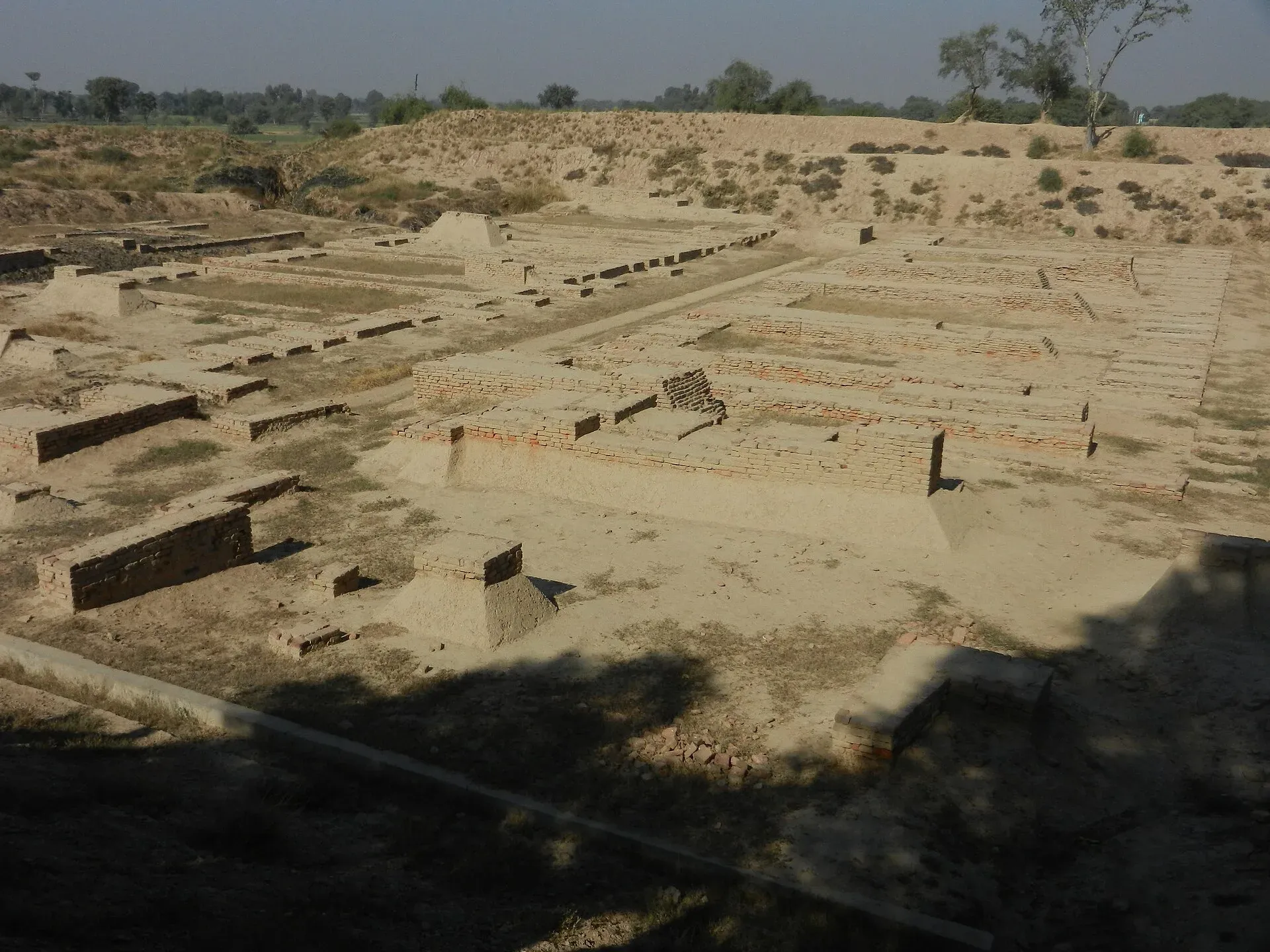
Today you see low mounds and excavated brick walls, plus a small museum beside the site. It is a quiet place for anyone interested in early cities.
Plan your visit
- Nearest town
- Sahiwal
- Getting there
Harappa is in Sahiwal district, about 20-25 km west of Sahiwal town (sources vary slightly). Sahiwal is on the Lahore-Multan railway line and main road; from Sahiwal, take a taxi or rickshaw to the site. More
Best months
Oct – Mar
History
Settlement began here about 3300 BCE (a 2025 study suggests possibly as early as about 3700 BCE). Archaeologists divide the site's long life into phases:
- Ravi phase, about 3300-2800 BCE.
- Kot Diji phase, about 2800-2600 BCE.
- Mature Harappan phase, about 2600-1900 BCE, when the city covered about 150 hectares. Population estimates vary widely, from about 23,500 up to 60,000-80,000 in the 2025 study.
- Transitional and Late Harappan phases, about 1900-1300 BCE.
Bricks from the ruins were taken as ballast for the Lahore-Multan railway in the late 1850s. Alexander Cunningham estimated that enough was removed to lay about 100 miles of track, and much of the site was destroyed. Charles Masson was the first European to report the ruins in 1826, and Alexander Burnes visited in 1831. Cunningham made a small dig in 1872-73. Large-scale excavation began under Daya Ram Sahni in 1921, followed by Madho Sarup Vats from 1926-27 to 1933-34. Mortimer Wheeler worked here in 1946, and the University of California, Berkeley's Harappa Project, led by George Dales and Jonathan Mark Kenoyer, ran fieldwork from 1986 to 2010. In 2005 a planned amusement park was abandoned after construction uncovered artefacts.
Harappa has been on Pakistan's UNESCO tentative list since 2004. It is not a World Heritage Site.
What to see and do
- The museum. The Harappa Museum, founded in 1926, stands beside the site, and four new galleries were opened by the Punjab government in September 2025. It displays finds from the site.
- Mound AB. An excavated mound surrounded by mud-brick walls that Wheeler read as the defences of a citadel. The 1986-1990 excavations focused here and on Mound E.
- Mound F. Includes the remains of the so-called granary, a building with parallel walls that John Marshall identified as a storehouse, and the great hall, brick buildings from the Mature phase.
- Cemetery R37 and Cemetery H. R37 is a burial ground of the Mature phase. Wheeler's trench showed that Cemetery H was the later of the two.
- Brick walls and drains. Look for the straight brick lines of streets, houses and drains, characteristic of Harappan planning.
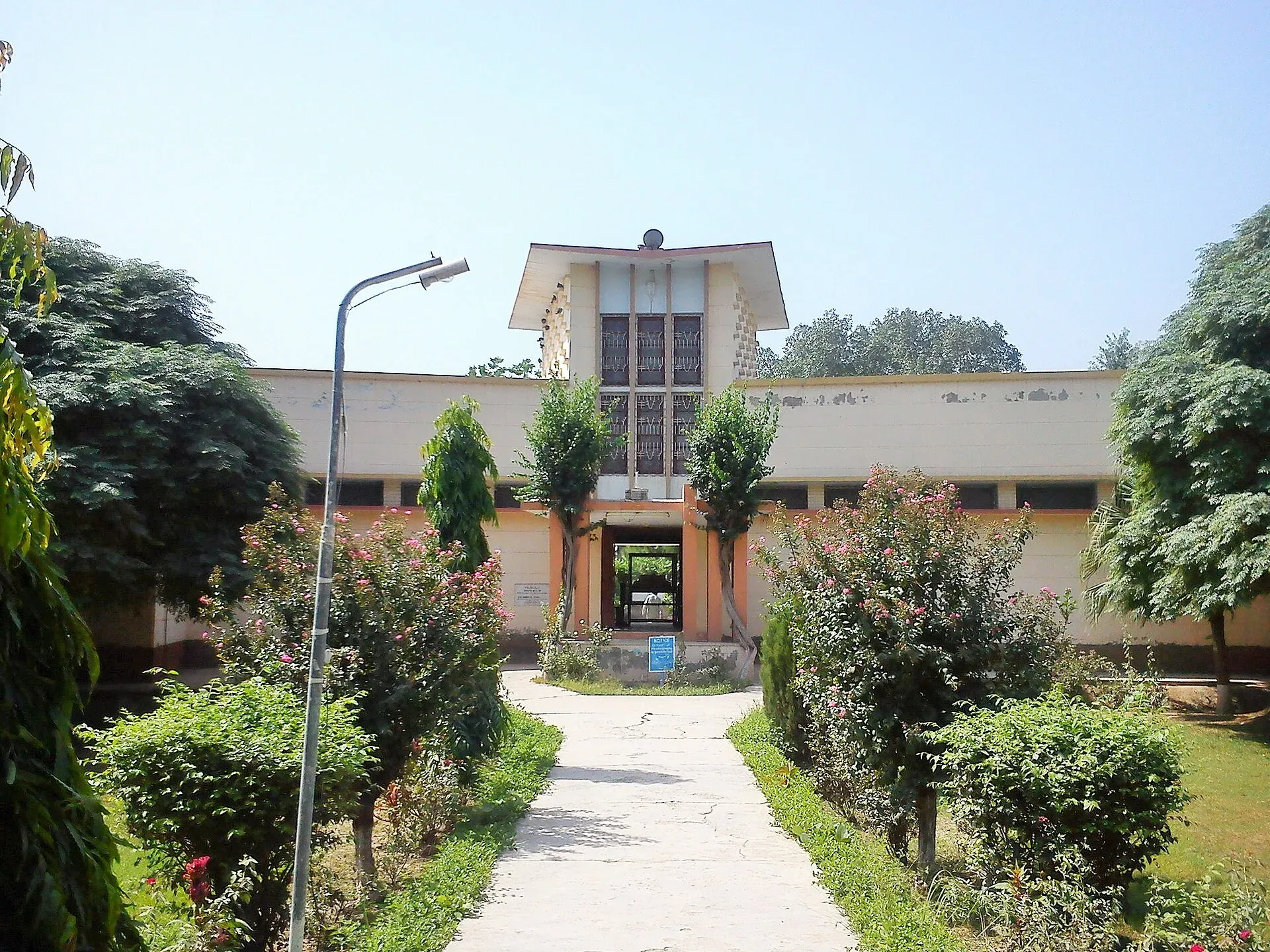
Photo: Shamshad Hussain, with thanks · CC BY-SA 3.0 · via Wikimedia Commons · temporary stand-in photo

What the city made and traded
Harappa's people made pottery on the wheel, some of it painted with animal and geometric motifs, and worked faience, a glazed ceramic. They wove and dyed cotton, grew wheat, rice, vegetables and fruit, and used copper and bronze but not iron. Weights and measures were highly standardised. Early residents traded for shell, copper and semi-precious stones from the Makran and Kutch coasts, Gujarat, Rajasthan, Balochistan and Afghanistan. Carnelian and lapis lazuli were among the most valuable goods.
Excavators recovered many small steatite seals, some carrying signs that remain undeciphered. The 1926-27 season alone produced 350 seals and inscribed objects. Other finds include terracotta figurines and toy models from about 2500 BCE.
A short visit
Allow one to two hours. A sensible order is the museum first, for the objects, then the mounds, so the bare brick walls make sense. Mound F, with the granary and great hall, is the clearest set of structures; Mound AB shows the wall lines of the old citadel. Read the on-site signs for the layout.
When to visit
October to March is best. Summers are very hot and the site has little shade.
Where to stay and eat
Sahiwal has hotels and restaurants; Harappa village has basic food stalls. Many visitors combine the site with a trip between Lahore and Multan.
Good to know
- Wear a hat and bring water.
- Do not climb on or remove anything from the excavated walls.
- Opening hours and any ticket price were not confirmed by an official source when this page was written. Current fees will be added soon; check with the Department of Archaeology and Museums before you go.
Highlights
- Type site of the Indus Valley Civilisation
- Settled from about 3300 BCE; Mature phase 2600-1900 BCE
- Mound F granary and great hall
- Harappa Museum, with new galleries in 2025
- On UNESCO's tentative list since 2004
Getting there
Harappa is in Sahiwal district, about 20-25 km west of Sahiwal town (sources vary slightly). Sahiwal is on the Lahore-Multan railway line and main road; from Sahiwal, take a taxi or rickshaw to the site. Lahore and Multan are the nearest large cities. Check journey times locally.
Tips
- Visit the museum first for context before walking the mounds.
- Go in cooler months and take water, sun protection and a hat.
- Combine with a stop in Sahiwal between Lahore and Multan.
- Do not climb on excavated brickwork.
Photos we still need: Mound AB; Cemetery R37 or Cemetery H; seals or other finds displayed in the museum. Send us yours
Sources and last checked
Last checked Confidence medium5 sources3 still to check
- Last checked
- Method
- Desk research from published sources
- Confidence
- medium
- Checked by
- trek.pk research team
Researched from published sources; not yet checked on the ground by our team. Spot something out of date? Report a mistake.
Sources
- Harappa · Wikipedia · checked
- List of World Heritage Sites in Pakistan (Tentative List) · Wikipedia · checked
- Punjab Inaugurates Four New Galleries at Harappa Museum · ProPakistani · checked
- Harappa heritage listing · Department of Archaeology and Museums, Pakistan · checked
- Pakistan Tourism Guide 2021 · Tourism Development Corporation of Pakistan (TDAP) · checked
Still to be checked on the ground (3)
- Opening hours and entry fee (doam.gov.pk page only redirects; no official figures found)
- Distance from Sahiwal (Wikipedia says about 24 km; other sources 17-20 km; no official figure)
- Current state of the Punjab restoration project (September 2025 report says restoration to 'international standards' is planned, no progress details)
Nearby and related

Sahiwal
A canal-colony city between Lahore and Multan, once called Montgomery, famous for the Sahiwal breed of cattle and a short drive from the Bronze Age ruins of Harappa.

Lahore
Punjab's capital and Pakistan's cultural city: Mughal forts, mosques and gardens, a lively Walled City, and some of the best food in the country.

Multan
The City of Saints in southern Punjab: blue-tiled Sufi shrines, a crowded old city, blue pottery, sohan halwa and mangoes.
Kamalia
Town of about 167,000 people in Toba Tek Singh District, Punjab, founded in its present form in the 14th century and a municipality since 1868.