

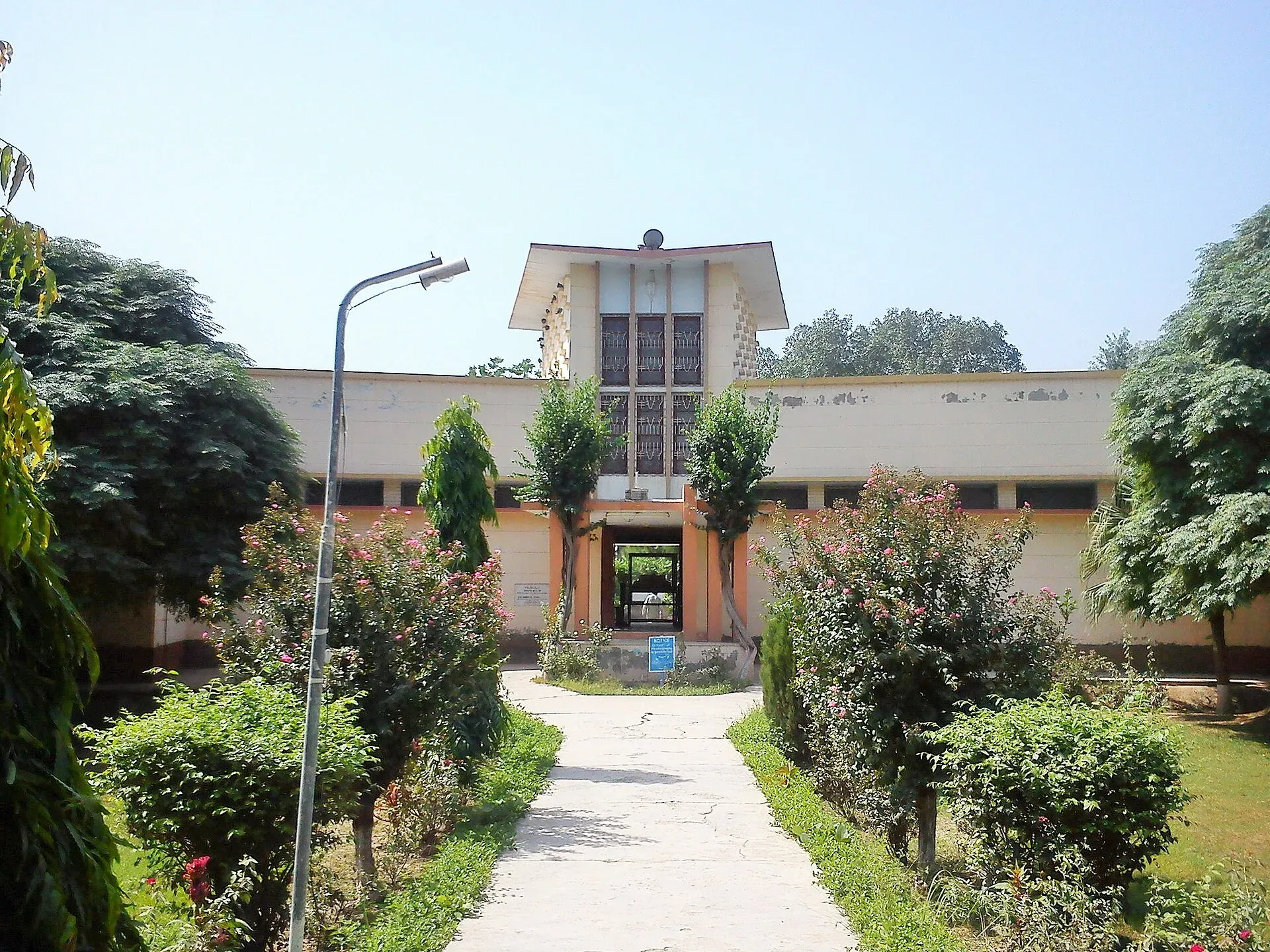
Photo: Shamshad Hussain, with thanks · CC BY-SA 3.0 · via Wikimedia Commons · temporary stand-in photo

Harappa Museum
The site museum of Harappa, a major city of the Indus Valley Civilisation, with pottery, copper and bronze tools, figurines, seals and skeletons. New galleries were opened in 2025.
Overview
The Harappa Museum is the site museum for Harappa, one of the two great cities of the Indus Valley Civilisation, in Sahiwal district, Punjab. It stands on the Chichawatni-Harappa road, about 17 km west of Sahiwal. The Indus Valley Civilisation was a Bronze Age culture that flourished from about 3300 to 1300 BCE. More than 400 of its sites are known, and Harappa and Moenjodaro were its two major cities.
Plan your visit
- Nearest town
- Sahiwal
- Getting there
The museum is on the Chichawatni-Harappa Road in Harappa, about 17 km west of Sahiwal. Sahiwal is on the main Lahore-Multan road and railway line. From Sahiwal take a taxi or local transport to Harappa. More
Best months
Oct – Mar
What the museum holds
Wikipedia describes two galleries with about thirty showcases. The displays follow the development of arts, crafts and technology in the Indus cities. Items include copper and bronze objects, terracotta figurines and toys, human skeletons, and everyday objects of ivory, shell and clay. They come from digs at Harappa over almost a century. Published sources do not name individual star objects, so ask the staff what is on show.
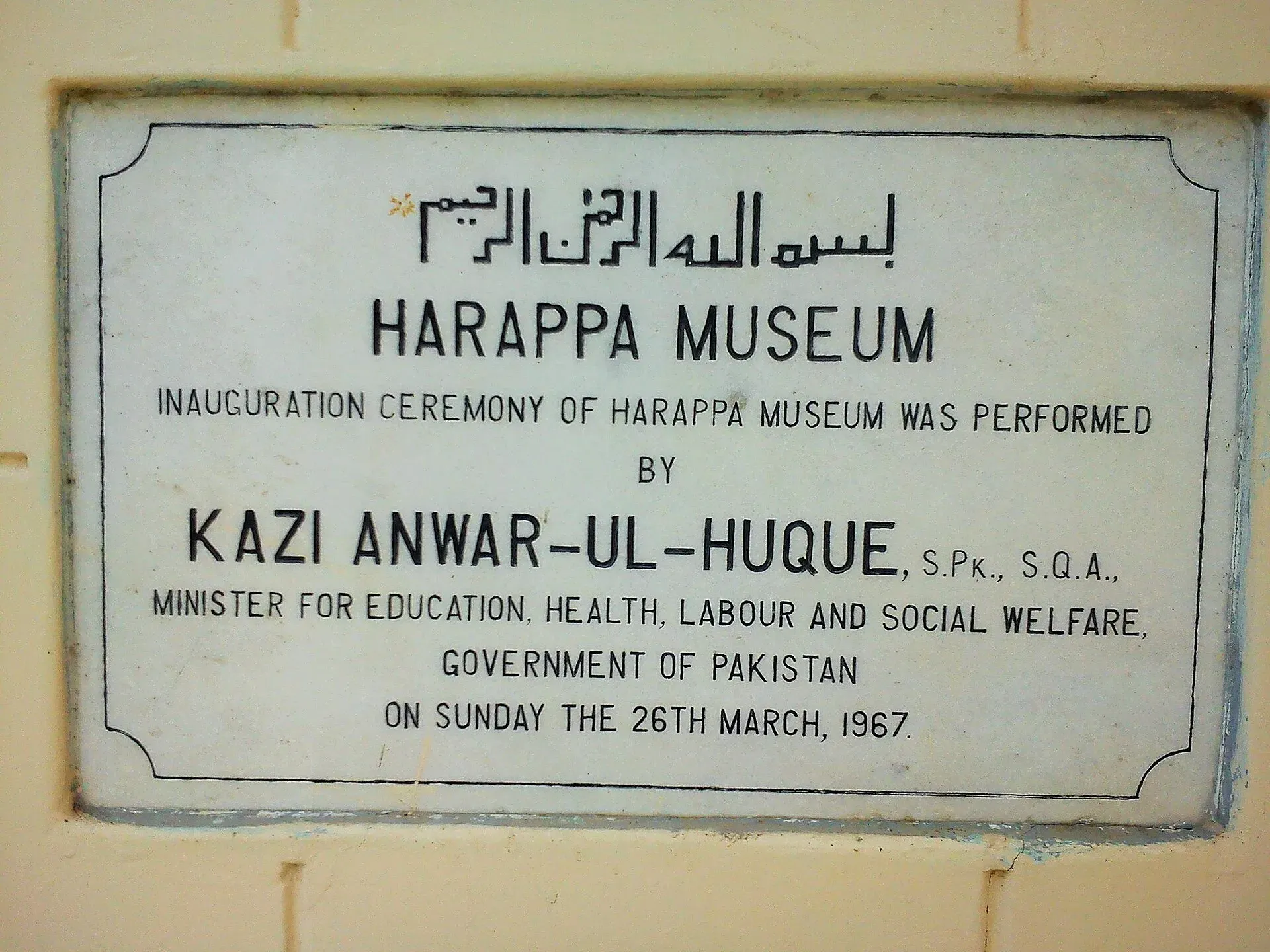
Photo: Shamshad Hussain, with thanks · CC BY-SA 3.0 · via Wikimedia Commons · temporary stand-in photo

In September 2025 ProPakistani reported that the Punjab government opened four new galleries at the museum, using modern display methods. The report does not list the exhibits, so displays may differ from older guidebooks.
History of the museum
The museum began in 1926 as a small on-site museum. It moved on 26 March 1967 to its present building, built by the Government of Pakistan and opened by the minister Kazi Anwarul Haque.
How Harappa was dug
Visitors to the ruins in the early 19th century included Charles Masson (1826) and Alexander Burnes (1831). Alexander Cunningham visited in 1853 and 1856 and noticed that bricks from the mounds were being taken for the Lahore-Multan railway, which damaged the site badly. Daya Ram Sahni excavated from 1921 to 1925, followed by Madho Sarup Vats from 1926 to 1934. A dig led by K. A. Nilakanta Sastri took place in 1937 and another by Mohammad Rafique Mughal in 1966. From 1986 to 2001 a joint American and Pakistani team ran the Harappa Archaeological Research Project, co-directed by George F. Dales.
What to see and do
Visit the museum first, so that the mounds, old brick lines and cemetery area at the site make more sense. The ruins are covered on the Harappa page. For the other great Indus city, see Moenjodaro in Sindh.
When to visit
October to March. Summers in this part of the Punjab plains are very hot.
Where to stay and eat
Facilities near the village are basic. Most visitors stay in Sahiwal or Lahore and make a day trip.
Good to know
- Hours and tickets: no official timings or ticket prices were found. A travel blog gave 9 am to 4 pm with a Friday prayer break, but this is not confirmed. Check with the Directorate General of Archaeology, Punjab, before you go. Current fees will be added soon.
- Photography and accessibility: not stated. Ask at the entrance.
- Distance: Wikipedia says the museum is about 7 km from Harappa railway station.
Highlights
- Site museum for the Indus Valley city of Harappa
- Founded 1926; present building since 1967
- New galleries inaugurated in September 2025 (press report)
- Copper, bronze, terracotta, ivory and shell objects
Getting there
The museum is on the Chichawatni-Harappa Road in Harappa, about 17 km west of Sahiwal. Sahiwal is on the main Lahore-Multan road and railway line. From Sahiwal take a taxi or local transport to Harappa. Wikipedia places the museum about 7 km from Harappa railway station.
Tips
- See the museum before the ruins.
- Confirm opening days by phone: no official timetable was found.
- Bring water; there is little shade at the site.
Photos we still need: galleries and display cases inside the museum; the Harappa mounds seen from the museum. Send us yours
Sources and last checked
Last checked Confidence medium4 sources4 still to check
- Last checked
- Method
- Desk research from published sources
- Confidence
- medium
- Checked by
- trek.pk research team
Researched from published sources; not yet checked on the ground by our team. Spot something out of date? Report a mistake.
Sources
- Harappa Museum · Wikipedia · checked
- Punjab inaugurates four new galleries at Harappa Museum · ProPakistani · checked
- Harappa · Wikipedia · checked
- Pakistan Tourism Guide 2021 (museums list) · Trade Development Authority of Pakistan (TDAP) · checked
Still to be checked on the ground (4)
- Opening days and hours (archaeology.punjab.gov.pk returned 404 and maintenance pages; doam.gov.pk only redirects)
- Ticket price (no official source reachable)
- Contents of the four galleries added in 2025 (ProPakistani reports four new galleries; Wikipedia still says two galleries and about thirty showcases)
- Photography rules and accessibility
Nearby and related

Harappa
The type site of the Indus Valley Civilisation, near Sahiwal in Punjab. Settlement here began about 3300 BCE and the city flourished about 2600-1900 BCE. On UNESCO's tentative list since 2004.

Sahiwal
A canal-colony city between Lahore and Multan, once called Montgomery, famous for the Sahiwal breed of cattle and a short drive from the Bronze Age ruins of Harappa.

Moenjodaro
The ruins of a planned Indus Valley city built around 2500 BCE, with brick streets, drains and the Great Bath. A UNESCO World Heritage Site since 1980, about 30 km from Larkana in Sindh.

Lahore
Punjab's capital and Pakistan's cultural city: Mughal forts, mosques and gardens, a lively Walled City, and some of the best food in the country.