

Photo: Mhtoori, with thanks · CC BY-SA 4.0 · via Wikimedia Commons · temporary stand-in photo

Hinglaj Mata Temple
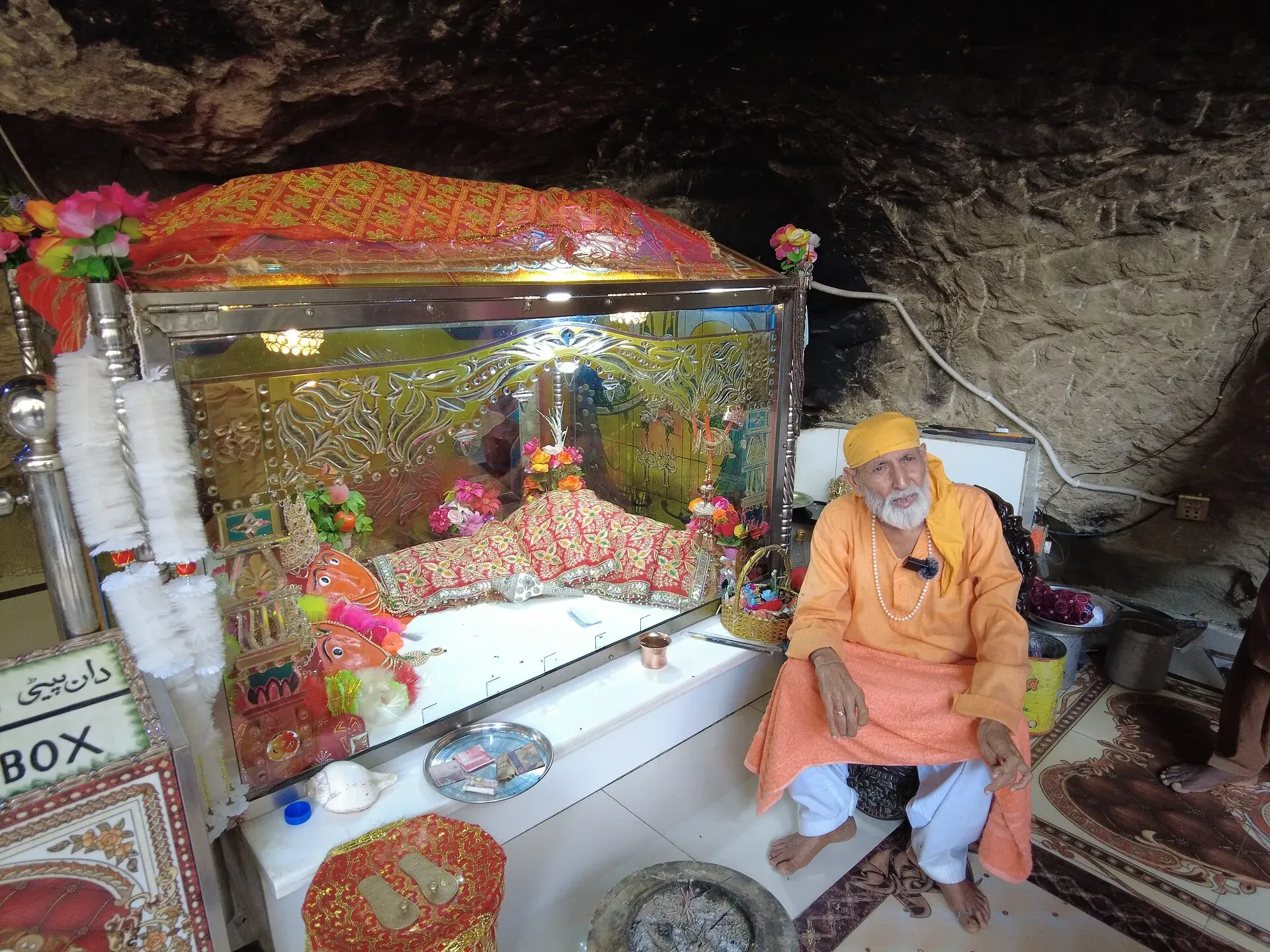
A cave shrine in a gorge on the Hingol River in Hingol National Park, Balochistan. Hindus revere it as a Shakti peeth, and local Muslims know it as Nani Mandir. The annual Hinglaj Yatra in April is Pakistan's largest Hindu pilgrimage.
Overview
Hinglaj Mata is a cave temple in a narrow gorge on the west bank of the Hingol River, inside Hingol National Park in Lasbela District, Balochistan, about 19 km inland from the Arabian Sea. It lies at the end of a range of the Kirthar Mountains, on the edge of the Makran desert. For Hindus it is one of the 51 Shakti peeths, places where, in tradition, a part of the goddess Sati fell to earth. Here the part is her upper head. Hinglaj Mata is a form of Durga, and Bhairava, a form of Shiva, is associated with the shrine. In one legend the goddess killed a demon named Hingol, who had tormented people and asked that the place carry his name.
Local Muslims, especially Zikri communities, also revere the site, call it Nani Mandir and help guard it. They sometimes call the pilgrimage Nani ki Haj.
Plan your visit
- Nearest town
- Hingol National Park
- Getting there
The temple is inside Hingol National Park on the Makran Coastal Highway. By road it is about 240 km (about 3 hours) from Karachi by OSRM (checked 16 November 2026); More
Best months
Mar – Apr
- Hinglaj Mata Temple
- Related place nearby: Hingol National Park
History
Pilgrims traditionally set out from the Nanad Panthi Akhada in Karachi, led by a staff bearer called the chaadiar, and used to cross the desert on foot. Today most go by bus or car along the Makran Coastal Highway. The temple committee, the Hinglaj Sheva Mandali, was formed on 5 January 1986 and manages services for pilgrims. A wall built in 1996 marks the start of the sacred valley, where commercial activity is not allowed. In 2008 a dam was proposed on the Hingol River near the shrine; after protests the site was moved a few kilometres north.
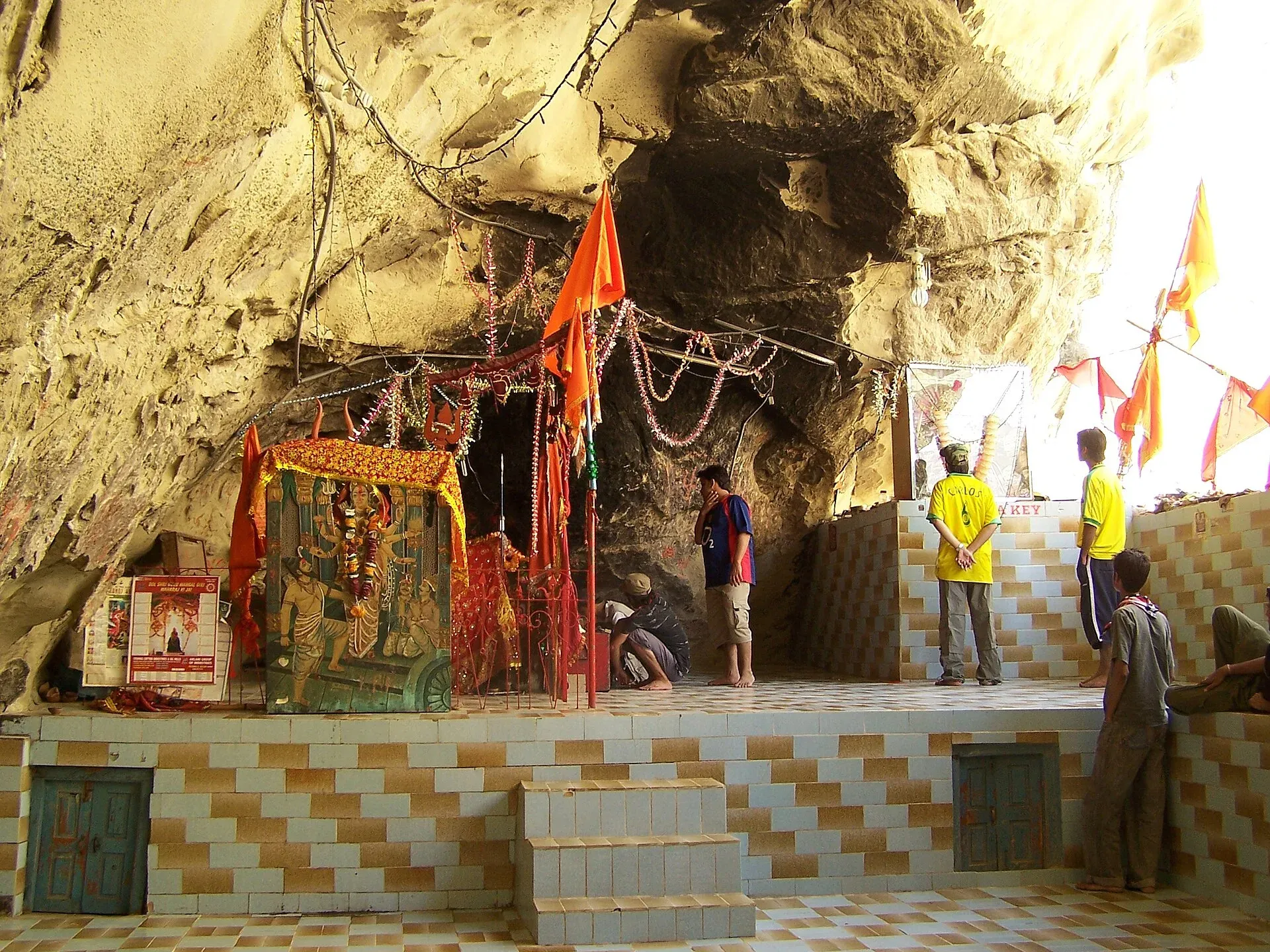
Photo: Bilal Mirza, with thanks · CC BY-SA 3.0 · via Wikimedia Commons · temporary stand-in photo

The cave shrine
The shrine is in a mountain cavern on the river bank. Pilgrims take a ritual bath in the river before approaching it. Little has been published about the architecture of the cave.
Hinglaj Yatra
The four-day Hinglaj Yatra is held in April, with the main ceremony on the third day, when priests recite mantras and bless offerings, mainly three coconuts. In 2026 it began on 17 April; Dawn reports it ended on 19 April, with about 300,000 pilgrims (a figure that varies between outlets), Army, Frontier Corps, police and Levies deployed, and free medical camps and a 24-hour langar (community kitchen) run on site. Volunteers serve three meals a day, and camps, temporary toilets and diesel generators are set up.
Chandragup mud volcano
Pilgrims stop at the Chandragup mud volcano, worshipped as Baba Chandragup, an embodiment of Shiva. Many believe the temple should be visited only after paying homage here. Pilgrims stay awake overnight, fasting, and bake roti from ingredients contributed by the group. Next day they climb the slope, offering roti and, in modern times, coconuts, betel nut and dal. Coconuts are thrown into the craters to make wishes. At the top each pilgrim gives their full name and origin and names their sins aloud, and a chaṛīdār reads the bubbling mud and the wind to judge whether the sins are forgiven. Some also climb the nearby Khandewari mud volcano.
UNESCO status
Hinglaj sits within the "Hingol Cultural Landscape", which Pakistan placed on its UNESCO tentative list in 2016. It is not an inscribed World Heritage Site (checked against Wikipedia's list, 16 November 2026).
What to see and do
- The gorge and river. The setting is the main draw: red-brown canyon walls within Hingol National Park.
- Pilgrim traditions. Offerings, rituals and food service happen throughout the yatra.
- Other sacred spots. Places linked to the pilgrimage include Ganesh Deva, Mata Kali, Gurugorakh Nath Dooni, Gurunanak Kharao and Aneel Kundh on Chorasi Mountain. Pilgrims also bathe in the sea at Khari Nadi, and Ram Bagh near Karachi and the Seeta Koowas, five wells said to have appeared when Sita pressed her palm to the soil, are part of the traditional route.
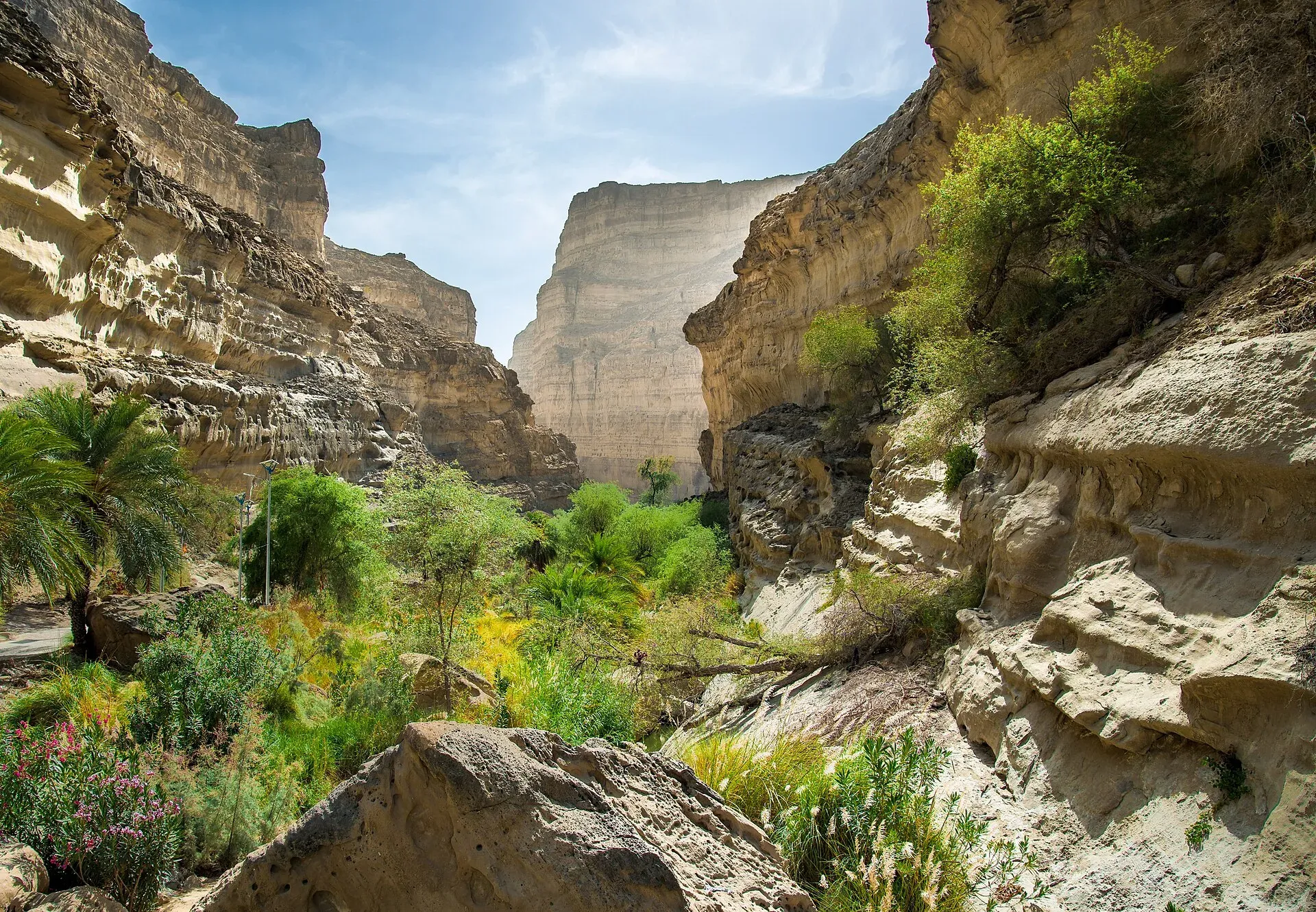
Photo: Balochistan, Pakistan, with thanks · CC BY-SA 4.0 · via Wikimedia Commons · temporary stand-in photo

When to visit
April, during the Yatra, is the main time. Outside the Yatra the area is remote and very hot in summer.
Where to stay and eat
There are no hotels at the site. During the Yatra pilgrims use camps, temporary bathrooms and community kitchens. Shops and tea stalls are not allowed in the sacred valley. At other times you need to arrange transport and supplies in advance.
Good to know
- Etiquette. This is a place of worship. Remove shoes, dress modestly, do not take photographs of rituals without permission, and respect both Hindu and Muslim visitors. Commercial activity is not allowed in the sacred valley.
- Safety. The site is in Balochistan. Ask the district administration or local police about current conditions before you go. For foreign visitors: the UK FCDO advises against all travel to Balochistan (updated 27 October 2026, checked 16 November 2026). The Yatra is escorted and organised by the authorities and the temple committee. Do not attempt to visit outside that arrangement without current local advice.
- Hours and fees. There is no published timetable or fee. Current fees will be added soon.
Highlights
- Cave shrine in the Hingol River gorge, a Shakti peeth
- Also revered by local Muslims as Nani Mandir
- Hinglaj Yatra each April, 17 to 20 April in 2026
- Inside Hingol National Park
Getting there
The temple is inside Hingol National Park on the Makran Coastal Highway. By road it is about 240 km (about 3 hours) from Karachi by OSRM (checked 16 November 2026); Wikipedia gives about 328 km and four hours, so allow extra time. Pilgrims normally travel in organised groups by bus or car. There is no public service to the site.
Tips
- Visit only with the organised Yatra or local advice.
- Dress modestly and remove shoes.
- Carry water, sun protection and cash.
- Respect both Hindu and Muslim traditions.
Photos we still need: Chandragup mud volcano. Send us yours
Sources and last checked
Last checked Confidence medium7 sources3 still to check
- Last checked
- Method
- Desk research from published sources
- Confidence
- medium
- Checked by
- trek.pk research team
Researched from published sources; not yet checked on the ground by our team. Spot something out of date? Report a mistake.
Sources
- Hinglaj Mata Temple · Wikipedia · checked
- Balochistan: Hinglaj Mata Yatra celebrated despite odds · Organiser (20 April 2026) · checked
- Hindu devotees perform rituals at the holy site in Balochistan · Dawn · checked
- List of World Heritage Sites in Pakistan (tentative list table) · Wikipedia (UNESCO site whc.unesco.org returned HTTP 403) · checked
- Pakistan Tourism Guide 2021 · TDAP (Trade Development Authority of Pakistan) · checked
- OSRM driving route calculation · OSRM (OpenStreetMap routing) · checked
- Pakistan travel advice (warnings and insurance), updated 27 October 2026 · UK Foreign, Commonwealth & Development Office · checked
Still to be checked on the ground (3)
- Distance and time from Karachi (OSRM 240 km vs Wikipedia 328 km; no official figure found)
- Current access and security arrangements outside the Yatra (no source; Wikipedia says local Zikri Muslims help guard the shrine)
- 2027 Yatra dates
Nearby and related

Hingol National Park
Pakistan's largest national park, about 6,100 square kilometres along the Makran Coastal Highway: desert canyons, mud volcanoes, the Hingol River, the Princess of Hope rock and the Hinglaj Mata temple.

Balochistan
Pakistan's largest and least populated province: Quetta's high valleys, Ziarat's juniper forest, the Makran coast, Hingol and Gwadar. Security and permission rules need checking first.

Karachi
Pakistan's largest city and main port: colonial buildings, museums, beaches, busy bazaars and some of the country's best food.