

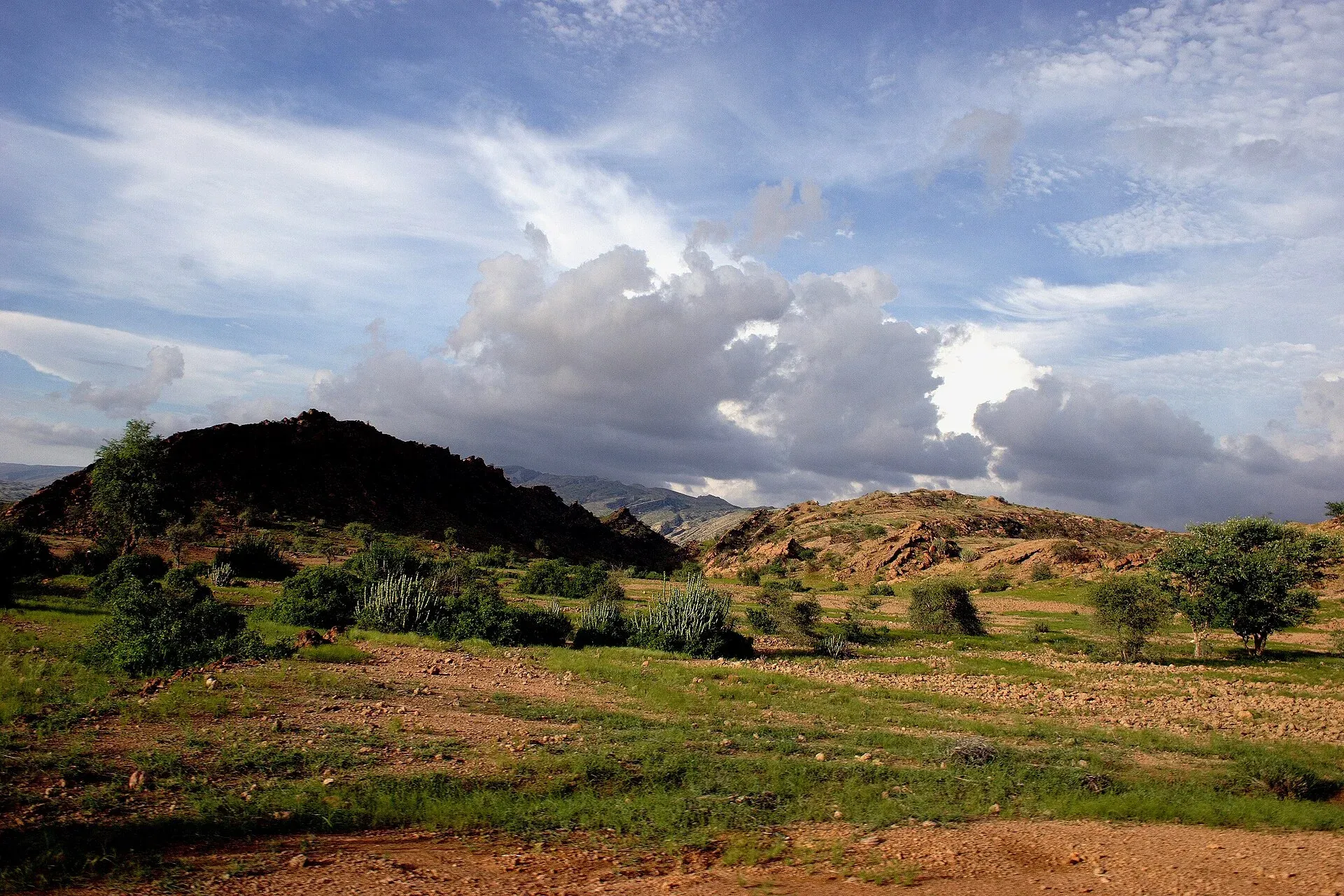
Photo: AQEEL BAIG, with thanks · CC BY-SA 2.0 · via Wikimedia Commons · temporary stand-in photo

Kirthar National Park
A rugged semi-desert park in the Kirthar Mountains north of Karachi, established in 1974. About 3,087 square kilometres, home to Sindh ibex, urial, chinkara and leopard.
Overview
Kirthar National Park lies in the Kirthar Mountains in Jamshoro and Dadu districts of Sindh. It was first a wildlife sanctuary in 1972 and became a national park on 31 January 1974. It covers about 3,087 square kilometres (Wikipedia calls it the third-largest national park in Pakistan; it was the second declared, after Lal Suhanra), is an IUCN Category II area and is managed by the Sindh Wildlife Department. Dawn credits its creation largely to Wahajuddin Ahmed Kirmani, who also set up the Sindh Wildlife Department.
Plan your visit
- Nearest town
- Karachi
- Getting there
The park is north of Karachi in the Kirthar Range. Dawn (June 2021) puts Giri Jabal about 70 km and Kirthar mountain about 160 km from Karachi, and mentions a base camp at Karchat. More
Best months
Nov – Mar
Landscape
The park runs from Hub Dam in the north to Ranikot in Jamshoro, according to Dawn. It is rugged and dry, with rocky ridges, limestone hills, gorges, dry river beds, a few streams and springs, and open scrub. The park takes its name from Kirthar mountain, the highest hilltop in the area, about 160 km from Karachi. After the monsoon rains the landscape turns green and flowers bloom.
Visitor areas
- Karchat (Karchaat). The base camp and most visited zone, with mountain terrain, wildlife and most of the archaeological sites. Wikivoyage says the unpaved road from the M-9 near Nooriabad needs a 4x4 and signage is poor.
- Khar. A visitor centre near Hub Dam with captive-breeding animals and birdwatching. Wikivoyage says the paved Kirthar Park Road from the Northern Bypass reaches it without a 4x4.
- Giri Jabal. About 70 km from Karachi, a rugged drive that needs a 4x4. Dawn advises leaving before sunrise for the view and the birds. Permission from the Sindh Wildlife Department is needed.
- Kirthar mountain. Reaching the top needs a reliable 4x4 and plenty of fuel and food, as you may be the only people around.
- Ranikot Fort. At the southern end of the park, near Sann on the Indus Highway. Wikivoyage describes it as said to be among the largest forts in the world, with walls about 10 m high and about 26 km round, and says its date and purpose are disputed. See Ranikot Fort.
- Koh Tarash and Taung. Wikivoyage lists prehistoric ruins at Koh Tarash and Chaukundi-style tombs at Taung.
Wildlife
Records list about 38 mammals, including leopard, striped hyena, Indian wolf, honey badger, urial (wild sheep with curled horns), chinkara (a gazelle) and the rare Sindh ibex. Dawn calls the ibex the most sought-after sight. It climbs steep valleys and often comes down to drink, and groups are seen on the foothills. Chinkara, blackbuck and urial are also mentioned, and blackbuck are kept in enclosures for a reintroduction project. Dawn reports that leopards were recorded most recently in 2019, and that griffon and cinereous vultures, once common, are now rare. Hyenas and hares show up in headlights on night drives.
At least 165 birds are recorded, including eagles, vultures, falcons, partridges, sandgrouse and owls. Lichtenstein's sandgrouse is elusive and well camouflaged, and grey francolins are seen in groups in dry grass. The park and the Hub Dam area became an Important Bird and Biodiversity Area in 2004. Wikipedia also lists 18 reptiles, including mugger crocodile and Indian python, and six amphibians. The IUCN Red List (2020 assessments) rates the wild goat, the species the Sindh ibex belongs to, as Near Threatened and the urial as Vulnerable.
Dawn suggests neutral colours, minimal movement and quiet to avoid startling animals.
When to visit
Sources differ. Dawn gives August to February and Wikivoyage October to January. November to March is a common cooler-season range. All agree that summers are very hot and that the monsoon (July and August) turns the park green but can make tracks muddy and fill dry beds with flash floods.
Where to stay and eat
Wikivoyage lists Sindh Wildlife Department guesthouses with basic cottages at Karchat and Khar, booked through the department, and says camping is possible if you bring your own tent. Visitors usually bring their own food and water. Karachi is the usual base.
Good to know
- Permission. Wikivoyage strongly recommends a no-objection letter from the Sindh Wildlife Department (Karachi or Hyderabad offices) for unguided visits, and says a guide is needed inside the park. Dawn mentions a local guide for Giri Jabal. Current fees will be added soon; check with the park office or the provincial wildlife department.
- Roads and tracks are rough. Use a 4x4, carry spare tyres, fuel and plenty of water, and check local security advice. Wikivoyage reports armed robbery and car break-ins in remote areas.
- Follow the standard park rules: take your litter out with you, do not light fires outside marked sites, do not pick plants or disturb animals, and do not hunt. Hunting and trapping inside a national park are offences. Ask the park office before flying a drone.
- Stay in your vehicle near large animals and keep to the tracks.
- Dawn notes that nearby communities lack running water, electricity and healthcare. Encroachment and extreme aridity are conservation concerns.
Travel advice
Part of Kirthar lies in Dadu district, north of Nawabshah. Ask the district administration or local police about current conditions before you go. For foreign visitors: the UK FCDO advises against all but essential travel to Sindh north of and including Nawabshah (advice updated 27 October 2026, checked 16 November 2026). Read the live advice before you plan.
Highlights
- Sindh ibex, urial and chinkara habitat
- Rugged Kirthar mountain scenery
- Popular day or weekend trip from Karachi
- Established 1974
Getting there
The park is north of Karachi in the Kirthar Range. Dawn (June 2021) puts Giri Jabal about 70 km and Kirthar mountain about 160 km from Karachi, and mentions a base camp at Karchat. Wikivoyage says Karchat is reached from the M-9 near Nooriabad on an unpaved road that needs a 4x4, and Khar by the paved Kirthar Park Road. Travel is usually 3 to 5 hours from the city. Ask the Sindh Wildlife Department in Karachi for current road and permit arrangements.
Tips
- Go between November and March
- Use a 4x4 with a local driver
- Carry water and food
- Check entry rules with Sindh Wildlife Department
Wildlife
Facilities
- Jeep tracks
- Rest houses (check)
- Karachi base
Photos we still need: Sindh ibex, urial or chinkara in Kirthar; Karchat or Giri Jabal track and landscape; Hub Dam and the Khar area. Send us yours
Sources and last checked
Last checked Confidence medium7 sources4 still to check
- Last checked
- Method
- Desk research from published sources
- Confidence
- medium
- Checked by
- trek.pk research team
Researched from published sources; not yet checked on the ground by our team. Spot something out of date? Report a mistake.
Sources
- Kirthar National Park (Wikipedia) · Wikipedia · checked
- Travel: Far from the Madding Crowd (20 June 2021) · Dawn · checked
- Sindh ibex (Wikipedia) · Wikipedia · checked
- Urial (Wikipedia) · Wikipedia · checked
- Kirthar National Park · Wikivoyage · checked
- Capra aegagrus (wild goat) (IUCN Red List category) · GBIF, IUCN Red List checklist · checked
- Ovis vignei (urial) (IUCN Red List category) · GBIF, IUCN Red List checklist · checked
Still to be checked on the ground (4)
- Security situation (no current source; FCDO advice already on the page)
- Entry rules and fees (Wikivoyage says no entrance fee and a guide is needed; undated and not an official source)
- Guesthouse availability and booking at Karchat and Khar (Wikivoyage only)
- Best months (sources differ)
Nearby and related

Gorakh Hill
A cool hill station in the Kirthar Mountains in north-west Sindh, near the Balochistan border. Popular with visitors from Karachi in winter and for Hindu pilgrims.
Kai Caves
Two groups of caves in the Kai valley south of Sehwan Sharif, Jamshoro District, Sindh, in the Kirthar range. The lower group is known locally as Satt Ghariyoon (Seven Caves). Access is by a narrow, difficult track.