

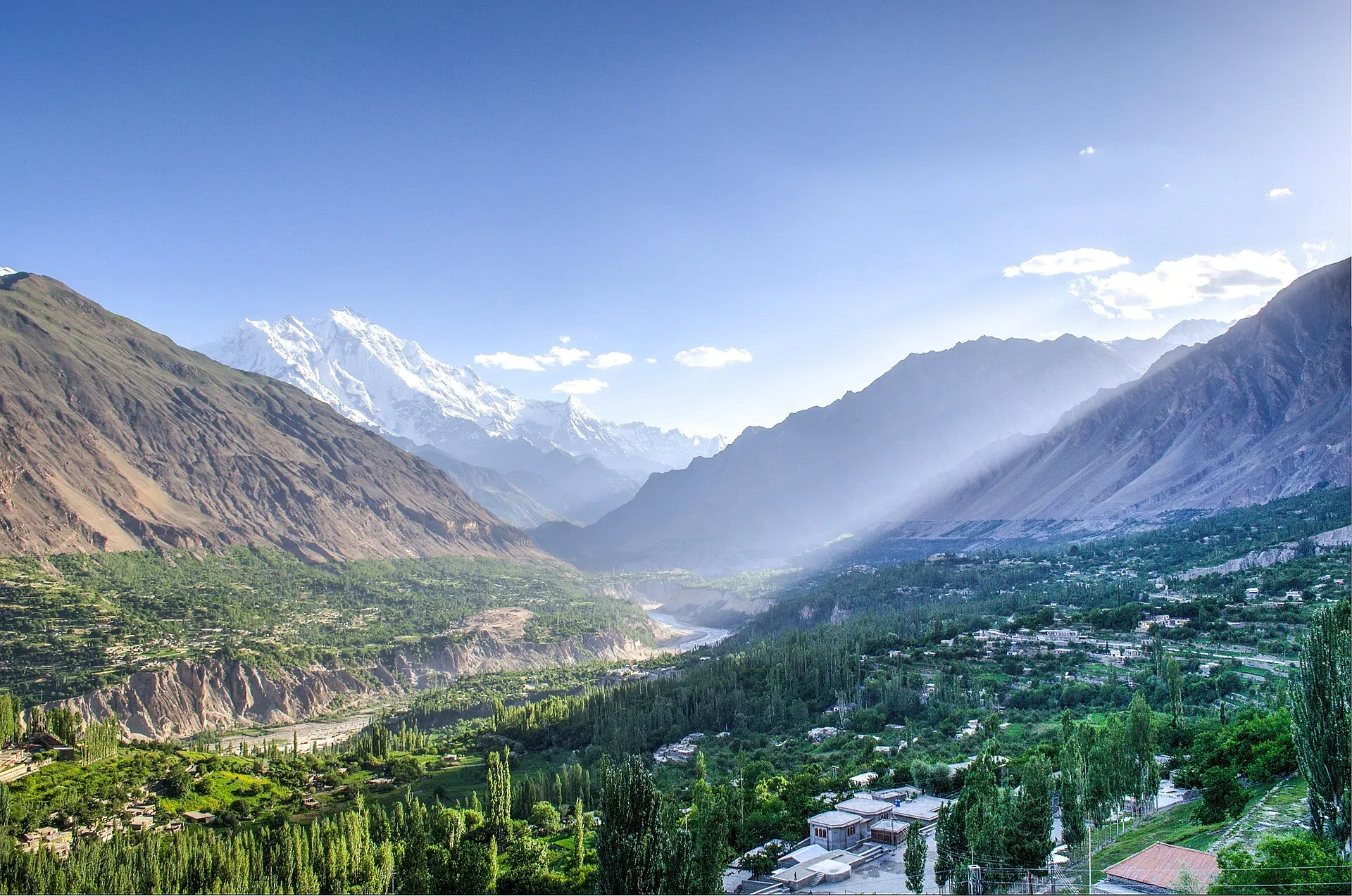
Photo: FaizanAhmad, with thanks · CC BY-SA 3.0 · via Wikimedia Commons · temporary stand-in photo

Cherry and Apricot Blossom Season (Hunza and Skardu)
Each spring cherry, apricot and apple trees bloom in Hunza and Skardu. The display lasts two to three weeks, from about mid-March to mid-April, with higher villages flowering later.
When and where
- Usual dates
Roughly mid-March to mid-April, depending on altitude and the weather; not a fixed event.
- Place
- Hunza Valley
- Nearest town
- Karimabad
- Region
- Gilgit-Baltistan
- Kind
- Cultural
Usual months
Mar – Apr · dates move from year to year
What it is
Blossom season is a natural event rather than a scheduled festival. In late winter the fruit trees of Hunza and Skardu flower in turn, colouring the villages and terraces. Some travel sites use labels such as "Hunza Blossom Festival", but there is no known official dated programme, so treat any such label as a commercial name.
When
The Express Tribune reported on 1 April 2026 that Hunza's season generally runs from mid-March to mid-April, with each bloom lasting two to three weeks and daytime temperatures around 10 to 20 degrees Celsius. Cherry blossom is the main draw; apricot, apple and walnut also flower. Higher places bloom later: areas at 2,500 to 2,800 m near Attabad Lake flower after the lower villages, and south-facing slopes flower earlier. A February 2026 travel blog gives mid-March to early April for lower areas and late March to mid-April for higher ones, and lists Skardu-area spots (Shangrila, Shigar valley, Upper Kachura Lake and the Khaplu Palace area), but it gives no Skardu-specific dates. Weather can move the peak by a week or more, so it can shift each year.
Where
In Hunza, the Tribune named Karimabad, Baltit Fort, Altit Fort, Ganish, Gulmit, Ghulkin, Passu, Hopper Valley, Duikar and the Attabad area. In Skardu the blossom is found in the valley villages and orchards around the town and nearby valleys; see the Skardu-area pages for places to stay.
What happens
There is nothing to book. People walk the village lanes and terraced orchards, photograph the trees against the snow peaks, visit forts and eat apricot-based local dishes. Many orchards are private, so stay on the paths.
How to go
Choose a base such as Karimabad and look at the trees at different heights over several days. Ask your host which villages are flowering.
Etiquette
Orchards belong to families. Ask before entering one, do not pick blossom or break branches, do not climb on walls or terraces, and keep to the paths. Ask before photographing people.
Why it is worth planning around
Blossom is a short window, so the best plan is a flexible one. Stay a few nights, move between villages at different heights and ask local hosts which orchards are in bloom that week. Early mornings give the softest light and the fewest visitors. The trees are part of family livelihoods, since the fruit is dried and sold later in the year, so treat every orchard with care.
Safety
Spring weather is unsettled and late snow, rockfall and landslides can close roads. Ask the district administration or local police about current conditions before you go. For foreign visitors: UK FCDO advice (updated 27 October 2026, still current on 17 November 2026) advises against all travel on the Karakoram Highway between Mansehra and Chilas, so check how you will reach Gilgit-Baltistan before you book. It does not advise against Gilgit-Baltistan generally. Check the live page.
Sources and last checked
Last checked Confidence medium3 sources3 still to check
- Last checked
- Method
- Desk research from published sources
- Confidence
- medium
- Checked by
- trek.pk research team
Researched from published sources; not yet checked on the ground by our team. Spot something out of date? Report a mistake.
Sources
- Hunza Valley gears up for breathtaking cherry blossom season · The Express Tribune · checked
- Blossom season in northern Pakistan · Travel Pakistani · checked
- Pakistan travel advice · UK Foreign, Commonwealth & Development Office · checked
Still to be checked on the ground (3)
- Skardu bloom timing: only a general March to April window from a travel blog; no Skardu-specific dates
- Peak dates vary year to year
- Whether any official blossom programme exists (none found)