

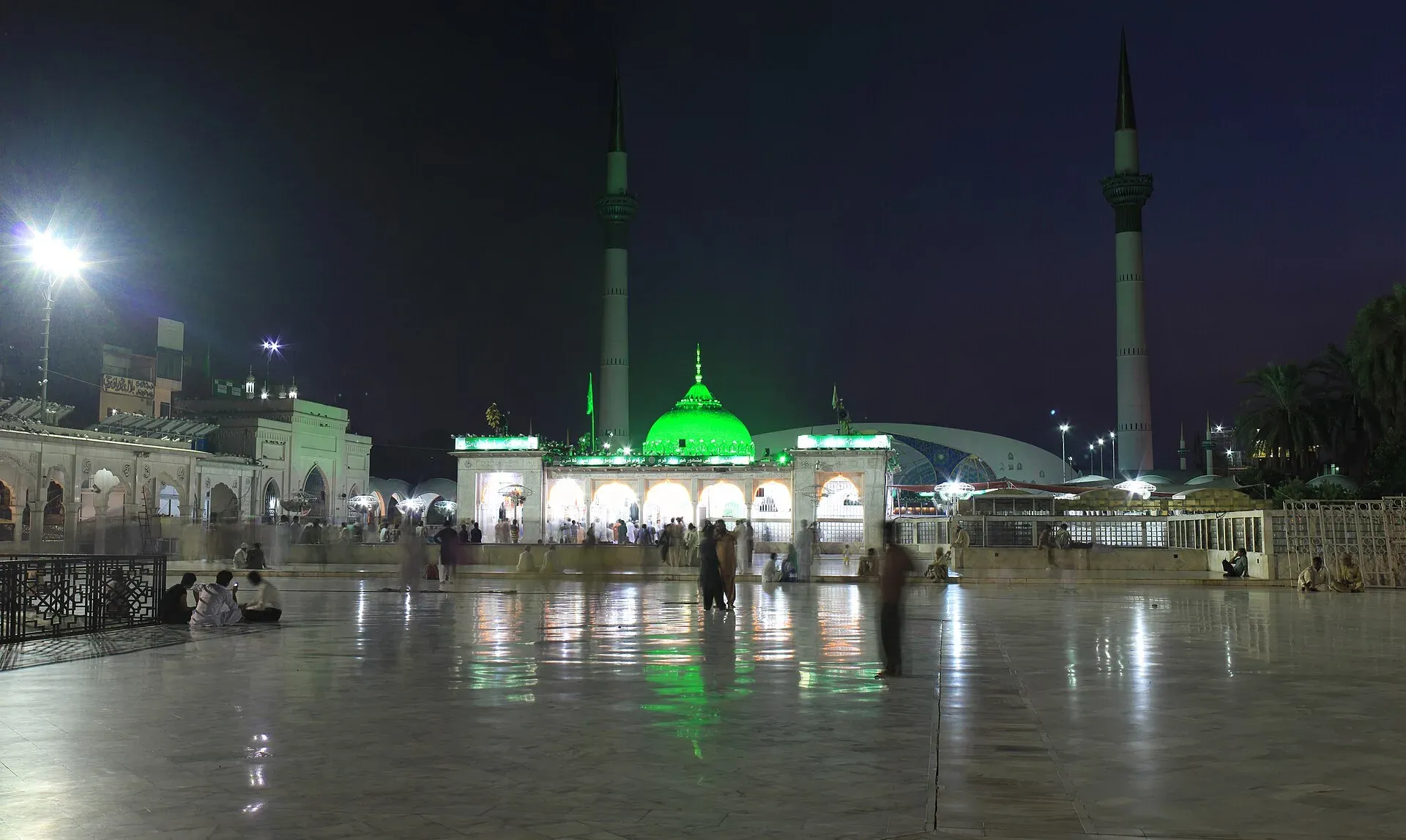
Photo: Meemjee, with thanks · CC BY-SA 3.0 · via Wikimedia Commons · temporary stand-in photo

Urs of Data Ganj Bakhsh
The urs of Ali Hajveri (Data Ganj Bakhsh) is a three-day Sufi observance at Data Darbar in Lahore. The 983rd urs was held on 2-4 August 2026; it follows the Islamic month of Safar.
When and where
- Usual dates
2026: 2-4 August (983rd urs). Follows the lunar calendar, so it falls about 11 days earlier each year.
- Place
- Data Darbar
- Nearest town
- Lahore
- Region
- Punjab
- Kind
- Religious
Usual months
Aug · dates move from year to year
What it is
Ali Hajveri, known as Data Ganj Bakhsh ("giver of treasure"), was an 11th-century Sufi scholar who settled in Lahore. His shrine, Data Darbar, is the city's best-known Sufi site. The urs marks his death anniversary and draws large crowds each year.
When
The urs follows the Islamic calendar and is traditionally held in the month of Safar; the 2026 reports do not give the Hijri days. In 2026 the 983rd urs ran from 2 to 4 August, according to The Nation and Business Recorder, and the Punjab government declared 4 August a local holiday in Lahore. Because lunar dates move about 11 days earlier each year, the 2027 urs should fall around late July; the date is announced only shortly before.
Where
Data Darbar, near Bhati Gate in the Walled City side of Lahore.
What happens
- A ceremony of opening prayers, including prayers for the country.
- Qawwali and other Sufi music sessions (mehfil-e-sama).
- The ceremonial changing of the chadar on the grave, and recitation.
- Free food (langar) for visitors, run by volunteers and donors.
How to attend
There is no known report of a ticket or entry fee for the urs; the shrine is open to visitors every day. Roads around the shrine are usually closed or diverted, so come on foot from a drop-off point. Early morning is calmer than the night of the main ceremony. Official arrangements in 2026 were coordinated by the Commissioner Lahore with Rescue 1122, the Punjab Food Authority and other agencies.
Etiquette
Dress modestly. Remove shoes before the shrine area, cover your head, and women should use the separate area where provided. Do not photograph people at prayer. Accept langar politely; it is offered as charity.
Background and nearby
Ali Hajveri wrote the Kashf al-Mahjub, one of the oldest Persian works on Sufism. For many people in Lahore he is the city's patron saint, and the shrine is busy every day of the year, especially on Thursday evenings. If you cannot come during the urs, an ordinary visit gives a calmer view of the same traditions, with qawwali on many evenings. The shrine is close to the Walled City and the Lahore Fort, so you can fit it into a day of sightseeing. In 2026 the authorities set up a control room and CCTV, which you will notice in the entrances.
Safety
Expect very large crowds, heavy security checks and sometimes mobile signal limits. Carry little, keep children close, and avoid the densest areas at night. Ask the district administration or local police about current conditions before you go. For foreign visitors: UK FCDO advice (updated 27 October 2026, checked 16 November 2026) does not list Lahore or most of central Punjab among the areas it advises against; it does advise against travel within 10 miles of the Line of Control and in several other named areas. Re-read the live page before you go.
Sources and last checked
Last checked Confidence medium5 sources3 still to check
- Last checked
- Method
- Desk research from published sources
- Confidence
- medium
- Checked by
- trek.pk research team
Researched from published sources; not yet checked on the ground by our team. Spot something out of date? Report a mistake.
Sources
- Data Ganj Bakhsh Urs begins today, all arrangements completed · The Nation · checked
- Three-day Urs of Data Ganj Bakhsh begins today · Business Recorder · checked
- Punjab announces local holiday in Lahore for Data Ganj Bakhsh Urs · The Nation · checked
- Pakistan Tourism Guide 2021 · TDAP · checked
- Pakistan travel advice · UK Foreign, Commonwealth & Development Office · checked
Still to be checked on the ground (3)
- Exact Hijri days of the urs (the 2026 reports do not state them)
- 2027 dates (expected around late July; announced shortly before)
- Women's access arrangements (not covered in the reports)