

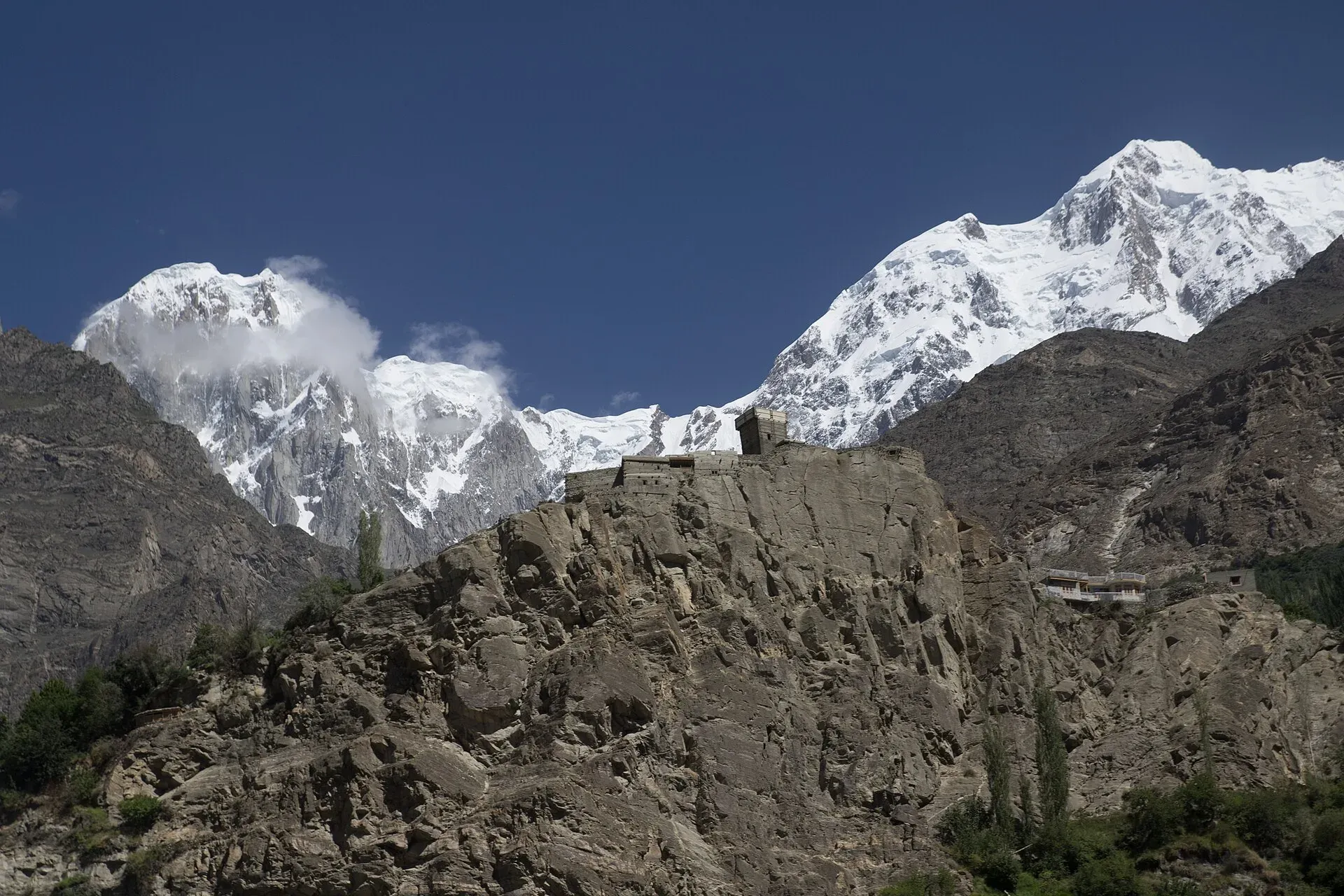
Photo: Myra Ahmad, with thanks · CC BY-SA 4.0 · via Wikimedia Commons · temporary stand-in photo

Altit Fort
An old fort above the Hunza River at Altit, restored by the Aga Khan Trust for Culture and open to visitors since 2007. Often described as the oldest monument in Gilgit-Baltistan.
Overview
Altit Fort stands on a rock above the Hunza River in the old village of Altit, a few kilometres from Karimabad. It was the first home of the hereditary Mirs of Hunza, before they moved to Baltit Fort. The fort has low wooden doorways, small rooms and carved details, and its terraces look over the valley and the peaks above it.
Plan your visit
- Nearest town
- Karimabad
- Getting there
Altit is in Hunza, about 3 km from Karimabad by road and roughly 100 km north of Gilgit on the Karakoram Highway. Taxis and local vans run from Karimabad; you can also walk down through the fields. More
Best months
Apr – Oct
- Altit Fort
- Related places nearby: Gilgit, Attabad Lake, Ganish Village (Ganish Khun), Hunza
History
Sources describe the fort as around 900 to 1,100 years old, with Wikipedia giving an 11th-century construction date, and some call it the oldest monument in Gilgit-Baltistan. The Mirs lived here for some three centuries, then moved to Baltit. In the 16th century a Hunza prince married a princess from Baltistan, who is said to have brought Balti craftsmen to build both forts. The name Altit is said to come from Burushaski, in which it is said to mean "this side down". Tradition gives the village earlier names, Hunukushal ("village of the Huns") and later Broshal. The people of the area are Burusho.
By the early 2000s the fort was in poor condition. The Aga Khan Trust for Culture restored it with funding from Norway; the fort has been open to the public since 2007 (Wikipedia), and the Trust says work was completed around 2010. It won the UNESCO Asia-Pacific Award of Distinction in 2011.
Architecture and conservation
The fort stands on a rocky outcrop, and its walls of stone, timber and mud sit directly on the rock, which gave the building a strong base. Wikipedia notes small rooms, low doorways and fine wood carving. Wikipedia names the Shikari Tower, about 1,100 years old, as the oldest monument in Gilgit-Baltistan.
The Aga Khan Trust for Culture kept the fort as an empty shell, so that visitors can see the traditional construction that has helped such buildings survive tremors in an earthquake zone. The conservation work mended structural defects, stabilised and repaired walls, replaced some roofs, treated decay in the timber and added suitable lighting.
The Trust rehabilitated the village below the fort first, because it expected tourism to bring change. Before that work, nearly a third of the houses had been abandoned. The Trust also brought in water and sanitation, and a town management society in Altit collects the related fees. Part of the fort and village entrance fees goes to that society.
What to see and do
- The fort rooms: the interior has been kept as an empty historic shell rather than filled with exhibits, so you see the building itself: carved wood, timber floors and small windows.
- Views: across the Hunza River and up to the peaks of the Karakoram.
- Garden and cafe: a former ruler's winter residence in the garden has been reused as the KhaBasi cafe.
- The old village: walk the lanes of Altit below the fort. The Trust's page says the fort now also serves as a local history museum and cultural centre.
- Music: the Leif Larsen Music Centre in Altit supports local musicians and records the musical traditions of Hunza and neighbouring valleys. Ask locally whether visitors can attend.
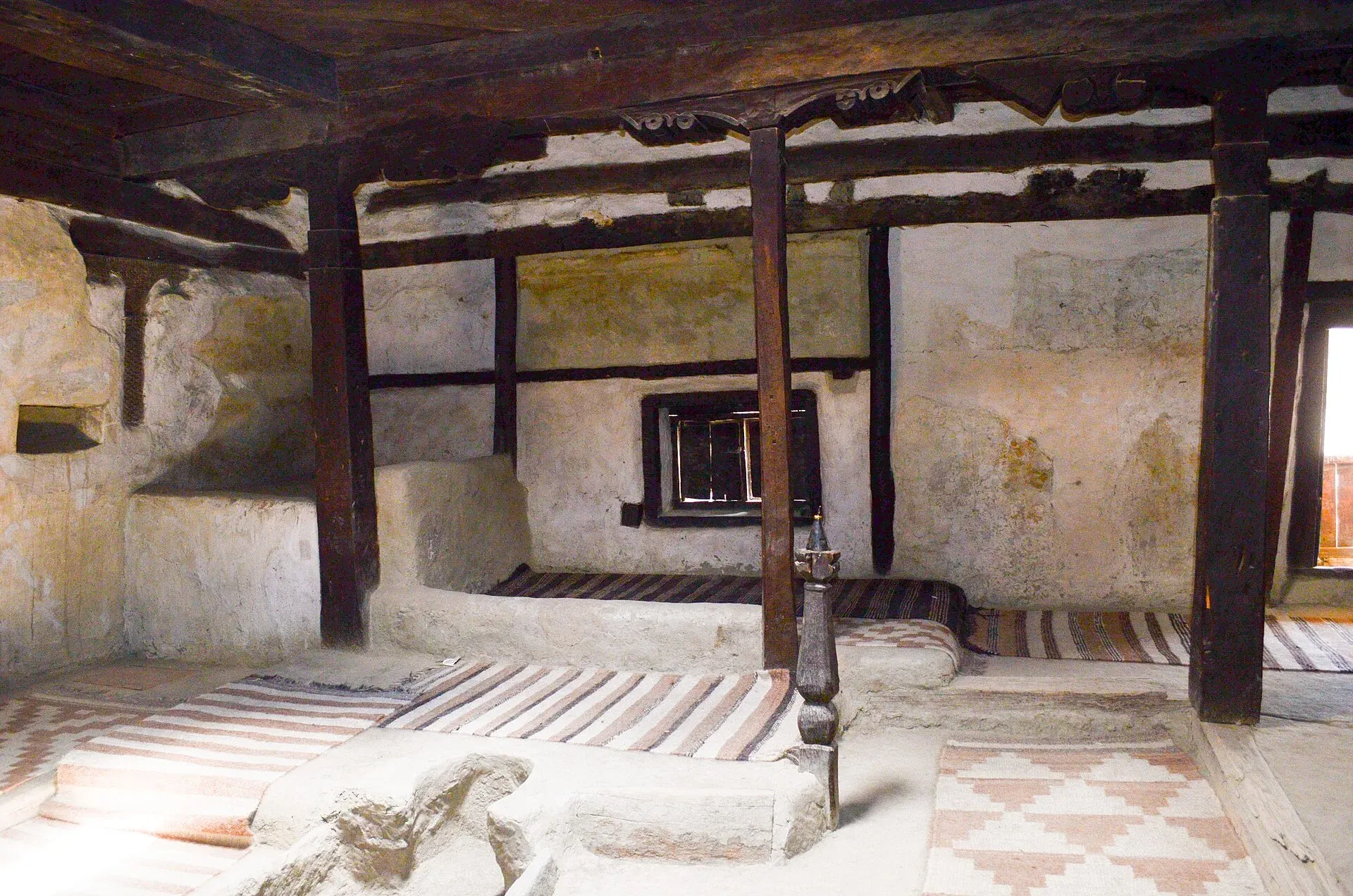
Photo: Faizanahmad, with thanks · CC BY-SA 4.0 · via Wikimedia Commons · temporary stand-in photo

When to visit
April to October. Autumn gives golden orchards and clear air.
Where to stay and eat
Guesthouses are in Altit and Karimabad. The fort's garden cafe is the easiest place to eat during your visit.
Good to know
- Entry and opening hours: a ticket (including a local guide) is charged. A published figure exists, but it is not confirmed from an official source, so current fees will be added soon. Check with the Aga Khan Cultural Service Pakistan or your hotel.
- Dress and behaviour: dress modestly and treat the narrow wooden stairs with care.
- Photography: generally fine for personal use.
Highlights
- Oldest surviving fort in Hunza, early rulers' home
- Restored by the Aga Khan Trust for Culture
- UNESCO Asia-Pacific Award of Distinction, 2011
- Garden cafe and valley views
Getting there
Altit is in Hunza, about 3 km from Karimabad by road and roughly 100 km north of Gilgit on the Karakoram Highway. Taxis and local vans run from Karimabad; you can also walk down through the fields.
Tips
- Visit Altit and Baltit on the same day.
- Watch your head, doorways are low.
- Walk down through the old village lanes.
- Go in the morning for clear views.
Sources and last checked
Last checked Confidence medium2 sources5 still to check
- Last checked
- Method
- Desk research from published sources
- Confidence
- medium
- Checked by
- trek.pk research team
Researched from published sources; not yet checked on the ground by our team. Spot something out of date? Report a mistake.
Sources
- Altit Fort (Wikipedia) · Wikipedia · checked
- Conservation and development in Gilgit-Baltistan · Aga Khan Development Network · checked
Still to be checked on the ground (5)
- Age of the fort (AKDN says about 900 years; Wikipedia says about 1,100 years, 11th century in its summary box and 16th century in its history section)
- Current ticket price and hours (Wikipedia, uncited, gives a figure for April 2025; no official page found)
- Coordinates approximate (match Wikipedia: 36.315, 74.6819)
- Visitor ticket price and hours: Wikipedia gives a 1,600 rupee figure for April 2025 with local residents at 200 rupees, uncited; confirm with Aga Khan Cultural Service Pakistan
- Whether the Shikari Tower is open to visitors
Nearby and related

Gilgit
Gateway to Gilgit-Baltistan on the Karakoram Highway: a busy mountain town with the Kargah Buddha and the base for Hunza, Naltar and Skardu.

Attabad Lake
A turquoise lake about 21 km long in Gojal, Hunza. It formed when a landslide blocked the Hunza River on 4 January 2010. The Karakoram Highway now passes it through five tunnels.
Gilgit-Baltistan
Pakistan's far north: three great ranges meet here, with K2, Nanga Parbat, giant glaciers, the Karakoram Highway and the valleys of Hunza, Skardu and Gilgit.
Ganish Village (Ganish Khun), Hunza
Ganish Khun is described as the oldest settlement in Hunza, at least 1,000 years old, with old watchtowers and restored mosques. It won a UNESCO Asia-Pacific heritage award for conservation.