

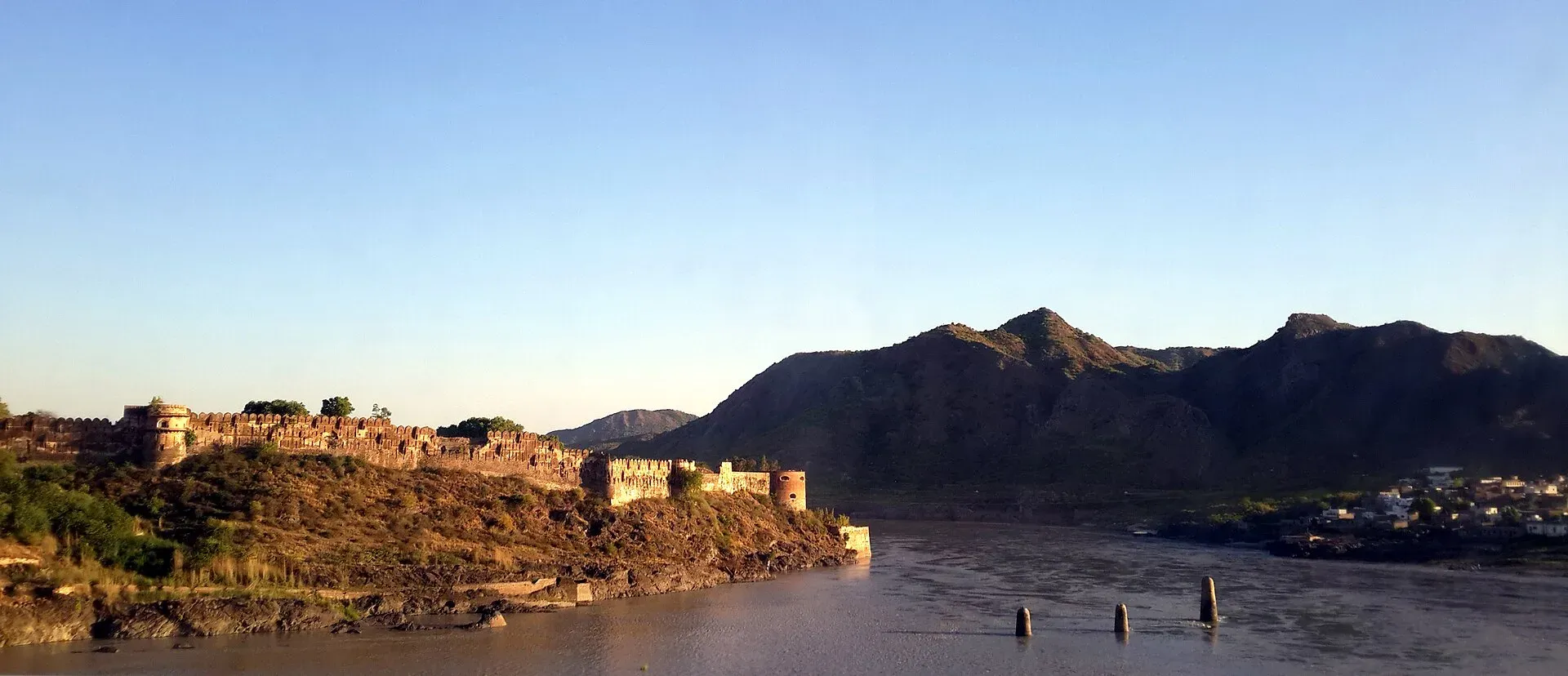
Photo: Mahnoorraja, with thanks · CC BY-SA 3.0 · via Wikimedia Commons · temporary stand-in photo

Attock Fort
A Mughal fort on the Indus at Attock, built by Akbar in 1581-83 with six gates and eight bastions. It is run by the army and is not open to the public.
Overview
Attock Fort stands on the bank of the Indus river at Attock, about 80 km from Islamabad as the crow flies (roughly 95 km by road). It was built by the Mughal emperor Akbar to guard the Indus crossing on the route from Afghanistan. Today it is a military base under the Pakistan Army, so most visitors can see it only from outside.
Plan your visit
- Nearest town
- Attock
- Getting there
Attock is about 95 km by road from central Islamabad, on the Grand Trunk Road (N-5). Buses and vans connect Attock with Islamabad, Rawalpindi and Peshawar, and the fort is in the town on the Indus. More
Best months
Feb – Apr, Oct – Dec
- Attock Fort
- Related places nearby: Islamabad, Hund Museum, Attock, Attock Bridges, Attock Kabul-Indus Confluence
History
The fort was built between 1581 and 1583 under the Mughal emperor Akbar, with the work supervised by Khawaja Shamsuddin Khawafi. It guarded the Indus crossing and served as a defence line against invaders from the west. It changed hands several times after the Mughal period.
- 1758. The Marathas took the fort under Tukojirao Holkar and Sabaji Shinde.
- 1761. After the battle of Panipat, the Durrani ruler Ahmad Shah captured Attock and halted the Maratha advance in the north.
- 1813. Sikh forces under Mohkam Chand took it from the Afghans after the battle of Attock.
- 1830s. The Sikhs strengthened the gates with very high, massive bastions.
- 1849. The British took over after the annexation of Punjab.
- After 1947. The fort passed to the Pakistan Army and became headquarters of its 7th Division. In 1956 it was handed to the Special Services Group (SSG), which still controls it.
Layout
The walls run about 1,600 m and have eight bastions, seven round and one rectangular. There are six gates: Delhi, Lahori, Kabuli, Aabi (water), Mallahitola and Mori. The upper part of the fort held soldiers and the lower part held ordinary people. A bathhouse (hammam) stands near the Delhi Gate. The Indus runs along the north-western walls. The fort sits between Peshawar Road and the river.
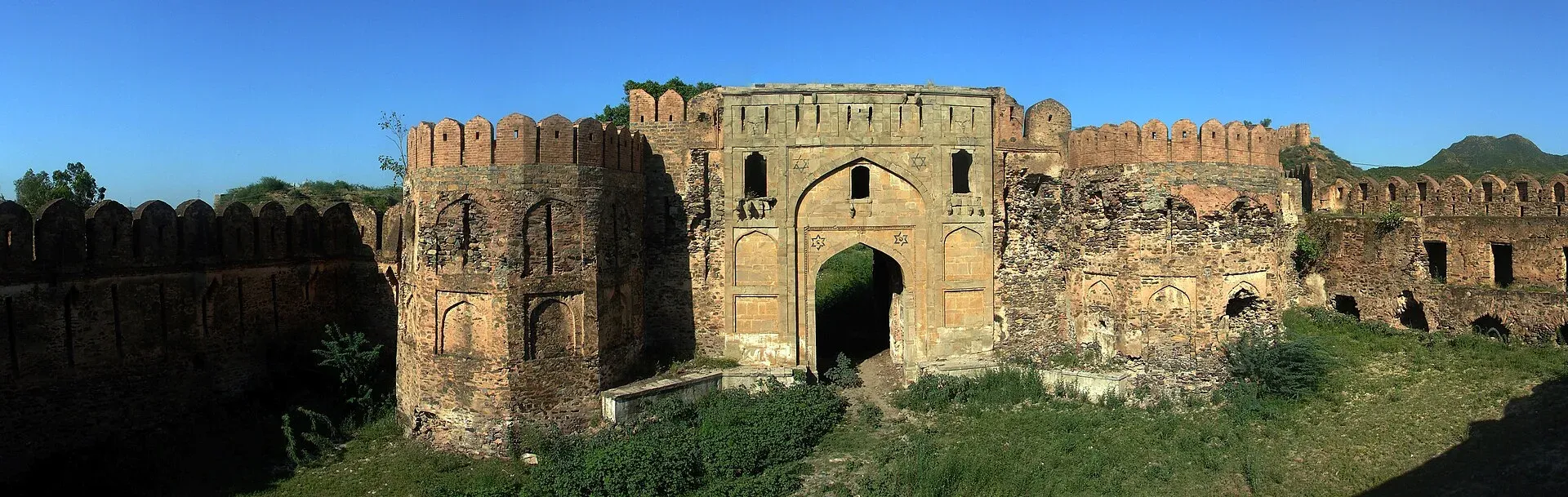
Photo: Optographer, with thanks · CC BY-SA 3.0 · via Wikimedia Commons · temporary stand-in photo

What to see and do
- The exterior. Look at the walls and gates from the road and from the river side.
- Begum Ki Sarai. A Mughal-era caravanserai (a traveller's inn) stands beside the fort. The nearby bridges and the meeting of the Kabul and Indus rivers are covered on the Attock, Attock bridges and Kabul-Indus confluence pages.
- The Indus. The river setting is the main attraction.
When to visit
October to April is the most comfortable period.
Where to stay and eat
Attock has basic restaurants and hotels; Islamabad and Rawalpindi have more choice.
Good to know
- Entry to the fort is not permitted without military permission. Do not photograph military areas.
- Check locally before visiting, as rules can change.
Highlights
- Mughal fort built 1581-83 under Akbar
- 1,600 m of walls, six gates, eight bastions
- On the bank of the Indus
- Begum Ki Sarai beside the fort
Getting there
Attock is about 95 km by road from central Islamabad, on the Grand Trunk Road (N-5). Buses and vans connect Attock with Islamabad, Rawalpindi and Peshawar, and the fort is in the town on the Indus.
Tips
- Do not photograph military areas.
- Check access rules before travelling.
- Visit as a day trip from Islamabad.
- Look at the walls from the road.
Photos we still need: Begum Ki Sarai (caravanserai) beside the fort. Send us yours
Sources and last checked
Last checked Confidence low3 sources1 still to check
- Last checked
- Method
- Desk research from published sources
- Confidence
- low
- Checked by
- trek.pk research team
Researched from published sources; not yet checked on the ground by our team. Spot something out of date? Report a mistake.
Sources
- Attock Fort · Wikipedia · checked
- Pakistan Tourism Guide 2021 · Tourism Development Corporation of Pakistan (TDAP) · checked
- Driving route Islamabad to Attock · OSRM (OpenStreetMap routing) · checked
Still to be checked on the ground (1)
- Whether any public access exists (sources say it is a military base closed to visitors; no official visitor notice found)
Nearby and related

Rawalpindi
Islamabad's older twin city: a busy bazaar and cantonment, the north's main rail and bus hub, and an easy base for Taxila and Murree.

Islamabad
Pakistan's green, planned capital at the foot of the Margalla Hills: Faisal Mosque, hillside trails, cafes and the gateway to the north.
Hund Museum
A small museum by the Indus at Hund, an ancient Gandharan capital in Swabi district, with artefacts from the Gandhara and Hindu Shahi periods.

Attock
District capital on the Grand Trunk Road near the Indus, about 86 km from Islamabad. A practical stop with the Mughal-era Attock Fort nearby.

Attock Bridges
The old Attock railway bridge, a double-deck iron truss opened over the Indus in 1883, and the newer road bridge that took traffic in 1979. A working railway, so photography and access need care.
Attock Kabul-Indus Confluence
Where the Kabul River meets the Indus near Attock Fort: a well-known river junction where the water from the two rivers can be seen running side by side in different colours.