

Photo: Engr.aly, with thanks · CC BY-SA 4.0 · via Wikimedia Commons · temporary stand-in photo

Banbhore
Ruins of an ancient port city on Gharo Creek, about 65 km east of Karachi, with a mosque inscription dated 727 and a small site museum. On Pakistan's UNESCO tentative list since 2004.
Overview
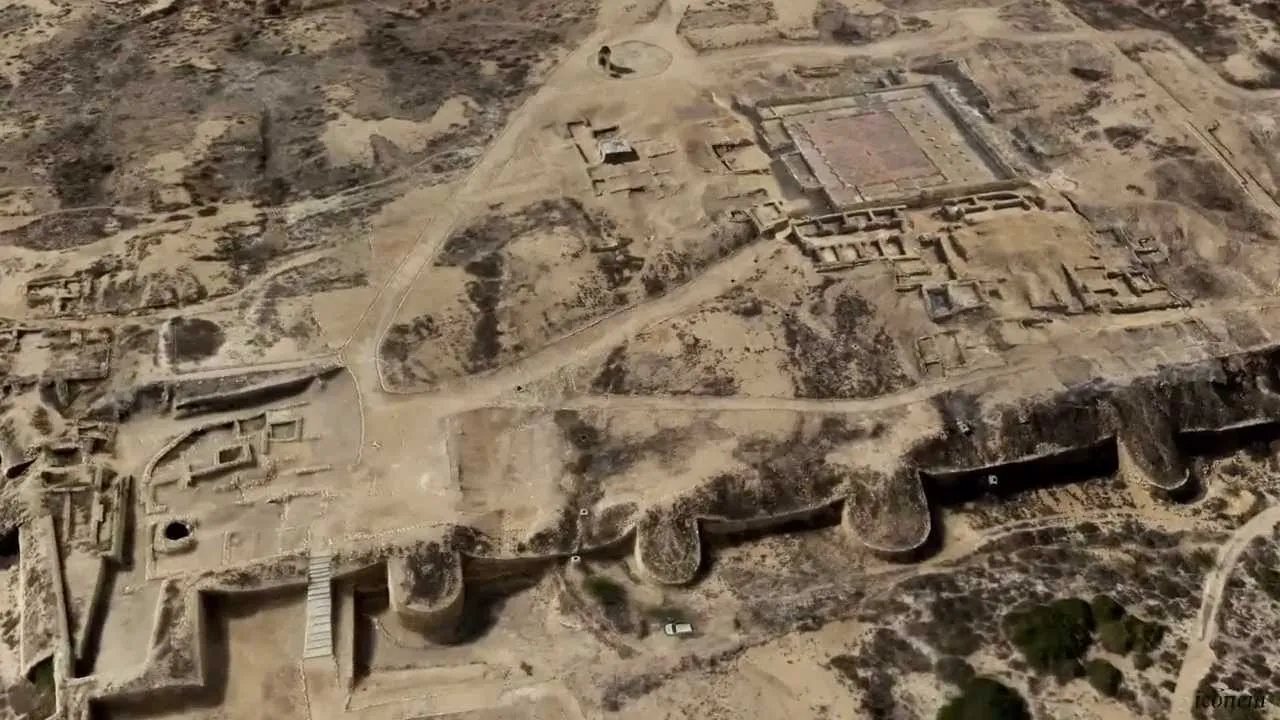
Banbhore (also spelled Bhambore) is an archaeological site on the northern bank of Gharo Creek in Thatta district, about 65 km east of Karachi. The ruins lie beside the N-5 National Highway between Dhabeji and Gharo. A walled port city stood here from about the 1st century BCE to the 13th century CE. Today you can walk the low walls, gateways and foundations, and see finds in the site museum.
Plan your visit
- Nearest town
- Gharo
- Getting there
Banbhore is on the N-5 National Highway between Dhabeji and Gharo, about 65 km east of Karachi and about 45 km by road from Thatta. Self-drive or a hired car is the simplest way; More
Best months
Nov – Mar
- Banbhore
- Related places nearby: Thatta, Karachi, Makli Necropolis, Keenjhar Lake
The layout of the city
Stone and mud walls enclosed the city. A fortified stone wall divided the citadel into eastern and western parts, and excavations found three gateways to the citadel, houses, streets, a semi-circular palatial building and a temple. A south gate is associated with Muhammad bin Qasim's entry to the fort. The eastern part holds the mosque ruins. Banbhore was a medieval port with trade in ceramic and metal goods, and a half-submerged stone anchorage survives. It declined as the creek silted up.
History
The city passed through three main periods: Scytho-Parthian (1st century BCE to 2nd century CE), Buddhist (2nd to 8th centuries) and early Islamic (8th to 13th centuries). It was gradually abandoned after the 13th century, reportedly because the Indus changed course.
Some scholars think Banbhore is the ancient port of Debal, which Muhammad bin Qasim took in 711 to 712. This is not confirmed. An inscription found in the ruins dates a mosque to 727, which makes it one of the earliest mosques in the region.
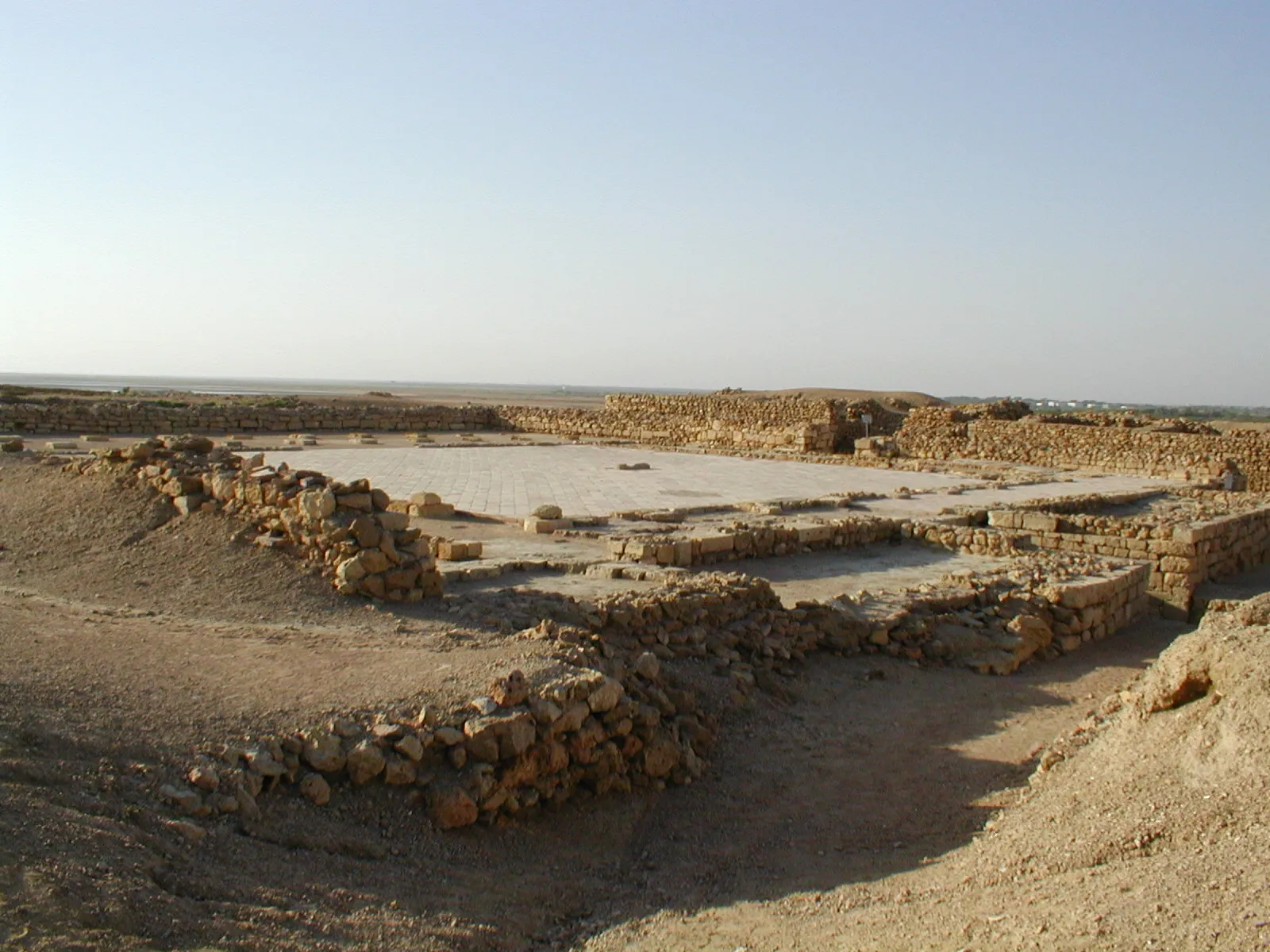
Photo: Mwaqas, with thanks · CC BY-SA 3.0 · via Wikimedia Commons · temporary stand-in photo

Ramesh Chandra Majumdar excavated here in 1928 and Leslie Alcock in 1951. F. A. Khan led a longer series of excavations from 1958 to the mid-1960s.
Pakistan's Department of Archaeology and Museums submitted the Port of Banbhore to UNESCO's tentative list in January 2004 (cultural criteria iv, v and vi). It is not a World Heritage Site.
What to see and do
- The fort walls and gates. Low stone walls, bastions and gateways of the old city, with north and south walls that can be followed on foot.
- The mosque remains. The foundations of the early mosque dated by inscription to 727.
- Archaeological Museum Banbhore. A small museum beside the site. It was established on 21 August 1960 and inaugurated on 14 May 1967, and holds finds from the excavations such as pottery and a Shiva lingam. Reportedly, a chief called Bamboo Raja ruled from here around the 10th century. Since May 2010 the site and museum have been managed by the Sindh Culture Department.
When to visit
November to February is the most comfortable time. Summers are hot and humid. Plan a morning visit, as there is little shade among the ruins.
Where to stay and eat
There are no hotels at the site. Most visitors come as a day trip from Karachi or Thatta, which has a few basic hotels. Bring water and food.
A day trip from Karachi
An honest outline, built only from the sights here: leave Karachi early on the N-5, walk the citadel walls and gates before the heat, see the mosque foundations, then spend an hour in the museum. Many visitors add Thatta and Makli Necropolis on the same day, which makes a long day.
Getting there
From Karachi, take the N-5 east towards Gharo and Thatta; the site is on the highway side, about 65 km from the city. From Thatta it is about 45 km by road. Many visitors combine Banbhore with Makli Necropolis and the Shah Jahan Mosque in Thatta.
Good to know
- The site is not a fully developed visitor attraction. Expect limited signs and facilities.
- Opening hours and ticket prices were not confirmed by an official source when this page was written. Current fees will be added soon; check with the Sindh Culture Department.
- The walls are old and fragile. Do not climb on them.
- Sindh is covered by the UK FCDO advice for foreigners, which advises against all but essential travel to areas north of and including Nawabshah. Banbhore is south of that line. Read the current page before you go.
Highlights
- Ruins of a port city dating from the 1st century BCE to the 13th century
- Mosque inscription dated 727
- Site museum opened in 1967
- On UNESCO's tentative list since 2004
Tips
- Visit in the cooler months and go in the morning.
- Combine it with Makli Necropolis and Thatta in one day trip from Karachi.
- Bring water and food; facilities at the site are limited.
- Do not climb on the old walls.
Photos we still need: the citadel gateways and the half-submerged anchorage. Send us yours
Sources and last checked
Last checked Confidence low3 sources4 still to check
- Last checked
- Method
- Desk research from published sources
- Confidence
- low
- Checked by
- trek.pk research team
Researched from published sources; not yet checked on the ground by our team. Spot something out of date? Report a mistake.
Sources
- Banbhore · Wikipedia · checked
- Banbhore Museum · Wikipedia · checked
- List of World Heritage Sites in Pakistan (tentative list) · Wikipedia · checked
Still to be checked on the ground (4)
- Opening hours and entry fee for the site and museum (Sindh Culture Department)
- Museum galleries and what is currently on display
- Road distance from Karachi (about 65 km east is the published figure)
- Any current security or access advice from Sindh authorities
Nearby and related

Thatta
Sindh's medieval capital, home to the UNESCO-listed Makli Necropolis and the tiled Shah Jahan Mosque, about 100 km from Karachi and Hyderabad.

Karachi
Pakistan's largest city and main port: colonial buildings, museums, beaches, busy bazaars and some of the country's best food.

Sindh
Pakistan's south-east: Karachi's beaches and markets, the Indus Valley city of Moenjodaro, Thatta's Makli tombs, Sufi shrines, the Thar desert and the Indus delta.

Makli Necropolis
One of the world's largest burial grounds, near Thatta in Sindh, with hundreds of thousands of graves and royal tombs from the 14th to 18th centuries. A UNESCO World Heritage Site since 1981.

Keenjhar Lake
Sindh's largest freshwater lake, about 36 km from Thatta and roughly 120 km from Karachi. A Ramsar site since 1976, with winter ducks, geese and flamingos and a shrine on an island.