

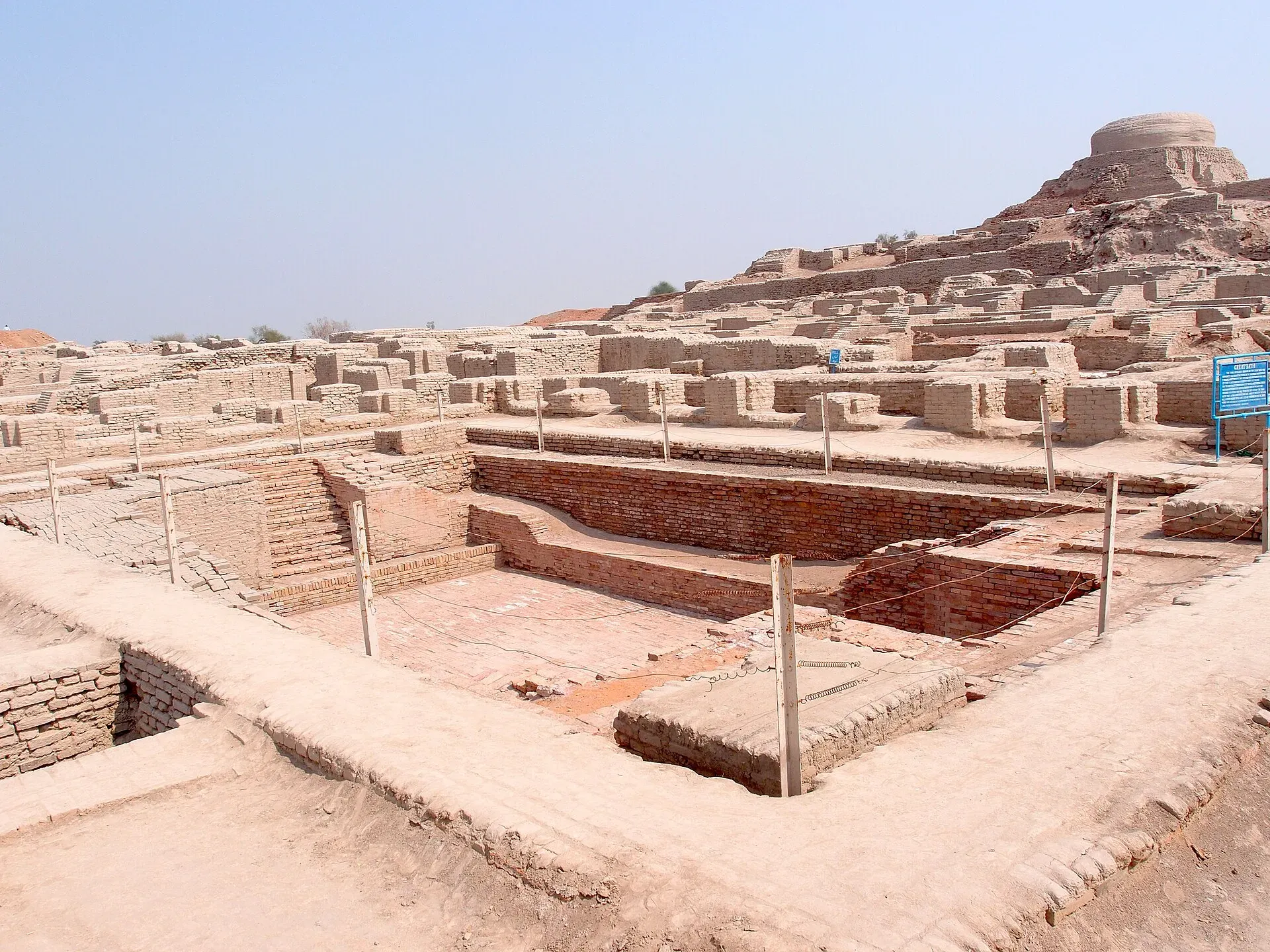
Photo: Saqib Qayyum, with thanks · CC BY-SA 3.0 · via Wikimedia Commons · temporary stand-in photo

Sindh
Pakistan's south-east: Karachi's beaches and markets, the Indus Valley city of Moenjodaro, Thatta's Makli tombs, Sufi shrines, the Thar desert and the Indus delta.
Overview
Sindh occupies the south-east of Pakistan, along the lower Indus River and the Arabian Sea. It covers about 141,000 square kilometres (140,914 km2) and had 55.7 million people at the 2023 census (55,696,147). Karachi, the capital, is Pakistan's largest city and main port. The name Sindh is linked to the Indus (Sindhu), and the river shapes farming, culture and history. Much of the land is low and dry, with the Kirthar hills to the west and the Thar desert to the east.
Plan your visit
- Getting there
By air. Karachi's Jinnah International Airport is the main gateway. Sukkur has Begum Nusrat Bhutto International Airport. More
Best months
Nov – Mar
- Sindh
- Related places nearby: Bhit Shah (Shah Abdul Latif), Ranikot Fort, Chotiari Reservoir
Regions at a glance
Wikipedia divides Sindh into three traditional parts, and the labels help when planning a route.
- Upper Sindh (Siro): north of Sehwan, around Sukkur, Larkana and Khairpur. Moenjodaro and the Sukkur barrage and bridges are here. This is also the part of the province covered by the strongest foreign travel warnings (see Safety).
- Middle Sindh (Vicholo): from Sehwan down to Hyderabad. Sehwan Sharif, Bhit Shah and the Kirthar foothills lie in this belt.
- Lower Sindh (Larr): mainly the Indus delta below Hyderabad, with Thatta, Makli and the coast. Karachi sits at the south-western edge.
The east of the province is Thar desert, with Mithi and Nagarparkar. The west is the Kirthar range, which Wikivoyage describes as having Sindh's only national park.
What it is best for
- Ancient history: Moenjodaro, built around 2500 BCE, and Kot Diji.
- Medieval and Islamic art: the tombs of Makli, Shah Jahan Mosque in Thatta and the Chaukhandi tombs.
- Sufi culture: Sehwan Sharif, Bhit Shah and the verses of Shah Abdul Latif Bhittai.
- Coast and wildlife: Karachi beaches, mangroves, the Indus Delta and the Indus dolphin reserve.
- Deserts and Jain heritage: the Thar desert and Nagarparkar.
Top places
- Karachi: Frere Hall, the Mohatta Palace Museum, National Museum of Pakistan, Empress Market, Clifton and Manora Island.
- Moenjodaro near Larkana, a UNESCO site since 1980.
- Thatta, Makli and Keenjhar Lake. Makli covers about 10 sq km, and local tradition says about 125,000 Sufi saints are buried on the hill.
- Sehwan Sharif and Bhit Shah.
- Sukkur: Lansdowne Bridge, Sadh Belo island and Bukkur Island.
- Ranikot Fort in the Kirthar foothills, described as one of the largest forts in the world by wall length.
- Thar desert with Mithi and Nagarparkar. Umerkot, with its fort, is described as Akbar's birthplace.
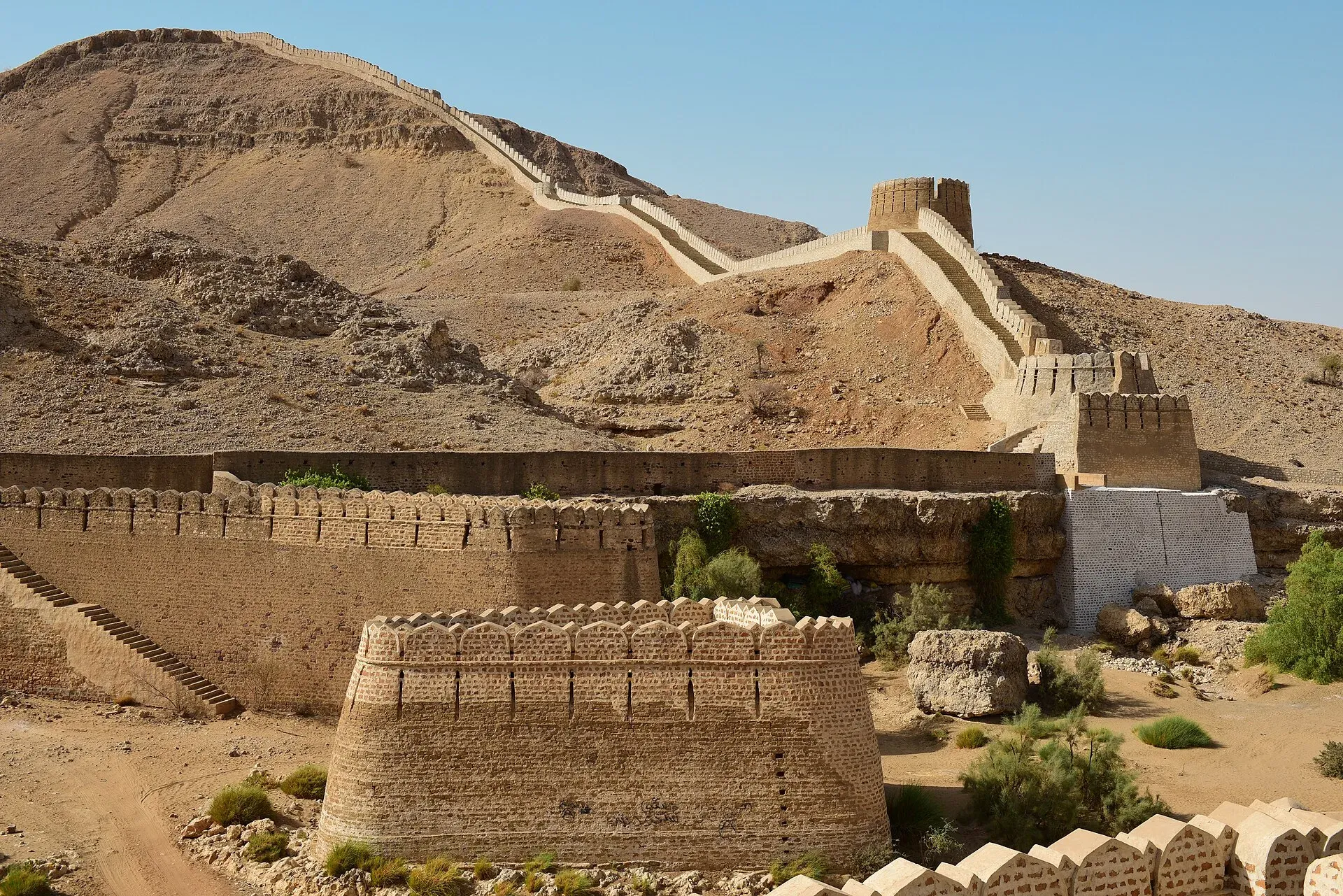
Photo: Adrian Leslie Lobo, with thanks · CC BY-SA 3.0 · via Wikimedia Commons · temporary stand-in photo

A short history
Towns of the Indus civilisation, including Moenjodaro, were flourishing around 2500 BCE. Alexander the Great's forces reached Sindh in 325 BCE. Arab forces under Muhammad ibn al-Qasim conquered the region in 712 CE, which gave Sindh its nickname Bab-ul-Islam (Gateway of Islam). The Mughals annexed it in the late 16th century, and the Talpur dynasty ruled from 1783 until the British conquest in 1843. Sindh became a separate province in 1936, joined Pakistan in 1947, was merged into West Pakistan in 1955 and was restored as a province on 1 July 1970.
When to go
November to March is cool and pleasant. April to June is very hot inland and humid on the coast. Wikivoyage notes summer temperatures often above 45 degrees C from May to August, with monsoon rain mainly in July and August, and winter nights as low as about 2 degrees C in the north in December and January. The Thar desert turns green after monsoon rains, usually in August and September, and attracts visitors then despite the heat. Cyclone season in the Arabian Sea is mostly in May-June and October-November, and beaches can be closed during rough weather.
Getting around
Karachi is large and traffic-heavy, so give yourself time. Motorways and highways connect main towns; Wikivoyage gives the Karachi to Hyderabad motorway as about 150 km and two hours. See the M-9 Karachi to Hyderabad motorway. Wikivoyage describes hourly air-conditioned coaches from Karachi to Sukkur (about seven hours) and a rail network linking the main cities, though many sights need a car or taxi. Hire with a driver is the easiest way to see Thatta, Makli and Moenjodaro; see Karachi to Thatta, Makli and Keenjhar. For the desert, see Thar desert, Mithi and Nagarparkar.
Permits and rules for visitors
- No special permits are generally needed for main cities and sights.
- Foreign visitors need a valid visa and should carry copies of their passport and visa.
- Some interior and border areas, including parts of the Thar and Kachho riverine tracts, may need local permission or police advice; check before travel.
- Moenjodaro and other monuments charge entry. Current fees will be added soon; check with the Sindh Culture Department or the site.
People, culture and food
Sindhi is the first language of about 60 per cent of residents and Urdu of about 22 per cent, with Urdu strong in Karachi and Hyderabad. Sufi poetry is central to Sindhi culture, and Shah Abdul Latif Bhittai is its best-known poet. Urs festivals, which mark the death anniversaries of saints, draw large crowds at places such as Sehwan and Bhit Shah. Visitors are welcome but should be careful in dense crowds.
For things to buy, Wikivoyage names the ajrak (a block-printed shawl), the Sindhi topi (a cylindrical cap with embroidery and mirror pieces), the ralli (a patchwork quilt) and glass bangles. Thatta's Shahi Bazaar is noted for hand-printed fabric and mirror embroidery.
Sindhi food goes beyond biryani. Wikipedia lists sai bhaji (spinach and lentils, eaten with rice), koki (a wheat flatbread eaten with dal, vegetables, curd or tea), sindhi kadhi (a chickpea-flour gravy with vegetables), bheeh bhajji (lotus root cooked in a clay pot) and dal pakwan (lentils with fried bread, mostly eaten by Sindhi Hindus). Sweets include khirni (a milk and rice pudding), busri (a jaggery-filled bread eaten mainly in winter) and Sindhi halwo. Local specialities include Ghotki's cone-shaped pera, pickles from Shikarpur and mao from Mehar. The sindhri mango is counted among the world's top ten varieties. Seafood is widely available near the coast, and palla (hilsa) is cooked fried, curried or barbecued. Karachi bun kebab and Hyderabad's rabri and falooda are also popular.
Safety
Karachi has petty crime, so use ordinary city precautions. Security around shrines and large gatherings can be tight. Ask the district administration or local police about current conditions before you go. For foreign visitors: the UK FCDO (updated 27 October 2026, checked 17 November 2026) advises against all but essential travel to all areas of Sindh north of and including Nawabshah, and within 5 miles of the Indian border. Read the live page before you plan. Heat stroke is a real risk from April to September. Do not swim in rough surf; lifeguard coverage on beaches is limited. Monsoon floods in 2010 and 2022 affected large parts of the province, so check weather and road news.
Highlights
- Moenjodaro (UNESCO), a 4,500-year-old Indus Valley city
- Makli Necropolis and Thatta's Mughal-era mosques
- Sehwan Sharif and the Sufi shrines of Bhit Shah
- Karachi's beaches, museums and food
- Thar desert, Nagarparkar Jain temples and the Indus delta
Getting there
By air. Karachi's Jinnah International Airport is the main gateway. Sukkur has Begum Nusrat Bhutto International Airport. Wikipedia's list of airports shows scheduled commercial service at Sukkur but not at Moenjodaro or Hyderabad; check with the airlines.
By road. M-9 links Karachi and Hyderabad, and M-6 and the Indus Highway (N-55) continue north. Thatta and Makli are about 1.5 to 2 hours from Karachi.
By train. Main Line 1 and the Kotri to Attock line pass through Hyderabad, Rohri/Sukkur and other cities. Check Pakistan Railways for services.
Moenjodaro and the interior. Larkana is the usual base, connected by road from Sukkur and Hyderabad. Thar is reached from Hyderabad via Mithi on a dual road.
Tips
- Go between November and March; summers are very hot and humid on the coast.
- Visit Moenjodaro early in the morning and carry water and sun protection.
- Plan shrine visits around local etiquette: cover your head, remove shoes and keep voices low.
- Use registered taxis or app services in Karachi and keep valuables hidden.
- Monsoon (July to September) can flood roads in the interior and lower Indus.
Photos we still need: Sindhi food, Thar desert (Pakistan side) and Keenjhar Lake; Karachi and Thatta in the Top places section. Send us yours
Sources and last checked
Last checked Confidence medium9 sources4 still to check
- Last checked
- Method
- Desk research from published sources
- Confidence
- medium
- Checked by
- trek.pk research team
Researched from published sources; not yet checked on the ground by our team. Spot something out of date? Report a mistake.
Sources
- Pakistan Tourism Guide 2021 · Trade Development Authority of Pakistan (TDAP) · checked
- Sindh · Wikipedia · checked
- Archaeological Ruins at Moenjodaro · UNESCO World Heritage Centre · checked
- Historical Monuments at Makli, Thatta · UNESCO World Heritage Centre · checked
- 2023 census of Pakistan (provincial populations) · Wikipedia · checked
- List of airports in Pakistan · Wikipedia · checked
- Pakistan travel advice: warnings and insurance (updated 27 October 2026) · UK Foreign, Commonwealth & Development Office · checked
- Sindhi cuisine · Wikipedia · checked
- Sindh · Wikivoyage · checked
Still to be checked on the ground (4)
- Entry fee amounts for sights (not published here)
- Whether scheduled flights to Moenjodaro and Hyderabad exist now (Wikipedia's airport list marks only Sukkur as scheduled; no airline schedule checked)
- Moenjodaro and Makli fees and hours (official source needed)
- Karachi to Sukkur coach and rail details (Wikivoyage, undated)
Nearby and related

Karachi
Pakistan's largest city and main port: colonial buildings, museums, beaches, busy bazaars and some of the country's best food.

Moenjodaro
The ruins of a planned Indus Valley city built around 2500 BCE, with brick streets, drains and the Great Bath. A UNESCO World Heritage Site since 1980, about 30 km from Larkana in Sindh.

Makli Necropolis
One of the world's largest burial grounds, near Thatta in Sindh, with hundreds of thousands of graves and royal tombs from the 14th to 18th centuries. A UNESCO World Heritage Site since 1981.

Thatta
Sindh's medieval capital, home to the UNESCO-listed Makli Necropolis and the tiled Shah Jahan Mosque, about 100 km from Karachi and Hyderabad.

Sehwan Sharif (Lal Shahbaz Qalandar)
An ancient town on the Indus and home to the shrine of the Sufi saint Lal Shahbaz Qalandar, one of Pakistan's most visited shrines, with a gold-plated dome, nightly devotion and the dhamal trance dance.

Bhit Shah (Shah Abdul Latif)
The town and tiled shrine of Shah Abdul Latif Bhittai, Sindh's best-loved Sufi poet (1689 to 1752), in Matiari District. Music and recitation of his verse are heard here every Thursday evening.

Sukkur
Sindh's third-largest city on the Indus, with the 1932 Sukkur Barrage, the 1889 Lansdowne Bridge, Masum Shah's Minaret and the river islands of Rohri.

Ranikot Fort
A huge hill-top wall in the Kirthar hills of Sindh, often called the Great Wall of Sindh, with four gates and a smaller inner fort. On Pakistan's UNESCO tentative list since 1993.

Thar Desert
Pakistan's share of the Thar is a sandy, semi-arid plain in south-east Sindh. Tharparkar district has about 1.8 million people, nearly half of them Hindu, and rain falls mainly July to September.

Nagarparkar Jain Temples
Ruined Jain temples and a marble mosque around Nagarparkar in the Karoonjhar hills of Tharparkar, from about the 12th to 15th centuries. The Nagarparkar Cultural Landscape is on Pakistan's UNESCO tentative list (2016).

Keenjhar Lake
Sindh's largest freshwater lake, about 36 km from Thatta and roughly 120 km from Karachi. A Ramsar site since 1976, with winter ducks, geese and flamingos and a shrine on an island.

Manora Island
A peninsula at Karachi harbour, once an island, with a lighthouse completed in 1889, old fort and beaches. The Navy holds part of it; expect photography limits.
Nurri Lagoon
A 2,540-hectare lagoon in Badin District, Sindh, listed as a Ramsar wetland of international importance on 10 May 2001. Very little visitor information exists.
Chotiari Reservoir
A large irrigation reservoir in Sanghar District, Sindh, on the edge of the Achhro Thar desert, built to store saline drain water and monsoon flow. Not set up for visitors.
Naig Valley
A valley and hill stream in the Kirthar hills of Sindh, about 45 km from Sehwan, with a Buddhist-era stupa, a Chalcolithic mound and a Sufi shrine. Few visitors and no facilities.

Karachi to Thatta: Makli and Keenjhar
A two-day, 257 km loop from Karachi on the N-5 to Thatta, the Makli Necropolis and the Shah Jahan Mosque, then Keenjhar Lake and back. Makli became a UNESCO World Heritage Site in 1981.

Thar Desert: Mithi and Nagarparkar
A three-day, about 475 km road trip from Karachi through Hyderabad to Mithi and the Karoonjhar hills at Nagarparkar, with Jain temples and monsoon greenery. Measured distances; August 2026 brought crowds and accidents.

M-9 Karachi-Hyderabad Motorway
The 136 km M-9 links Karachi and Hyderabad on six lanes. It has four interchanges, a large toll plaza at Karachi's end and few service areas. A link to the M-10 bypass is near Karachi.