

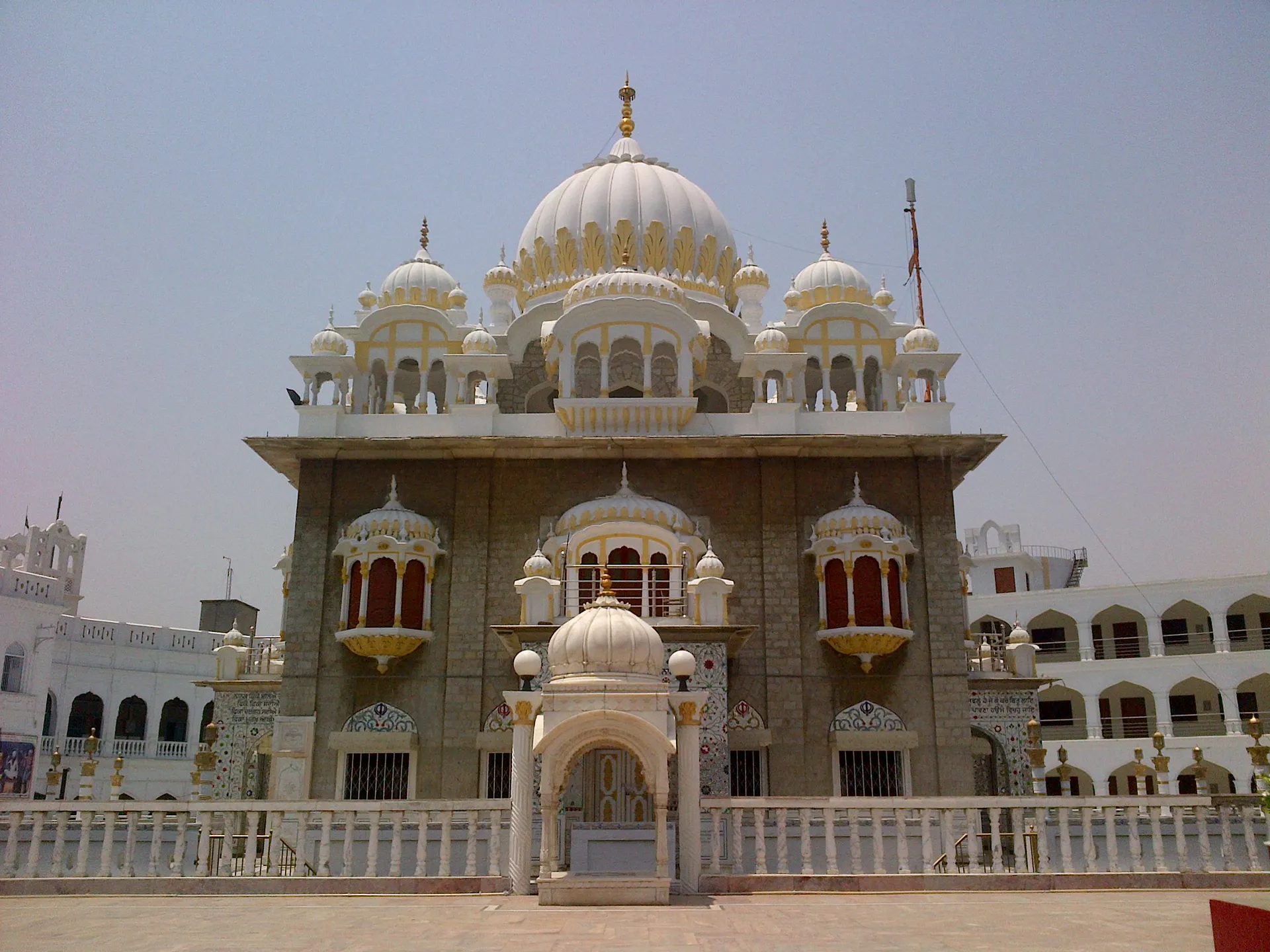
Photo: Muhammad Imran Saeed, with thanks · CC BY 2.0 · via Wikimedia Commons · temporary stand-in photo

Gurdwara Panja Sahib (Hasan Abdal)
A Sikh shrine in Hasan Abdal where a handprint on a boulder is believed to be Guru Nanak's, beside a spring that never dries. About 64 km from Islamabad. Check access rules before you go.
Overview
Gurdwara Panja Sahib is in Hasan Abdal, Attock District, on the road between Islamabad and Peshawar. It is among the most important Sikh sites in Pakistan because of a boulder bearing the imprint of a hand ("panja"), which Sikhs believe is Guru Nanak's. A clear spring flows from beside the rock into a large pool. The gurdwara is managed by the Pakistan Sikh Gurdwara Parbandhak Committee.
Plan your visit
- Nearest town
- Hasan Abdal
- Getting there
Hasan Abdal is about 64 km (roughly 45 minutes) from central Islamabad and about 66 km (around 50 minutes) from Rawalpindi by road (OSRM, checked 16 November 2026). Buses and vans run along the Grand Trunk Road; More
Best months
Oct – Apr
- Gurdwara Panja Sahib (Hasan Abdal)
- Related places nearby: Islamabad, Rawalpindi, Dharmarajika Stupa, Hasan Abdal
History
The Chinese pilgrim Xuanzang, who passed through in the 7th century, wrote about a sacred spring called Elapatra about 70 li north-west of Taxila. It has been identified with this spring. Sikh tradition says Guru Nanak and his companion Bhai Mardana arrived in the summer of 1521. In the story, Mardana asked a local saint, Shah Wali Qandhari, for water and was refused. Guru Nanak moved a rock and a spring welled up, and the saint's own spring dried. The saint then rolled a boulder down the hill, and Guru Nanak stopped it with his hand, leaving the imprint. The Sikh general Hari Singh Nalwa is credited with building the first gurdwara here and giving it the name Panja Sahib. The older building had murals of Guru Nanak on its walls. Wikipedia also records that a building in the Mughal style is associated with Maharaja Ranjit Singh (1780 to 1839).
The legend
According to Sikh tradition, Guru Nanak and Bhai Mardana sat under a shady tree and began to sing kirtan (devotional hymns), and devotees gathered. This annoyed the local saint Shah Wali Qandhari. Mardana, thirsty, went to the saint three times for water and was refused each time. Guru Nanak told him to repeat the Name of God and drink, then moved a large rock aside, and a spring welled up. The saint's own spring dried up. In anger he hurled part of the hillside at the Guru, who stopped the boulder with his hand. Water flows from behind the rock into a large pool, and a right-hand imprint is in the stone.
What to see and do
- The shrine. The boulder with the handprint is the heart of the gurdwara. Sikhs believe the imprint is Guru Nanak's.
- The sarovar. The large pool fed by the spring.
- The courtyard and langar. The community kitchen serves free vegetarian food.
- Hasan Abdal itself. An old town with other historic and religious sites nearby.
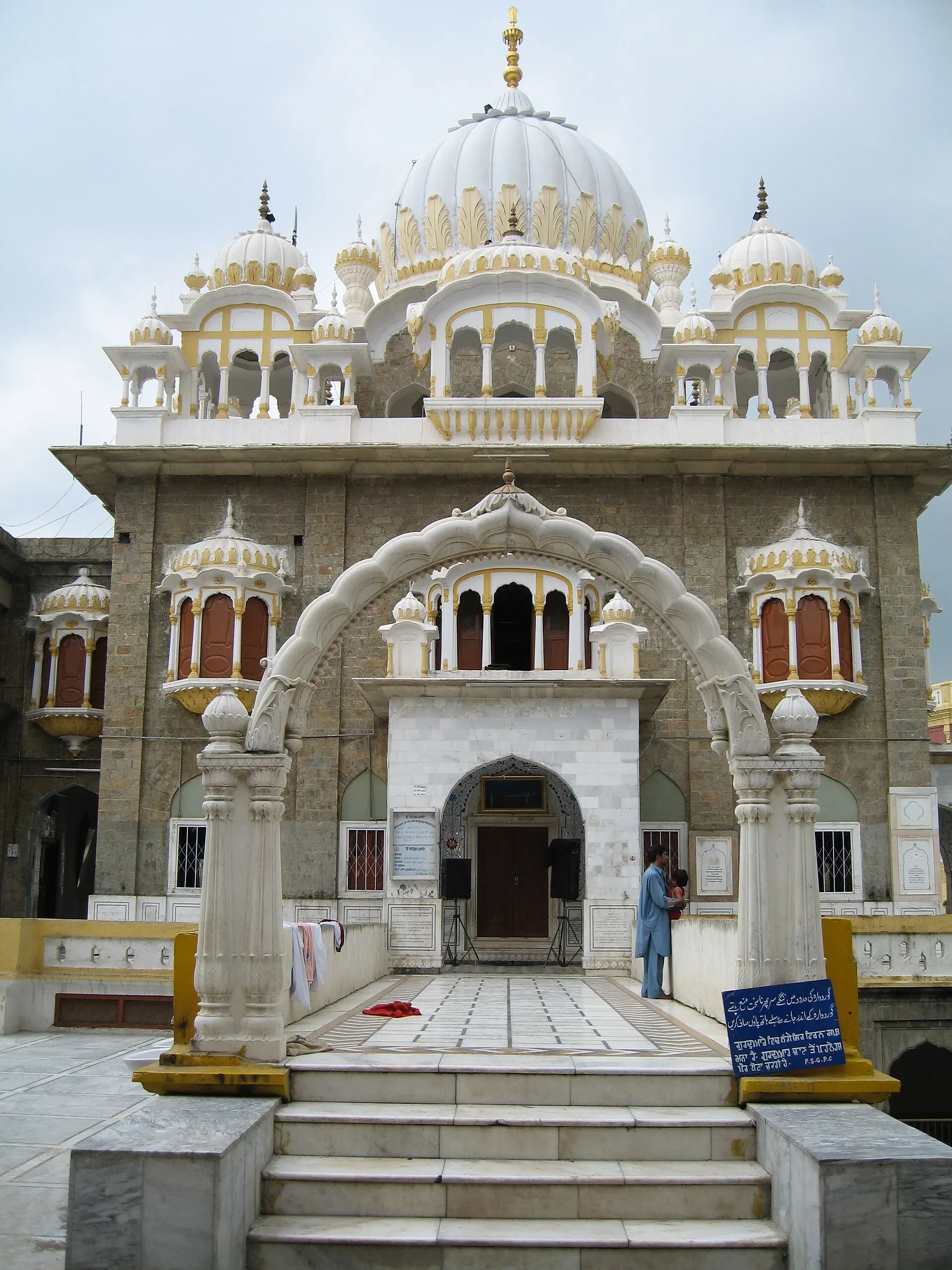
Photo: BookwormUK at English Wikipedia, with thanks · Public domain (CC0) · via Wikimedia Commons · temporary stand-in photo

When to visit
October to March is pleasant. The main Sikh festival here is Baisakhi in April, when large groups of pilgrims arrive; the town is crowded then.
Where to stay and eat
Hasan Abdal has small hotels and eateries on the main road. Many travellers use Islamabad or Rawalpindi as a base.
Good to know and etiquette
- This is an active place of worship. Access for people who are not Sikh pilgrims has varied and depends on the managing bodies. Check with the Evacuee Trust Property Board (ETPB) or the Pakistan Sikh Gurdwara Parbandhak Committee before you go.
- Cover your head, remove shoes and socks, and dress modestly. Do not bring tobacco or alcohol. Ask before taking photographs.
- Sit quietly and do not point your feet at the Guru Granth Sahib.
- Pilgrim groups from India visit on set dates. The ETPB travel advisory lists the 2026 Martyrdom Day of Guru Arjun Dev Ji visit (10 to 19 June), with a stay at Panja Sahib on 12 and 13 June. Entry into the cantonment is prohibited for these groups.
- No official fee or hours were confirmed; fees will be added soon.
Highlights
- Handprint of Guru Nanak on a boulder, by Sikh belief
- Sacred spring and sarovar
- Spring mentioned by Xuanzang in the 7th century
- First gurdwara built by Hari Singh Nalwa
- Baisakhi pilgrimage each April
Getting there
Hasan Abdal is about 64 km (roughly 45 minutes) from central Islamabad and about 66 km (around 50 minutes) from Rawalpindi by road (OSRM, checked 16 November 2026). Buses and vans run along the Grand Trunk Road; a taxi from Islamabad is straightforward.
Tips
- Check ETPB for current visitor access before travelling.
- Cover your head, remove shoes and socks, dress modestly.
- Avoid Baisakhi week if you prefer quiet.
- Combine with nearby Taxila sights.
Photos we still need: the sarovar today and the langar hall. Send us yours
Sources and last checked
Last checked Confidence medium3 sources3 still to check
- Last checked
- Method
- Desk research from published sources
- Confidence
- medium
- Checked by
- trek.pk research team
Researched from published sources; not yet checked on the ground by our team. Spot something out of date? Report a mistake.
Sources
- Gurdwara Panja Sahib (Wikipedia) · Wikipedia · checked
- Evacuee Trust Property Board: Travel advisory for yatrees · Evacuee Trust Property Board (ETPB) · checked
- OSRM routing (road distances) · Project OSRM · checked
Still to be checked on the ground (3)
- Who may enter and under what conditions for visitors who are not on an organised pilgrim group (ETPB advisory covers yatrees only)
- Fees and hours (not published on the ETPB pages opened)
- Baisakhi dates and crowd conditions (no 2027 schedule found; the ETPB 2026 advisory covers June only)
Nearby and related

Islamabad
Pakistan's green, planned capital at the foot of the Margalla Hills: Faisal Mosque, hillside trails, cafes and the gateway to the north.

Rawalpindi
Islamabad's older twin city: a busy bazaar and cantonment, the north's main rail and bus hub, and an easy base for Taxila and Murree.

Dharmarajika Stupa
The largest stupa in the Taxila region, linked by tradition to Emperor Ashoka and later rebuilt under the Kushans. Part of the Taxila World Heritage Site, inscribed in 1980.

Hasan Abdal
Historic town on the Grand Trunk Road in Attock District. Known for Gurdwara Panja Sahib, a major Sikh pilgrimage site, and Mughal-era tombs.