

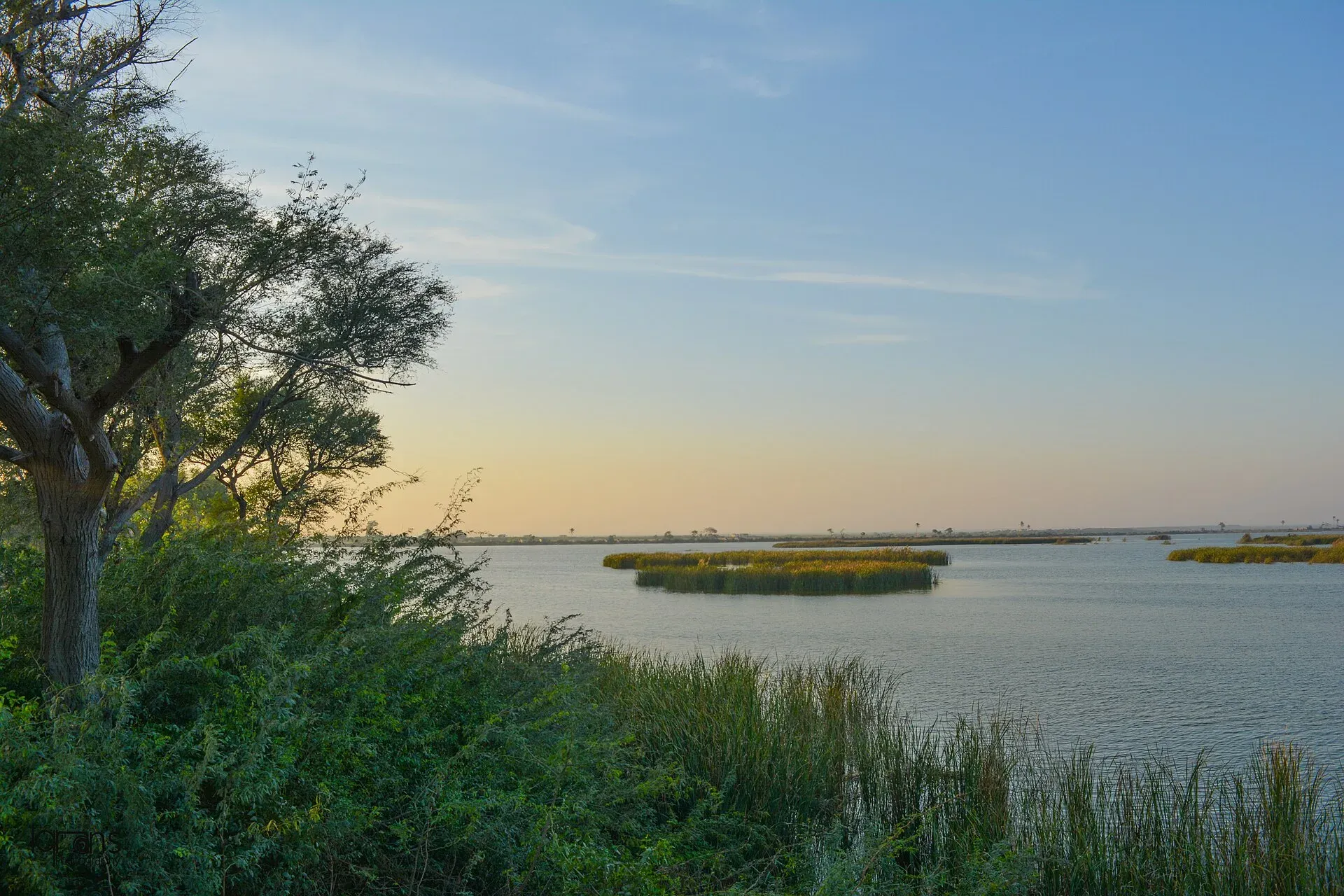
Photo: Iqran Rasheed, with thanks · CC BY-SA 4.0 · via Wikimedia Commons · temporary stand-in photo

Haleji Lake Wildlife Sanctuary
A 1,704-hectare freshwater lake in Thatta District, Sindh, about 90 km east of Karachi. Ramsar site no. 101 since 1976 and a winter home for ducks and waders, though falling water is reducing its birds.
Overview
Haleji Lake is a shallow freshwater lake in Thatta District, Sindh, about 90 km east of Karachi. It was built between 1940 and 1943 to supply water to troops in Karachi, so it is a man-made lake that wild birds have made their own. It is a wildlife sanctuary run by the Sindh Wildlife Department and one of Pakistan's oldest Ramsar sites: it was listed as a Wetland of International Importance on 23 July 1976 (Ramsar site no. 101), covering 1,704 hectares. Sources give the date the sanctuary was first notified as 1972 or 1977, so this page does not state one.
Haleji matters because it lies on the Indus flyway. Large numbers of ducks, waders and other waterbirds winter here, and egrets, herons and jacanas breed around the reeds. The sanctuary also shows what happens when a lake loses its water. Press reports in 2026 say inflow from the Indus has stopped for about eight years, so the lake is shrinking and bird numbers have fallen.
Plan your visit
- Nearest town
- Thatta
- Getting there
From central Karachi, drive east towards Thatta on the National Highway (N-5) and turn off to Haleji Lake. OSRM models about 93 km and 1.7 hours from Karachi city centre; allow more for traffic. More
Best months
Nov – Feb
- Haleji Lake Wildlife Sanctuary
- Related places nearby: Thatta, Karachi, Keenjhar Lake, Makli Necropolis, Hadero Lake
How the lake was made
Wikipedia says the site was a saline lagoon until the 1930s. During the Second World War the government of Sindh raised its capacity: a feeder canal brought water from the Indus, the salt water was drained and an embankment was built. The work was done on a wartime footing and finished in 1943. Wikipedia gives an average and maximum depth of about 5 m. Its area figures differ between the text and the infobox, so this page uses the Ramsar figure above.
What to see and do
- Winter waterfowl. Northern pintail, mallard and other ducks arrive from the north. Recorded species also include white-tailed lapwing and pheasant-tailed jacana. The Egyptian vulture, which is listed as Endangered on the IUCN Red List (Wikipedia), has been recorded here too.
- Breeding birds. The lake is described as a breeding site for egrets and herons, with cotton teal, Indian spot-billed duck and purple moorhen among the residents.
- Bird watching from the bank. Binoculars and a patient early start work better than a boat. Ask the Sindh Wildlife Department about walking routes and any viewing points open when you visit.
- Photography. The light is best in the first and last hours of the day.
When to visit
Go between November and February for the migratory birds. Summers are very hot and humid, and few migrants remain. In dry years the water may be low and birds fewer than the older figures suggest; a 2026 Express Tribune report quoted officials saying the 2026 winter count was down on 2025.
Where to stay and eat
There is no accommodation inside the sanctuary. Most visitors come as a day trip from Karachi. Thatta and the roadside towns on the way offer simple food. Carry water and a hat.
Good to know
- The sanctuary is managed by the Sindh Wildlife Department. Ask the department in Karachi about entry arrangements before you go. A fee may apply: current fees will be added soon.
- Hunting, trapping and fishing without permission are not allowed in a wildlife sanctuary. Do not feed or chase birds, keep to marked paths, take litter away, and ask the department before flying a drone.
- Ask the district administration or local police about current conditions before you go. Safety. For foreign visitors: the UK FCDO page (updated 27 October 2026, checked 16 November 2026) advises against all but essential travel to Sindh north of and including Nawabshah. Haleji lies far to the south of that line, in Thatta District. FCDO advice can change, so read the current page before you travel.
- Allow time for the Karachi to Thatta road, which can be busy. Add the nearby Makli Necropolis or Thatta town if you want a full day.
Highlights
- Ramsar site no. 101, designated 23 July 1976
- Winter ducks and waders on the Indus flyway
- Breeding egrets and herons
- About 90 km from Karachi by road
- Shows the effect of Indus water diversion on wetlands
Getting there
From central Karachi, drive east towards Thatta on the National Highway (N-5) and turn off to Haleji Lake. OSRM models about 93 km and 1.7 hours from Karachi city centre; allow more for traffic. Public buses run Karachi to Thatta, but you will need a taxi or your own vehicle for the last stretch. Confirm the turn-off locally, as signage is limited.
Tips
- Go between November and February
- Start early; birds are most active at dawn
- Carry binoculars, water and sun protection
- Ask the Sindh Wildlife Department about entry before you go
- Expect fewer birds in dry years
Wildlife
Facilities
- Day-trip access from Karachi
- Bird watching from the bank
Photos we still need: wintering waterfowl or breeding egrets and herons at Haleji Lake. Send us yours
Sources and last checked
Last checked Confidence medium7 sources4 still to check
- Last checked
- Method
- Desk research from published sources
- Confidence
- medium
- Checked by
- trek.pk research team
Researched from published sources; not yet checked on the ground by our team. Spot something out of date? Report a mistake.
Sources
- Ramsar Sites Information Service: Haleji Lake (site 101) · Ramsar Convention Secretariat · checked
- Haleji Lake · Wikipedia · checked
- Haleji Lake: a wetland losing its water (Dawn, 3 February 2026) · Dawn · checked
- Sindh's Haleji Lake faces ecological crisis (4 April 2026) · The Express Tribune · checked
- Egyptian vulture · Wikipedia (cites IUCN Red List assessment) · checked
- Pakistan travel advice · UK Foreign, Commonwealth & Development Office (FCDO) · checked
- OSRM routing (driving distance and time estimates) · OpenStreetMap / Project OSRM · checked
Still to be checked on the ground (4)
- Year the sanctuary was first notified (sources say 1972 or 1977; Wikipedia gives only the Ramsar date, 23 July 1976)
- Entry arrangements and fee
- Current water level and bird numbers
- Exact turn-off and road condition from the highway
Nearby and related

Thatta
Sindh's medieval capital, home to the UNESCO-listed Makli Necropolis and the tiled Shah Jahan Mosque, about 100 km from Karachi and Hyderabad.

Karachi
Pakistan's largest city and main port: colonial buildings, museums, beaches, busy bazaars and some of the country's best food.

Keenjhar Lake
Sindh's largest freshwater lake, about 36 km from Thatta and roughly 120 km from Karachi. A Ramsar site since 1976, with winter ducks, geese and flamingos and a shrine on an island.

Makli Necropolis
One of the world's largest burial grounds, near Thatta in Sindh, with hundreds of thousands of graves and royal tombs from the 14th to 18th centuries. A UNESCO World Heritage Site since 1981.

Sindh
Pakistan's south-east: Karachi's beaches and markets, the Indus Valley city of Moenjodaro, Thatta's Makli tombs, Sufi shrines, the Thar desert and the Indus delta.
Jubho Lagoon
A shallow brackish lagoon in the Indus delta region of Sujawal district, a Ramsar site known for flamingos, pelicans and winter waterbirds.
Nurri Lagoon
A 2,540-hectare lagoon in Badin District, Sindh, listed as a Ramsar wetland of international importance on 10 May 2001. Very little visitor information exists.
Hadero Lake
A shallow brackish lake and wildlife sanctuary in Thatta District, Sindh, about 85 km east of Karachi, known for waterfowl. Not set up for casual visitors.