

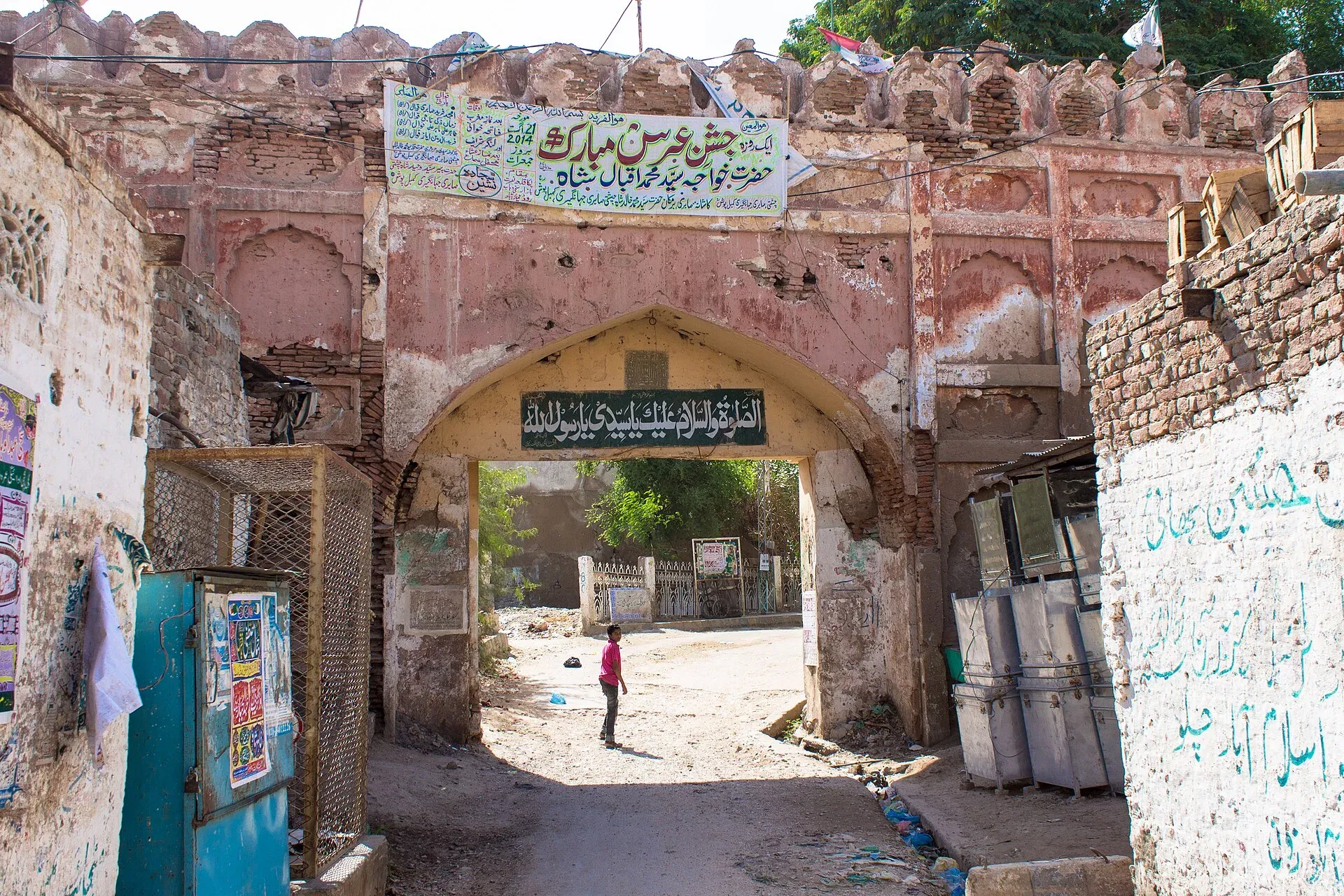
Photo: Soban, with thanks · CC BY-SA 3.0 · via Wikimedia Commons · temporary stand-in photo

Hyderabad
Sindh's second-largest city, founded in 1768 and famous for its glass bangles, Pacco Qillo fort and Talpur tombs, about 160 km from Karachi.
Overview
Hyderabad is the second-largest city in Sindh, on the east bank of the Indus about 150 km inland from Karachi. Mian Ghulam Shah Kalhoro founded it in 1768 on a limestone ridge known as Ganjo Takkar, and it later became the capital of the Talpur rulers until the British defeated them in 1843. The 2023 census counted 1,921,275 people in the city (CityPopulation.de, compiled from the Pakistan Bureau of Statistics). Urdu and Sindhi are both widely spoken.
The name honours Caliph Ali and is often rendered as "Lion City". The ridge is traditionally taken to be the site of Neroon Kot, which fell to Muhammad bin Qasim in 711 CE.
It is an old trading and craft town, known across Pakistan for its glass bangles, and a convenient stop between Karachi and upper Sindh. The old city has real character, though it is crowded and the heat is strong.
Plan your visit
- Getting there
Road: Karachi about 162 km (about 1 hour 55 minutes) on the M-9. Rail: Hyderabad Junction on the Karachi to Peshawar line. Air: no commercial flights since 2013; use Karachi. More
Best months
Nov – Feb
- Hyderabad
- Related places nearby: Sindh, Keenjhar Lake, Pacco Qillo, Kotri Barrage (Ghulam Muhammad Barrage), Kotri, Hala
History in brief
The Kalhoras built Pacco Qillo and finished it in 1769. Mian Sarfraz Kalhoro laid out a formal city plan in 1782. Mir Fateh Ali Khan Talpur took the city in 1775 and made it his capital in 1789. The British defeated the Talpurs at the Battle of Hyderabad on 24 March 1843. After 1947 many Hindus left, and Urdu-speaking migrants (Muhajirs) became the largest community. Hyderabad was the capital of Sindh from 1947 to 1955, when Karachi took over.
What to see and do
- Pacco Qillo: the "Strong Fort", built of baked clay brick in 1768 to 1769 on one of the city's hills, covering about 36 acres. It was the Talpur residence. Wikivoyage says the main gate survives and can be photographed, and that most of the compound is now lived in; Wikipedia says the fort is open but in dire need of repair. Ask locally before you go in.
- Talpur Mirs' tombs: 18th-century tombs at the northern edge of Ganjo Hill, restored in 2016. Kalhora tombs are also in the city.
- Kalhora tombs: the tombs of Mian Ghulam Shah Kalhoro, the city's founder, and Mian Sarfraz Kalhoro stand in the city. The tombs of the Talpur Mirs at Hirabad are the better-known group.
- Badshahi Bungalow: a palace built in 1863 for Prince Mir Hassan Ali Khan Talpur (Wikipedia). Ask locally whether visits are possible.
- Tilak Charhi: a limestone incline named after Lokmanya Tilak.
- Kacha Qila: a fort built to protect the tomb of the Sufi saint Shah Makki.
- Qadamgah Maula Ali: a pilgrimage site with a stone said to carry the footprint of Imam Ali. Visit respectfully.
- Rani Bagh: a garden set up in 1861 and later renamed for Queen Victoria, now a zoological and botanical garden.
- Navalrai Clock Tower: a market tower built in 1914 and a landmark of the old centre.
- Sindh Museum: the provincial museum, with exhibits on the heritage of Sindh. Wikivoyage lists it as open 10 am to 5 pm and closed on Wednesdays (undated), so confirm locally.
Food and bazaars
Hyderabad is famous for glass bangles. The industry is centred on the Churi Parah neighbourhood and produces nearly all of Pakistan's ornamental glass bangles, often from recycled glass. Wikipedia estimates it employs 300,000 to 350,000 people. Hyderabad is also a trading hub for rice, wheat, millet, cotton and fruit from the surrounding plains, and its older crafts include silver and gold work, lacquerware, embroidered silks and embroidered leather saddles. Ajrak (block-printed cloth) and Sindhi caps are sold widely. Shahi Bazaar is a long bazaar of handicrafts, embroidery and jewellery; it runs from the fort area towards the clock tower, and Resham Gali is known for women's clothing and jewellery. Saddar and Soldier Bazaar are quarters added under British rule. Sources mention rabri, sohan halwa and Sindhi biryani as local favourites. Ask where locals queue.
A day in Hyderabad
An honest outline, built from the sights above. Start early at Pacco Qillo and Ganjo Takkar, look at Tilak Charhi, then walk or ride into the old bazaars (Shahi Bazaar and Resham Gali) before the afternoon heat. Visit the Talpur tombs at Hirabad, and finish at the Navalrai Clock Tower. Churi Parah, the bangle quarter, can be added; ask locally about visiting workshops. With a second day, add the Sindh Museum in Qasimabad and Rani Bagh, or go to Thatta and Makli.
Getting there
- Road: Karachi is about 162 km and about 1 hour 55 minutes by road (OSRM, checked 16 November 2026). The M-9 motorway links the two cities. Mirpur Khas is about 70 km east and Thatta about 101 km south-west. The N-5 passes through.
- Rail: Hyderabad Junction is a main station on the Karachi to Peshawar line, with services such as the Khyber Mail and the Allama Iqbal Express (Wikipedia, checked 16 November 2026). Check Pakistan Railways for current trains.
- Air: Hyderabad Airport has had no commercial flights since 2013. Fly into Karachi.
Getting around
Rickshaws and ride-hailing are the main options; Wikivoyage says taxis are private company cars that cannot be hailed on the street, so arrange them through a hotel. The Sindh government runs a People's Bus Service in Hyderabad. For the forts and tombs, a rickshaw or car for half a day works well.
Where to stay
Stay in Qasimabad or Latifabad for modern hotels, or near Saddar for older, central lodgings. Many visitors prefer to stay in Karachi and treat Hyderabad as a long day trip.
Day trips
- Kotri and Jamshoro: a few kilometres across the Indus, with Sindh's universities.
- Thatta: about 101 km, for Makli and the Shah Jahan Mosque.
- Bhambore and Keenjhar Lake: on the road towards Karachi.
- Mirpur Khas: about 70 km east.
When to visit
November to February is the best time, with winter highs around 25 °C. Hyderabad has a hot semi-arid climate. Mid-April to late June is the hottest period, with May highs averaging about 41 °C and records near 50 °C. Strong winds moderate the heat, and traditional houses use wind-catcher towers. May and June are hottest, and the monsoon months of July to September bring humid heat and heavy rain.
Safety
Ask the district administration or local police about current conditions before you go. For foreign visitors: the UK FCDO advice (page updated 27 October 2026; checked 16 November 2026) advises against all but essential travel to Sindh north of and including Nawabshah. Hyderabad lies south of that area. The FCDO still notes an ongoing risk of terrorism across Pakistan. Take care at crowded markets, protests and religious gatherings.
Good to know
Old-city lanes are narrow and uneven. Carry water, wear sun protection and dress modestly.
Highlights
- Pacco Qillo, the 1768 fort
- Talpur Mirs' tombs
- Glass bangle industry at Churi Parah
- Shahi Bazaar and Resham Gali
Hotels, food, fuel and services in Hyderabad
Places to stay
- AS GLOBAL FarmHouseCall AS GLOBAL FarmHouseMap of AS GLOBAL FarmHouse in Google Maps
- Cape Town Guest House Hyderabad, SindhCall Cape Town Guest House Hyderabad, SindhMap of Cape Town Guest House Hyderabad, Sindh in Google Maps
- Teachers Hostel (استادن جي رهائش)Map of Teachers Hostel (استادن جي رهائش) in Google Maps
- Rashidi HostelMap of Rashidi Hostel in Google Maps
- Boys Hostels University of Sindh JamshoroCall Boys Hostels University of Sindh JamshoroMap of Boys Hostels University of Sindh Jamshoro in Google Maps
- Hotel Noor Mahal 'Since 1920'Call Hotel Noor Mahal 'Since 1920'Map of Hotel Noor Mahal 'Since 1920' in Google Maps
Places to eat
- The Bombay BakeryCall The Bombay BakeryMap of The Bombay Bakery in Google Maps
- McDonald'sCall McDonald'sMap of McDonald's in Google Maps
- Pizza Max - HyderabadCall Pizza Max - HyderabadMap of Pizza Max - Hyderabad in Google Maps
- Brohi Balochistan Bar B.Q & RestaurantCall Brohi Balochistan Bar B.Q & RestaurantMap of Brohi Balochistan Bar B.Q & Restaurant in Google Maps
- Royal Taj RestaurantCall Royal Taj RestaurantMap of Royal Taj Restaurant in Google Maps
- KFC | Hyderabad- Qasim ChowkCall KFC | Hyderabad- Qasim ChowkMap of KFC | Hyderabad- Qasim Chowk in Google Maps
Essential services fuel stations, ATMs, pharmacies and hospitals and clinics
Fuel
- ShellCall ShellMap of Shell in Google Maps
- Thar CNG StationCall Thar CNG StationMap of Thar CNG Station in Google Maps
- Pakistan State OilCall Pakistan State OilMap of Pakistan State Oil in Google Maps
- Al-Rehman 2 Filling Station- Total Petrol StationCall Al-Rehman 2 Filling Station- Total Petrol StationMap of Al-Rehman 2 Filling Station- Total Petrol Station in Google Maps
- Taj Filling Station Total Parco Petrol StationCall Taj Filling Station Total Parco Petrol StationMap of Taj Filling Station Total Parco Petrol Station in Google Maps
- PSO Petrol Pump (Kotak)Map of PSO Petrol Pump (Kotak) in Google Maps
ATMs
- Telenor Microfinance BankCall Telenor Microfinance BankMap of Telenor Microfinance Bank in Google Maps
- Habib Bank Sindh University BranchCall Habib Bank Sindh University BranchMap of Habib Bank Sindh University Branch in Google Maps
- Bank Al-HabibCall Bank Al-HabibMap of Bank Al-Habib in Google Maps
Pharmacies
- Hydri Medical StoreCall Hydri Medical StoreMap of Hydri Medical Store in Google Maps
- Faculty Of Pharmacy, University Of Sindh JamshoroMap of Faculty Of Pharmacy, University Of Sindh Jamshoro in Google Maps
- DVAGO Pharmacy & Wellness ExpertsCall DVAGO Pharmacy & Wellness ExpertsMap of DVAGO Pharmacy & Wellness Experts in Google Maps
Hospitals and clinics
- The Agha Khan Maternal & Child Care CentreCall The Agha Khan Maternal & Child Care CentreMap of The Agha Khan Maternal & Child Care Centre in Google Maps
- Hashim Medical City Hospital (HMC)Call Hashim Medical City Hospital (HMC)Map of Hashim Medical City Hospital (HMC) in Google Maps
- Pet ZoneCall Pet ZoneMap of Pet Zone in Google Maps
- SICVD HyderabadCall SICVD HyderabadMap of SICVD Hyderabad in Google Maps
- Liaquat University Hospital, HyderabadCall Liaquat University Hospital, HyderabadMap of Liaquat University Hospital, Hyderabad in Google Maps
- St. Elizabeth HospitalCall St. Elizabeth HospitalMap of St. Elizabeth Hospital in Google Maps
Listings come from Google Maps data and are unverified: phone numbers, opening months and prices may have changed. Report a problem · Own one of these? Claim it
Tips
- Visit November to February.
- Start early to see the fort and tombs before the heat.
- Use Karachi airport; Hyderabad has no commercial flights.
- Dress modestly at shrines and tombs.
Photos we still need: glass-bangle workshop or Churi Parah, Shahi Bazaar, Navalrai Clock Tower (Sindh) — Openverse searches returned only Hyderabad, India bangle photos. Send us yours
Sources and last checked
Last checked Confidence medium8 sources4 still to check
- Last checked
- Method
- Desk research from published sources
- Confidence
- medium
- Checked by
- trek.pk research team
Researched from published sources; not yet checked on the ground by our team. Spot something out of date? Report a mistake.
Sources
- Hyderabad, Sindh · Wikipedia · checked
- Pakistan Tourism Guide 2021 · TDAP Pakistan · checked
- City populations, 2023 census (compiled from Pakistan Bureau of Statistics) · CityPopulation.de · checked
- OSRM driving routes (road distances and times) · Project OSRM / OpenStreetMap · checked
- Pakistan travel advice (safety and security; updated 27 October 2026) · UK Foreign, Commonwealth & Development Office · checked
- Hyderabad (Pakistan) · Wikivoyage · checked
- Pacco Qillo · Wikipedia · checked
- Hyderabad, Sindh (history, landmarks, bangle industry, climate) · Wikipedia · checked
Still to be checked on the ground (4)
- Sindh Museum opening hours: Wikivoyage says 10 am to 5 pm, closed Wednesdays (undated, unofficial); no official source found
- Current train services (Wikipedia lists the Khyber Mail, Allama Iqbal Express and Badin Express at Hyderabad Junction; no timetable)
- Where to find the food specialities (names mentioned, no named outlets from a reliable source)
- Whether visitors can enter Badshahi Bungalow, Kacha Qila and Tilak Charhi (no visiting information in sources)
Nearby and related

Karachi
Pakistan's largest city and main port: colonial buildings, museums, beaches, busy bazaars and some of the country's best food.

Sindh
Pakistan's south-east: Karachi's beaches and markets, the Indus Valley city of Moenjodaro, Thatta's Makli tombs, Sufi shrines, the Thar desert and the Indus delta.

Keenjhar Lake
Sindh's largest freshwater lake, about 36 km from Thatta and roughly 120 km from Karachi. A Ramsar site since 1976, with winter ducks, geese and flamingos and a shrine on an island.

Pacco Qillo
The 'Strong Fort' of Hyderabad, built around 1768 on a hill called Ganjo Takkar. Little of the old fort survives, and the site is in need of repair.

Kotri Barrage (Ghulam Muhammad Barrage)
A barrage on the Indus between Jamshoro and Hyderabad, finished in 1955. It is the last major barrage before the river reaches the sea, and carries a road across the river.
Kotri
Industrial and fishing town on the Indus in Jamshoro District, beside Kotri Barrage. Few tourist sights; mainly useful as a gateway between Hyderabad and Jamshoro.
Hala
Sufi and craft town in Matiari District on the N-5, known for glazed pottery, woodwork and handloom cloth, and for the tomb of Makhdum Nuh.